
Patan Durbar Square: History, Location & Travel Guide 2026
Hidden Hymn
Author
Hidden Hymn writes for Hidden Hymn — long-form stories from the world's quietest corners.
July 31, 2026 · 19 min read
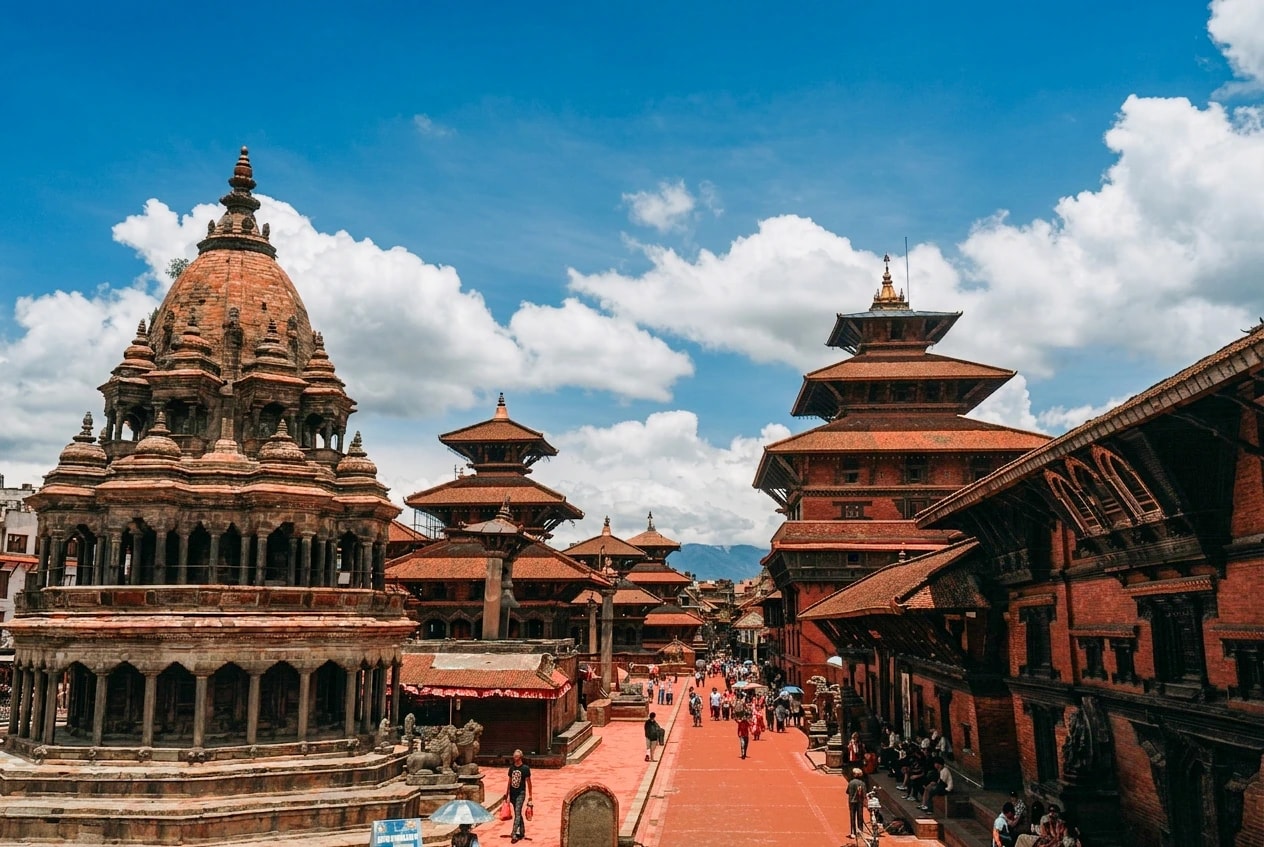
About Patan Durbar Square
Patan is the name you'll see on signs and tours, but the city's official and far older name is Lalitpur, carries its meaning in its name - "Lalit "means Art & Architecture, and "Pur " means City. It is, quite literally, the City of Fine Arts. Older texts call it Lalita Patana, "the beautiful Patan." Its Newar name is older still: Yala. Patan Durbar Square was named a UNESCO World Heritage Site in 1979 and a World Craft City in 2018.
Patan Durbar Square is the old royal court of Lalitpur - the seat of the Malla kings who ruled Patan as an independent kingdom from the 12th to the 18th centuries. Today it is an open-air ensemble of temples, palaces, courtyards and sunken water tanks, packed into a compact square and surrounded by a warren of workshops and shrines. The city is often cited as holding some 55 temples and 136 bahals (courtyards), a density of monuments unmatched anywhere else in Nepal.
Its significance is threefold. Architecturally, it is the finest mark of Newari craft - stone, wood and metal carving of a refinement the Valley never surpassed. Religiously, it is a place where Hinduism and Buddhism sit side by side without friction, often honored by the same families. And, crucially, it is still in use: priests open the shrines at dawn, families draw water at the spouts, and metalworkers in the surrounding lanes supply metalcraft across the world.
History of Patan Durbar Square
From Kirat capital to Malla golden age:
Patan is one of the oldest continuously inhabited places in the Kathmandu Valley, with roots reaching back to the 3rd century BC. Local Kirat chronicles name it as an early capital, and legend credits the Indian emperor Ashoka with raising stupas at its four corners around 250 BC - markers you can still trace on a walk through the wider city. Under the Lichhavi kings (roughly the 4th to 9th centuries), Patan grew from a settlement of artisans and traders into a genuine religious and commercial hub, its fortunes tied to the old trans-Himalayan trade routes.
The Independent Malla kingdom:
The square you see today, though, is overwhelmingly the work of the Malla dynasty, who ruled from the 12th to the 18th centuries and turned Patan into an independent kingdom obsessed with art. Its golden age belongs to King Siddhi Narsingh Malla (who reigned from around 1618 to 1661), the first independent Malla king of Patan and the patron behind much of the palace complex and the Krishna Mandir. His successors kept building - temples, courtyards, sunken water tanks - commissioning Newari craftsmen whose carving in wood, stone and metal set a standard that has never really been matched in Nepal.
Conquest, Earthquakes and Restoration:
That independence ended in 1768, when Prithvi Narayan Shah of Gorkha took Patan as part of his unification of Nepal - reportedly without a fight. The royal court moved on, but the square kept its character. It has survived two catastrophic earthquakes, in 1934 and again in 2015, and the restoration that followed the more recent quake is now largely complete, with the great majority of monuments rebuilt and open. Some scaffolding remains, and that is part of the appeal: at Patan you can often stand a few metres from masons and carpenters recreating a 17th-century temple by hand.
Major Attractions of Patan Durbar Square - A Self-Guided Walking Tour
The square is small enough to see properly on foot in a couple of hours, and it repays a logical route rather than a random wander. Start at the southern (main) entrance, where the ticket office sits, and work your way north. Everything below is within a few minutes' walk of the last.
- The royal pillars and the Taleju Bell
The great Taleju Bell, hung in the early 18th century under King Vishnu Malla, was once rung to summon justice or sound the alarm; it still rings for festivals and can be heard across Patan. A few steps on, facing the palace stands - you will see the slender stone pillar of King Yoganarendra Malla, his gilded figure kneeling beneath a cobra hood, a small bird perched on top. Local lore holds that as long as the bird remains, the king may yet return - so a door and hookah are kept ready for him inside the palace.
- Krishna Mandir - the stone masterpiece
The Krishna Mandir, built in 1637, is carved entirely from grey stone in the North Indian shikhara style - a rarity in a valley that builds in brick and timber. Its 21 golden finials catch the first and last light of the day, and friezes running around the lower levels depict scenes from the Mahabharata and Ramayana. It is a working temple: during Krishna Janmashtami, worshippers queue deep into the night. Look, too, for the nearby Chyasim Deval, an elegant octagonal Krishna temple that many visitors walk straight past.
- The temple row: Bhimsen, Vishwanath and Hari Shankar
The western edge of the square is lined with temples, each worth a pause. The Bhimsen Temple, dedicated to a deity of trade and commerce, is a favourite of the local merchant community. The Vishwanath (Vishvanath) Temple, guarded by two stone elephants, honours Shiva. The three-tiered Hari Shankar Temple carries carvings of scenes of the afterlife along its struts. Together they form one of the most photographed lines in the Kathmandu Valley.
- The Royal Palace and Patan Museum
Cross to the eastern side and the old Royal Palace - now home to the Patan Museum, widely rated among the finest museums in South Asia. Opened in 1997 after a restoration led jointly by the Nepali and Austrian governments, it presents Hindu and Buddhist bronze and gilt-copper work with a clarity and calm that reward an unhurried visit; the collection runs to well over a thousand objects, and the restored royal apartments are a masterpiece in their own right. Work through its three great courtyards: Keshav Narayan Chowk ( just inside the museum gate), Mul Chowk (the ceremonial heart, with its Taleju shrines), and Sundari Chowk, which holds the exquisitely carved royal bath, the Tusha Hiti. Spend a full hour here - most people wish they had left more.
- Manga Hiti and the northern lanes
At the northern end, the sunken stone spout of Manga Hiti still supplies water to the neighbourhood as it has for centuries - one of the clearest signs that this is a working city, not a museum piece. From here the lanes narrow and the workshops begin: this is the point to slow down, look up at the carved windows, and let the square dissolve into the living old town around it.
- Beyond the square: Golden Temple, Kumbeshwar and Mahabuddha
Three of Patan's finest sights sit just outside the square, each a few minutes' walk and each requiring its own small ticket. The Golden Temple (Hiranya Varna Mahavihar), a working Buddhist monastery dating to somewhere between the 12th and 14th centuries, glows with a gilded façade down a narrow alley to the north - arguably the single most atmospheric corner of Patan. The five-storey Kumbeshwar Temple, one of only a handful of five-tiered temples in Nepal, honours Shiva. And the terracotta Mahabuddha Temple, the "Temple of a Thousand Buddhas," is faced with thousands of tiny Buddha images. Do not treat these as afterthoughts; for many visitors they are the highlight.
What most visitors miss
Most people photograph the temple row and leave within the hour. The reward for staying longer is the living city underneath the monument. Come back to the square after dark, when the temples are floodlit and the crowds have gone, or at dawn, when it belongs to the neighbourhood - priests unlocking shrines, women drawing water at the hitis, marigold sellers setting up. Wander the side courtyards off the main square, where some of Patan's finest carvings hide well away from the tour groups. Step into the metalwork and thangka workshops in the surrounding lanes - these are working businesses, and watching a craftsman raise a copper Buddha by hand is a better history lesson than any plaque. And spend real time watching the restoration, one of the few places on earth where medieval building crafts are practiced in front of you. Patan does not perform for visitors; it simply carries on, and the traveler who slows down gets let in.
Entry Fees, Tickets & Opening hours
Entry fees: Foreign visitors pay an entry fee that helps fund conservation, and usefully a single ticket under the current "one-door" policy covers both the square and the Patan Museum. Nepal uses a tiered pricing system, so what you pay depends on where you're from. Buy your ticket at the counter near the southern (main) entrance; carry cash in Nepali rupees, and SAARC nationals should bring a passport to claim the discount.
Visitors Category | Entry Fee (NPR) | Notes |
Foreign nationals | ~1,000 | Patan Museum included; standard non-SAARC rate (Chinese nationals included) |
SAARC nationals | ~250 | Passport required as proof |
Nepali citizens | Free (square) | Discount for students with a school ID |
Children under 10 | Usually free | Accompanied by an adult |
Opening hours: The square itself has no gates and is effectively open around the clock - one reason dawn and after-dark visits are so rewarding. The ticketed sites keep daytime hours, and the Patan Museum runs its own schedule that shortens in winter and closes one day a week.
Typical Hours | Notes | |
The square (open area) | All day | No barrier; ticket counter roughly 7am–6pm |
Patan Museum | ~8:00am–5:30pm (to ~4:30pm in winter) | Commonly closed Tuesdays and public holidays (verify) |
Temples & inner courtyards | Roughly daytime hours | Some shrines closed to non-Hindus |
Practical ticket tips:
-
The single square/museum ticket does not cover temples outside the square. The Golden Temple, Kumbeshwar and Mahabuddha each charge a small separate fee (around NPR 50 for foreigners).
-
Carry small cash; card payment is unreliable at heritage counters.
-
The square occasionally closes to ticketing for certain ceremonies and festivals - check if your date coincides with a major Jatra.
Visitor Rules & Guidelines
Patan Durbar Square is not a museum you look at; it is a living heritage site you are briefly allowed into. Priests still unlock the shrines at dawn, families still draw water at the spouts, and the temples along the western edge still fill with worshippers on festival nights. Most of it comes down to one instinct: move through the square the way you would move through someone's home, because that is what it is.
Guideline | What it means on the ground | Why it matters |
Dress modestly | Cover shoulders and knees, especially entering temples and shrines. There is no enforced dress code, but locals notice - and appreciate those who make the effort. | These are active places of worship, not a photo backdrop. |
Remove your shoes | Take them off before stepping into any temple or shrine. Leather items are occasionally restricted at certain shrines. | Bare feet on temple ground is the oldest mark of respect in Nepal. |
Photograph the stone, not the sacred | Photography is welcome across the open square. It is restricted inside several temples - including the Krishna Mandir, the Taleju Bhawani shrine, and the inner sanctum of the Golden Temple - and in parts of the Patan Museum. Watch for signage; when in doubt, ask. | Flash and lenses damage pigments and interrupt devotion. |
Ask before you photograph a person | Always ask a resident, priest, sadhu or monk before raising your camera - and never photograph a puja or ritual in progress. Accept "no" gracefully. | People here are narrators, not subjects. |
No drones or commercial filming without permission | Drone flights and any commercial shoot require prior clearance from the authorities. | Heritage airspace and ceremony both need protecting. |
Do not touch or climb | No climbing on plinths, monuments or temple struts; no handling of statues or offerings. Respect restoration fences and hoardings. | Some of what you are looking at is 400 years old and being rebuilt by hand. |
Walk clockwise | Circle shrines, temples and stupas clockwise (pradakshina), as devotees do. | A small gesture that signals you understand where you are. |
Carry the right ticket and cash | The single "one-door" ticket covers the square and the Patan Museum; the Golden Temple, Kumbeshwar and Mahabuddha each charge a small separate fee. Carry Nepali rupees - card readers at heritage counters are unreliable - and SAARC nationals should bring a passport for the discount. | Your fee funds the conservation you have come to admire. |
[→ Full guide: Nepal Temple Etiquette for Travelers]
Best Time To Visit Patan Durbar Square
Best time of day:
Come early or late. Between about 7 and 9am the square belongs to the neighbourhood - the light is soft and low, ideal for photographing the temples, and the tour groups have not yet arrived. The other sweet spot is late afternoon, roughly 4–6pm, when the stone turns gold and the square fills with an easy end-of-day energy; sunset here is genuinely memorable, and the floodlit temples afterward are worth staying for. Midday (11am–3pm) is the stretch to avoid: harsher light, the biggest crowds, and, in the warmer months, real heat on the exposed brick. Weekends are busier than weekdays.
Best season:
October and November are the finest months - the monsoon has cleared, the skies are sharp, temperatures are comfortable, and this is Nepal's peak travel season for good reason. Spring (March to April) is a close second: warm, largely clear, and rich with festivals. The monsoon (June to September) brings dramatic skies and lush greenery but also heavy afternoon rain and humidity, while winter (December to February) is cool and quiet, with crisp, clear mornings if you don't mind a chill - and the fewest crowds of the year.
[→ Full guide: Best Time to Visit Patan, Nepal]
Patan's Festival Calendar
If you can time your visit to a festival, do - it transforms the square from a monument into a stage. Patan's signature event is the Rato Machhindranath Jatra, the longest chariot festival in Nepal and one of the oldest, running for well over a month from roughly mid-April into June. A towering wooden chariot - commonly cited at up to around 60 feet and built without a single iron nail - is hauled through Patan's streets by thousands of devotees over successive weeks, honouring Bunga Dyah / Rato Machhindranath, a rain-and-harvest deity revered simultaneously as the Buddhist Avalokiteshvara (Karunamaya) and the Hindu Matsyendranath. The festival climaxes with the Bhoto Jatra at Jawalakhel, when an official displays a sacred jewel-studded vest from the chariot in the presence of the President of Nepal and the living goddess Kumari of Patan; afterward, the deity is carried to the village of Bungamati for its six-month winter residence.
Dates shift each year with the lunar calendar, and are confirmed only a week or two ahead. In 2026, the chariot was raised at Pulchowk in mid-to-late April, and the Bhoto Jatra was ultimately held on Saturday 20 June 2026 at Jawalakhel - later than early estimates, a good illustration of how much the schedule can move. If you're planning around it, expect road closures across Patan through the festival period, and check the year's confirmed dates before you commit.
Patan's other major festivals worth timing a visit to include Krishna Janmashtami (August/September), which turns the Krishna Mandir into a night-long pilgrimage; Gai Jatra (late summer), with processions and satire winding through the lanes; Indra Jatra, Dashain and Tihar in autumn; and Machhindranath's smaller companion processions. Always confirm exact dates, as almost all follow the lunar calendar.
Patan Durbar Square vs Kathmandu & Bhaktapur Comparison
The Kathmandu Valley has three royal durbar squares, all UNESCO-listed, and travelers with limited time often ask which to prioritise. Patan wins for fine art and a relaxed atmosphere close to the capital; Bhaktapur wins for scale and a car-free, frozen-in-time feel.
Patan Durbar Square | Kathmandu Durbar Square | Bhaktapur Durbar Square | |
City | Lalitpur (Patan) | Central Kathmandu | Bhaktapur |
Best for | Fine art, Newari craft, calm | Central location, grandeur | Scale, car-free medieval feel |
Crowds | Moderate | Moderate–heavy | Moderate |
From Thamel | ~20–40 min | ~10–15 min (walkable) | ~45–60 min |
Foreign entry (approx.) | ~NPR 1,000 (museum incl.) | ~NPR 1,000 (museum incl.) | ~NPR 2,000 |
Signature sight | Krishna Mandir · Patan Museum | Kumari Ghar · Hanuman Dhoka | 55-Window Palace · Nyatapola |
Signature festival | Rato Machhindranath Jatra | Indra Jatra | Bisket Jatra |
Tip: Patan and Kathmandu can be paired in a single busy day; Bhaktapur deserves its own. Fees change often - confirm current rates before you go.
How to get to Patan Durbar Square from Kathmandu
Patan sits only 5–7 km south of central Kathmandu, so getting there is quick and easy - Valley traffic permitting. The catch is timing: the morning and evening rush can turn a 20-minute run into an hour, so travel before around 9am or after 4pm where you can.
A taxi is the simplest option and always available; agree the fare before you set off, or use a ride-hailing app (Pathao or InDrive are widely used) for a fixed, trackable price. Local buses and microbuses are the cheapest way across, running from Ratna Park or Kantipath toward Pulchowk, Jawalakhel or Lagankhel, from where it's a short walk to the square. Crossing the Bagmati is straightforward - bridges and signage handle it, with no tricky driving involved.
Where to stay near Patan Durbar Square
Staying in Patan itself - rather than Thamel - puts you within walking distance of the square and lets you experience it at dawn and after dark, when it is at its best. The lanes around Mangal Bazaar and the neighbourhoods of Pulchowk, Jawalakhel and Kupondole hold a good mix of heritage guesthouses in restored Newari buildings, mid-range hotels and a few boutique options, many with rooftop views over the temple roofs. It's a quieter, more local base than central Kathmandu, and only 20–40 minutes from the capital's sights when you want them.
Challenges & Preservation: Keeping Patan Alive
Patan is often called one of the finest surviving historic urban spaces on earth. What makes it remarkable is also what makes it fragile: it is not a preserved relic behind glass, but a functioning city that has been lived in continuously for well over a thousand years. Its greatest challenge, in the end, is simply staying alive as itself while a modern city presses in on every side.
The earthquake, and what the rubble revealed
On 25 April 2015, a 7.8-magnitude earthquake tore through the Kathmandu Valley, followed two weeks later by a second violent shock. In the square, two temples - among them the 16th-century Char Narayan, one of the oldest here - and two sataḥs (public rest-house pavilions) collapsed entirely; the Royal Palace and other monuments were badly damaged.
What happened next is the part worth telling. Before the crews and the cameras arrived, residents ran to the square themselves. They guarded the toppled statue of King Yoganarendra Malla - cast in 1683 - until the army and police came. Alongside conservators, locals sifted the debris and carried hundreds of invaluable art objects to safety. From the wreckage of the Char Narayan and Hari Shankar temples, workers salvaged 162 carved wooden struts; most were too broken to reuse, but the fragments now sit in a Patan Museum exhibition on the rescue itself - the wound turned into a record.
Rohit Ranjitkar, who directs the trust that has led the rebuilding, has said something that lingers. Before the quake, he observed, many people had begun to take their heritage for granted - until the temples fell and there was suddenly nowhere to worship, and hundreds came out to save the pieces. The disaster, in other words, reconnected a community to what it already had. That is the whole ethos of this square in a single sentence.
The quiet, decades-long work
The restoration you can watch today is overwhelmingly the work of the Kathmandu Valley Preservation Trust (KVPT), a Nepali–American charity that has worked on Patan since 1991. After 2015 it organised an international fundraising drive and led the rebuilding of more than twenty monuments, in partnership with Nepal's Department of Archaeology, UNESCO, the Institute of Conservation in Vienna, the World Monuments Fund, and the U.S. Ambassadors Fund for Cultural Preservation.
The method matters, and it rewards a curious eye. Rather than pour concrete, conservators rebuilt with salvaged original elements, discreet seismic retrofitting, and traditional Newar technique - stripping out the cement-heavy repairs of the late 20th century and repointing joints with a brick-dust lime mortar, the way it was always done. By 2022, more than 90% of Patan's built heritage had been restored, and the work is now largely complete. The scaffolding you still see is not a sign of failure; it is one of the few places on earth where medieval building crafts are practised in front of you.
The threats that don't make headlines
The earthquake was sudden. The slower dangers are the ones that never stop. Rapid, unregulated urbanisation is the biggest: concrete blocks steadily replacing traditional brick-and-timber homes in the streets around the square, along with rising traffic and air pollution. The pressure was serious enough that the wider Kathmandu Valley sat on UNESCO's List of World Heritage in Danger from 2003 to 2007, largely because of the unsympathetic transformation of the neighbourhoods that frame the monuments. A protected buffer zone around the Patan Monument Zone was formally drawn in 2006 in response - but the tension between a living city's need to grow and a heritage site's need to hold still has never gone away.
Why Patan gives cause for hope
Two things set Patan's recovery apart. First, the rebuilding deliberately reached beyond the "five-star map." Alongside the grand royal temples, crews restored the smaller, less photogenic structures that matter most to the people who live here - the arcaded rest platforms (phalcā), the neighbourhood patis and sattals, the community shrines that never appear on a postcard. Second, much of the ongoing maintenance is carried out by local artisan co-operatives, which means every repair also sustains a livelihood and passes intact craft knowledge to the next generation. Preservation here is not something done to the community; it is done by it.