
Kathmandu Durbar Square: History, Monuments & Travel Guide 2026
Hidden Hymn
Author
Hidden Hymn writes for Hidden Hymn — long-form stories from the world's quietest corners.
September 1, 2026 · 22 min read
About Kathmandu Durbar Square
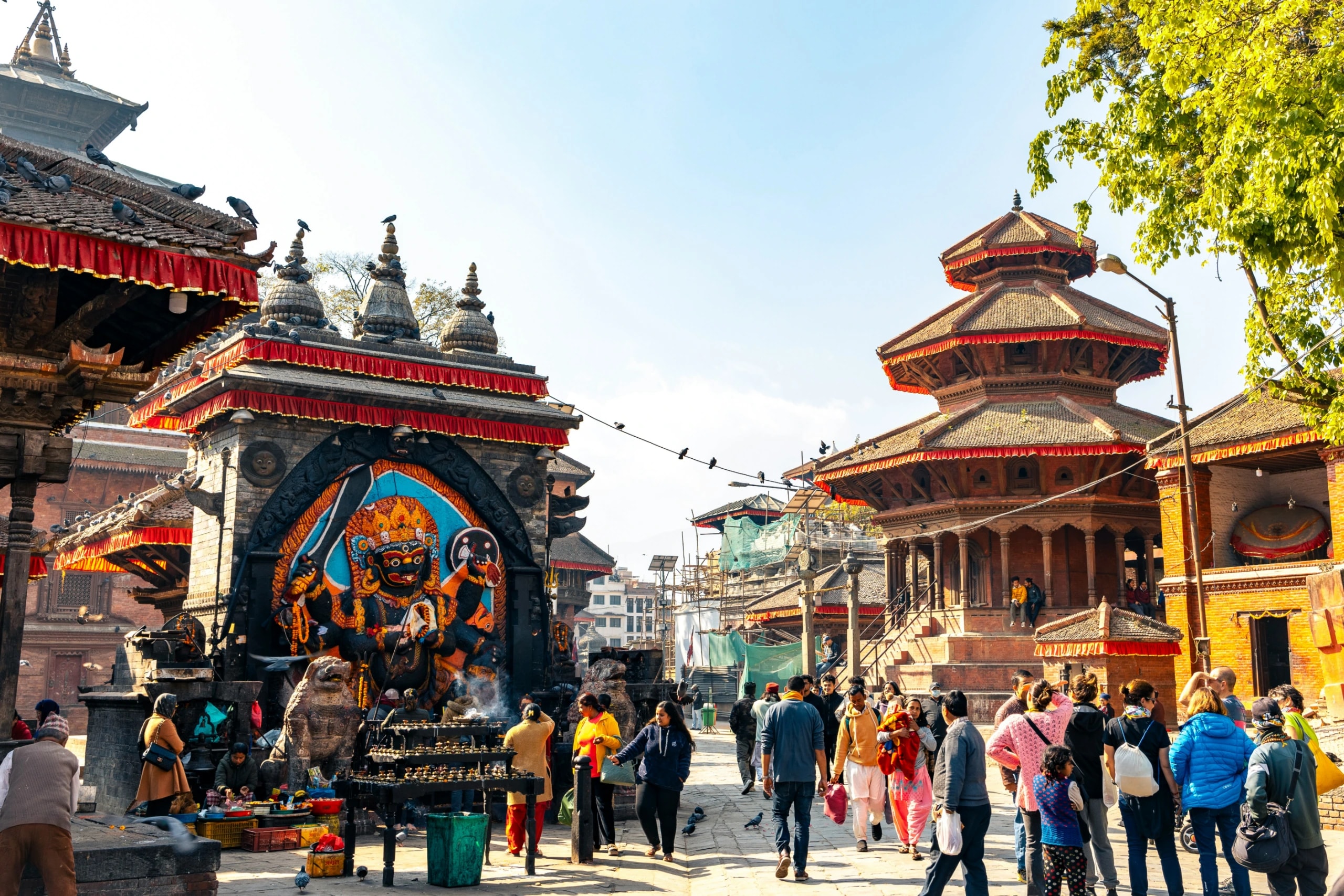
Kathmandu Durbar Square is the old royal palace of Kathmandu - the seat of the Malla kings who ruled the city as an independent kingdom, and of the Shah dynasty that took it in 1768 and ruled a unified Nepal from it. Today it is an open-air ensemble of temples, palace courtyards, towers and public rest houses, spread across roughly five acres of the old city and holding more than fifty monuments.
The site carries three names, used interchangeably. Durbar (palace or royal court) is the generic term. Hanuman Dhoka (Hanuman’s Gate) refers to the palace at its centre, named for the Hanuman (a character from the hindu epic ramayan) image set at its gate in 1672. Basantapur (Place of Spring) refers to the open plaza at its southern end.
Its significance is threefold. Historically, it is the one square in the valley that remained a working seat of state after unification, which is why Shah and Rana additions sit alongside the Malla ones. Religiously, it holds the residence of the Kumari (the living goddess), alongside shrines revered by Hindus and Buddhists together. Crucially, it is still in use: priests open the shrines at dawn, public roads run through the site, and the surrounding market lanes trade as they have for centuries.
Kathmandu Durbar Square was inscribed as a UNESCO World Heritage Site in 1979, as one of the seven monument zones within the single Kathmandu Valley listing.
How the site is laid out
It is a series of linked open spaces with public roads running through them, in three parts:
-
The western temple area: The open square, holding the densest concentration of free-standing temples: Maju Deval, Trailokya Mohan, Shiva-Parvati, Jagannath and the Kal Bhairav statue.
-
The eastern palace area: Hanuman Dhoka itself, its chowks (courtyards), the Taleju Temple and the palace museums.
-
Basantapur Square: The open plaza to the south, with the nine-storey palace, the Kumari Ghar and the souvenir market.
History of Kathmandu Durbar Square
Ancient period (3rd-11th centuries)
-
Settlement on the site is traced to around the 3rd century.
-
Meaningful development came under the Licchavi rulers, 4th-9th centuries, whose foundations underlie much of the present complex.
-
A competing chronicle credits King Shankaradev with founding a palace here in the 11th century. Nothing securely dated survives from either period.
-
The oldest surviving buildings are not temples but sattals (public rest houses for pilgrims and travellers), of which Kasthamandap and Singha Sattal remain. The square began as civic infrastructure; the royal and religious architecture accumulated around it.
Malla period (12th-18th centuries)
-
The square became the political, religious and ceremonial centre of the Kathmandu kingdom.
-
King Mahendra Malla (16th century) raised the Taleju Temple, still the tallest structure on the site.
-
King Pratap Malla (17th century) was the most prolific builder and the most self-commemorating. To his reign or patronage belong:
◦ the Hanuman image at the palace gate, 1672, which gave the palace its name
◦ the stone column carrying his own kneeling figure
◦ the Jagannath and Kal Bhairav statue installations in their present form
◦ the fifteen-language inscription of 1664
Shah period (1768-1951)
-
Prithvi Narayan Shah of Gorkha took Kathmandu in 1768, timing the assault to coincide with Indra Jatra (the festival of Indra), when the city was occupied with the celebration.
-
The capture ended Malla rule and made the square the seat of a unified Nepal.
-
The nine-storey Basantapur Tower or Nautale Durbar (nine-storey palace), was raised after the conquest, giving the southern plaza its dominant structure and the site one of its alternative names.
Modern period (1951-present)
-
Nasal Chowk, the principal palace courtyard, remained the setting for royal coronations, and state ceremonies continued there into the 2000s.
-
Inscribed as a UNESCO World Heritage Site in 1979, within the Kathmandu Valley listing.
-
The monarchy was abolished in 2008, ending the square’s ceremonial function after roughly six centuries of royal use.
-
The 7.8-magnitude Gorkha earthquake of April 2015 caused the heaviest damage in the site’s modern history. The decade of rebuilding that followed is now largely complete.
Major Attractions of Kathmandu Durbar Square - A Self-Guided Walking Tour
The square takes about two hours on foot, and it repays a logical route rather than a random wander. The one below runs west to east: the open temple area first, then the palace, then Basantapur to the south. Everything is within a few minutes’ walk of the last.
Understanding the architecture:
Four features recur across almost every structure here, and recognising them saves explaining each building separately.
-
The pagoda form: Tiered roofs, each smaller than the one below, on a square brick base. The tier count signals importance, not function.
-
Brick and timber: Load-bearing brick walls with carved wooden doorframes, windows and struts. Almost no stone construction; the stone shikhara temple is a Patan speciality, not a Kathmandu one.
-
Roof struts (tunala): The angled timbers supporting the eaves, carved with deities, guardians and, on several temples, explicit erotic figures. These belong to an old symbolic vocabulary concerning creation and fertility, and are found across the valley rather than being peculiar to any one temple.
-
Lattice windows : Carved screens allow those inside to see out without being seen, at their finest on the Kumari Ghar.
The western temple area:
Maju Deval
A tall Shiva temple on a stepped, nine-level plinth. The plinth, rather than the shrine, is the point for most visitors: it is the highest open platform on the square and its main sitting, meeting and gathering spot, with the widest view across the temple area.
Trailokya Mohan
A three-roofed temple to Vishnu, distinguished by the large kneeling Garuda (Vishnu’s eagle mount) facing it - hands joined, positioned as a devotee rather than a guardian.
Shiva-Parvati Temple
Formally the Navadurga (nine forms of the goddess Durga) temple, and known by its facade rather than its dedication: painted wooden figures of Shiva and Parvati lean from an upper-storey window and look down into the square. A single-storey temple on a rectangular plinth, unusual among the pagodas around it.
Jagannath Temple
A 16th-century Vishnu temple and the oldest of the free-standing temples in this section. It is best known for the erotic figures carved along its roof struts - the most detailed and most photographed examples in the square, and the reason a good many visitors stop here longest.
Kal Bhairav
A large stone image of Kal Bhairav (Shiva in his fierce, destroying aspect) black, multi-armed, trampling a figure underfoot. It was the square’s instrument of justice. Oaths were sworn before it, and it was held that anyone who lied in front of the image would die on the spot; government cases were settled here into the modern era.
Sweta Bhairav
Sweta Bhairav, is a large gilded mask kept behind a wooden screen near Hanuman Dhoka and uncovered only once a year, during Indra Jatra. For the rest of the year visitors see the lattice rather than the face.
The fifteen-language inscription
A stone slab set into a palace wall, dated 1664, carrying an invocation written in fifteen scripts and languages, among them Newari, Sanskrit, Persian, Arabic and, by tradition, a few words of French and English. Local lore holds that milk will flow from the wall if anyone ever reads all fifteen. It is small, unmarked, at waist height, and walked past by most of the square.
Taleju bell, drums and Narsingha
Grouped near the palace entrance: a large bronze bell and a pair of ceremonial drums installed for temple ritual and public alarm, and a stone image of Narsingha (Vishnu’s man-lion incarnation), shown killing the demon Hiranyakashipu.
The palace: Hanuman Dhoka
The palace entrance, named for the stone Hanuman installed by Pratap Malla in 1672 to guard it. The figure is draped in red cloth and so thickly coated in sindoor (vermilion paste) applied by devotees that the features have disappeared entirely. A stone Narsingha stands alongside it.
The palace is organised around a series of enclosed chowks (courtyards) holding some of the finest medieval metal, stone and woodwork in the valley. Access varies - several are closed to visitors or open only in part.
-
Nasal Chowk: The principal and largest courtyard, used for royal coronations and state ceremony; open and rectangular, with the Basantapur Tower rising at its southern corner.
-
Mul Chowk (the main courtyard): The ritual heart of the palace, tied to Taleju worship and the most restricted of them.
-
Mohan Chowk: The Malla kings’ private residential courtyard, built around a sunken royal bath.
-
Sundar Chowk: A smaller space set around a stone water spout, noted for its carved doorways and stone deities.
-
Lohan Chowk (the stone courtyard): Framed by the four towers representing the valley’s old kingdoms, Basantapur among them.
Basantapur Tower (Nautale Durbar)
The nine-storey tower at the palace’s southern end, raised after the Shah conquest and the tallest of the palace structures. Its upper floors give views across the old city rooftops towards Swayambhunath.
Kumari Ghar
The Kumari Ghar (house of the living goddess), dated 1757, is a three-storey brick residence built around a small enclosed courtyard whose carved wooden windows are among the finest surviving Newar woodwork anywhere in the valley.
The Kumari is a pre-pubescent girl of the Newar Shakya caste, selected through a formal process and worshipped as the living embodiment of the goddess Taleju. She lives here for the length of her tenure and is succeeded when she reaches her first menstruation. She appears at a courtyard window at set hours, briefly and not predictably. The courtyard may be photographed. The Kumari may not, under any circumstances.
The Palace Museums
The Tribhuvan Museum occupies rooms within the palace and covers the modern monarchy through thrones, regalia, weapons, personal effects and photographs, with the King Mahendra Memorial Museum adjoining it.
Gaddi Baithak
The white neoclassical hall on the eastern side, with a colonnaded facade facing Basantapur. Used for cultural events and state receptions and open to visitors. Its scale and colour make it the easiest building on the square to navigate by.
Taleju Temple
The tallest structure on the square, a multi-tiered pagoda on a stepped brick plinth, dedicated to Taleju Bhawani, the tutelary goddess of the Malla kings. Its dating varies across sources between 1549, 1561 and 1564. It opens to the public for a single day each year during Dashain; for the rest of the year it is viewed from outside.
Kasthamandap and the southwestern corner:
Kasthamandap
The structure the city is named for: kastha (wood) and mandap (pavilion). A large open wooden pavilion said by tradition to have been built from the timber of a single sal tree, it functioned as a public rest house rather than a temple, and its open ground floor makes that obvious. It is among the oldest structures on the site.
Singha Sattal
Singha Sattal (Lion Rest House), a second shelter immediately nearby, of the same building type and likewise built for public use rather than worship.
Ashok Binayak
A small gilded, roofless shrine to Binayak (the remover of obstacles) beside Kasthamandap, one of the valley’s four principal Ganesh temples and among the busiest shrines on the square. Travelers stop here before journeys, and it is one of the best places to watch ordinary morning worship.
Beyond the square: Freak Street, Asan and Indra Chowk
Three things sit just outside the ticketed area and are worth folding into the walk.
Freak Street, or Jhochhen in Newari, the lane running south from Basantapur, was the centre of Kathmandu’s hippie-trail scene in the 1960s and 70s and is now quiet - cheap guesthouses, small cafes, a few bookshops, and the nearest place to sit down.
Asan and Indra Chowk, the market streets running north towards Thamel, form the route most visitors walk in on: working trading lanes dense with spice, grain and textile shops, small shrines set into the buildings, and the silver head of Akash Bhairav (Sky Bhairav) on a first floor above the crossroads..
What Most Visitors Miss
Most people photograph the temple row, spend forty-five minutes in the open square and leave, which is roughly a third of what their ticket covers. The reward for staying is the part that is not free-standing.
Go into the palace. The courtyards and the two museums are included in the entry fee and are consistently the section skipped, partly because they open later than the square and partly because the gate does not look like an entrance. Find the fifteen-language inscription, which is unmarked and at waist height. Climb the Basantapur Tower for the rooftop view rather than photographing it from below.
Then use the ticket twice. The extension to visa length is free and takes minutes at the office beside the Kumari Ghar, and the square is a different place at different hours - a working thoroughfare at seven in the morning, a tourist site at noon, a local gathering ground on the Maju Deval plinth after dark. Come back through it on your way somewhere else. And walk in through Asan rather than taking a taxi to New Road; the market lanes are the context the square sits in, and they cost nothing.
Entry Fees, Tickets & Opening Hours
Entry fees: Foreign visitors pay an entry fee that funds conservation, and a single ticket covers the whole site - the temple area, the palace courtyards open to visitors, and both museums. Nepal uses a tiered pricing system, so what you pay depends on where you are from. Buy at the booths on the main entrances, carry cash in Nepali rupees, and SAARC nationals should bring a passport to claim the discount.
Visitor Category | Entry Fee (NPR) | Notes |
Foreign nationals | ~1,000 | Museums included; standard non-SAARC rate |
SAARC nationals | ~150-500 | Figures vary by source; passport required as proof |
Nepali citizens | Free / nominal (~50) | - |
Children under 10 | Usually free | Accompanied by an adult |
Opening hours: The square has public roads running through it and no gates, which is one reason early and after-dark visits are so rewarding. The ticketed sites keep daytime hours, and the museums run their own schedule with set weekly closing days.
| Typical Hours | Notes |
The square (open area) | All day | No barrier; ticket booths roughly 7am-7pm |
Palace museums | 10:00am-4:00pm | Closed on Tuesday and public holidays |
Taleju Temple | Closed | Opens to the public one day a year, at Dashain |
Kumari Ghar courtyard | Daytime hours | The Kumari appears at set times |
Practical ticket tips:
-
The ticket is valid for one day, but can be extended free of charge for the length of your visa at the site office beside the Kumari Ghar. Bring the ticket, your passport and a passport photograph, and it is issued on the spot. Do this on the first visit even if you are unsure about returning.
-
Only the booths at the main entrances are official. Anyone selling tickets or "temple passes" on the approach lanes is not.
-
Carry small notes; card readers at heritage counters are unreliable.
-
Keep the ticket on you - inspections inside the square are common.
-
Ticketing and museum hours dissolve entirely on major festival days.
Visitor Rules & Guidelines
Kathmandu Durbar Square is not a museum you look at; it is a working city centre and an active place of worship that you are briefly allowed into. The rules below are the terms on which a living neighbourhood lets a stranger in.
Dress and move as a guest
Cover shoulders and knees, men and women alike, and take your shoes off before stepping into any temple or shrine - leather and fur are restricted at some, and hats come off indoors. Circle shrines clockwise as devotees do, and never point the soles of your feet at a deity or altar. Do not climb the plinths or struts, handle statues or offerings, or cross restoration fences.
Lower the camera before someone asks you to
Photography is welcome across the open square, but several interiors ban it outright and flash damages old pigment, so watch for signals. Always ask a resident, priest or monk first, never shoot a puja (act of worship) in progress, and agree a price before photographing costumed sadhus (Hindu ascetics), who will expect one afterwards. The Kumari is the one absolute: her courtyard may be photographed, she may not
Handle the practicalities before
Watch your bag in the afternoon rush and during festivals, and keep an eye out for motorbikes, dust and street dogs - public roads run straight through the middle of this World Heritage site.
[→ Full guide: Nepal Temple Etiquette: A Traveler’s Guide to Sacred Spaces (2026)]
Best Time To Visit Kathmandu Durbar Square
Best time of day:
Window | What it offers | The catch |
Early morning (7–9am) | Quiet lanes, low soft light on the temples, worshippers at Ashok Binayak and the Bhairav shrines, and vendors still setting up rather than selling. Traffic through the old city has not yet built | The museums and palace interiors are not yet open, so this window covers the outdoor square only |
Late morning to mid-afternoon (10am–3pm) | The only window in which the museums, palace courtyards and Kumari Ghar are open, so a first visit has to include part of it | Crowds and tour groups peak, the light is flat and harsh, traffic through the square is heaviest, and the touts are most persistent |
Late afternoon (3–6pm) | Crowds begin to thin, the light warms on the brick, and the shops around Basantapur are at their busiest for browsing. A reasonable compromise if you can only visit once | The museums close from around 4pm, so the palace interiors are a gamble at this hour |
Evening | The square is lit, the tour groups have gone, and the Maju Deval plinth fills with locals rather than visitors | Everything ticketed is shut. Treat the evening as a second visit rather than a first - which is what the free ticket extension is for |
Best season:
Unlike the trekking destinations, all four seasons work here. This is a low-altitude urban site with no approach to speak of, so the season changes comfort and crowds rather than access.
Season | Weather & crowds | What it offers | The catch |
Autumn (Oct–Nov) | Dry and sunny, ~23–28°C, cool nights. Crowds high | The monsoon has cleared, skies are sharp, temperatures are comfortable, and the festival calendar is at its fullest with Dashain and Tihar | Nepal's peak season, so prices are highest and the square is busiest; much of the city closes for the core Dashain days |
Spring (Mar–Apr) | Warm, mostly dry, ~22–30°C. Crowds moderate | Comfortable all-day sightseeing, rich with festivals, and lighter crowds than autumn | Haze builds through April and May as the plains heat up |
Winter (Dec–Feb) | Dry, days ~18–20°C, nights ~2–5°C, morning fog. Crowds low | Cool, clear and calm, with the fewest visitors of the year and the lowest room rates | Cold, foggy dawns that can delay the best early window, and short daylight |
Monsoon (Jun–Sep) | Warm and humid, ~28–30°C, heavy afternoon rain. Crowds lowest | Lush, quiet and inexpensive, with the square almost to yourself on a wet morning | Heavy afternoon rain, real humidity and slick brick underfoot, which makes the open-air sightseeing this site is built for unreliable after midday |
Kathmandu's Festival Calendar
If you can time your visit to a festival, do - it turns the square from a monument into a stage. A jatra is a festival procession in which a deity travels through the city, usually on a chariot, and the square sits on the route of several. Dates shift each year with the lunar calendar and are often confirmed only a week or two ahead, so check locally before you book.
Festival | When | Why it is observed | What happens at the square |
Indra Jatra & Kumari Jatra | Aug-Sep, eight days | Honours Indra, god of rain, and marks the end of the monsoon. Also the festival during which Prithvi Narayan Shah took the city in 1768. | The square’s largest festival. The Kumari is drawn through the old city on a chariot over three days with those of Ganesh and Bhairav, the only time she leaves her residence in procession. Masked Lakhe (demon) dancers perform in the streets, and Sweta Bhairav is unveiled for the one period each year the mask is visible |
Dashain | Sep-Oct, fifteen days | Marks Durga's victory over the demon Mahishasura; Nepal's longest and most important festival | Ritual offerings and sacrifices take place in the palace courtyards, centred on Mul Chowk and Nasal Chowk. Shops and offices around the square close for the main days |
Gai Jatra | Aug, one day | The gai jatra (cow procession) remembers family members who have died in the past year | A procession of cows, and of children and adults dressed as cows, passes through the square. Characterised by public satire and comic performance - traditionally the one day open mockery of authority is permitted |
Seto Machhindranath Jatra | Mar-Apr | Chariot festival for Seto Machhindranath (the White Machhindranath), god of rain and plenty | The chariot route runs through the old city lanes beside the square |
Holi | Feb-Mar, one day | Spring festival of colour | Basantapur Square is among the busiest gathering points in the city |
Tihar | Oct-Nov, five days | Festival of lights, honouring Laxmi and a series of animals across its days | The square and the shops around it are lit with oil lamps |
Visiting during a festival:
-
Confirm the date locally the week before rather than relying on a published calendar; lunar dates are fixed late.
-
Expect road closures across the old city. Taxis will not reach the square, and you will walk the final stretch.
-
Ticket booths and museums may close entirely on the biggest ritual days.
-
Crowds are dense enough that pickpocketing is a real risk.
-
The procession has the right of way over everything: never cross a chariot’s path, touch it or its ropes, or climb a monument for a vantage point.
How To Get to Kathmandu Durbar Square
The square sits in the middle of the old city, where the streets are narrow, congested and partly pedestrianised. Whatever transport you take, the last stretch is on foot.
-
On foot from Thamel: It is 1–2km, ten to twenty minutes south through Thahiti, Asan and Indra Chowk, and the lanes open directly onto the square's northern edge. This is faster than a taxi at most hours and a better introduction to the site, since the route passes the old city's main market crossroads on the way in.
-
Taxi: Agree the fare before setting off, as meters are generally ignored, and ask to be dropped at New Road rather than "Durbar Square" - drivers cannot enter the narrow lanes, and New Road is two minutes from the eastern side. Allow ten to twenty minutes from Thamel, longer in afternoon traffic.
-
Ride-hailing apps: Pathao and InDrive both work here and remove the negotiation with a fixed, trackable price. The same drop-off rule applies: name New Road, not the square.
-
Local buses and microbuses: Services run from Ratna Park, Sundhara, Balaju and Lainchaur, stopping within a few minutes' walk, and fares are nominal. Ratna Park is the most useful of them at roughly ten minutes on foot, but routes are slow at peak hours and not signposted in English, so ask before boarding.
-
From the airport: It is 5–6km, twenty to forty minutes by taxi depending on traffic. Prepaid counters operate at the terminal and ride apps work from there too, which makes the square an easy stop on an arrival or departure day.
-
Bicycle: Bicycles are permitted inside the square where cars are not, a rare case of a vehicle being the more convenient option. Rentals are easy to find in Thamel, though the old city traffic is not for nervous riders.
-
Cycle rickshaw: These operate around Thamel and the old city, priced entirely by negotiation, so agree the fare first. Slower than walking in places, but a reasonable option in heat or at the end of a long day..
Kathmandu Durbar Square vs Patan & Bhaktapur Comparison
The Kathmandu Valley has three royal durbar squares, all UNESCO-listed, and travelers with limited time often ask which to prioritise. Kathmandu wins for central location, royal history and the Kumari; Patan for fine art and calm; Bhaktapur for scale and a car-free, frozen-in-time feel.
| Kathmandu Durbar Square | Patan Durbar Square | Bhaktapur Durbar Square |
City | Central Kathmandu | Lalitpur (Patan) | Bhaktapur |
Best for | Royal history, the Kumari, central location | Fine art, Newari craft, calm | Scale, car-free medieval feel |
Crowds | Moderate-heavy | Moderate | Moderate |
From Thamel | ~10-20 min (walkable) | ~20-40 min | ~45-60 min |
Foreign entry (approx.) | ~NPR 1,000 (museums incl.) | ~NPR 1,000 (museum incl.) | ~NPR 1,800 |
Signature sight | Kumari Ghar / Hanuman Dhoka | Krishna Mandir / Patan Museum | 55-Window Palace / Nyatapola |
Signature festival | Indra Jatra | Rato Machhindranath Jatra | Bisket Jatra |
Tip: Kathmandu and Patan pair well in a single busy day; Bhaktapur deserves its own. Kathmandu also combines naturally with Swayambhunath, 3km west - the square early, the stupa afterwards. Fees change often, so confirm current rates before you go.
Glossary of Nepali & Newari Terms
Term | Meaning |
Durbar | Palace, or royal court |
Dhoka | Gate |
Ghar | House |
Chowk | Enclosed courtyard within a palace or house complex |
Sattal | Public rest house built to shelter pilgrims and travellers |
Tundal | Carved wooden roof strut supporting the eaves of a pagoda temple |
Shikhara | Tapering North Indian temple spire, usually built in stone |
Jatra | Festival procession in which a deity travels through the city, usually by chariot |
Puja | Act of worship or ritual offering |
Pradakshina | Clockwise ritual circuit around a shrine or temple |
Sadhu | Hindu ascetic or wandering holy man |
Sindoor | Red vermilion paste applied to images and to the forehead in worship |
Bhairav | Shiva in his fierce, destroying aspect |
Kumari | Living goddess; a pre-pubescent girl worshipped as the embodiment of Taleju |
Nautale | Nine-storey |
Seto / Rato | White / red - used to distinguish the two Machhindranath deities |
Gai | Cow |
Kastha / Mandap | Wood / pavilion - the two words behind the name Kathmandu |