Inside Patan’s Golden Temple: Nepal’s Thousand-Year Old Monastery
In the city of Patan there are almost 185 monasteries as documented by Fr. John K. Lock in his book the Buddhist Monasteries of Nepal , among such various “Architectural Marvel” one stands out for its Gold Gilded Shrine.

Sarvagya Shakya
Author
Sarvagya Shakya writes for Hidden Hymn — long-form stories from the world's quietest corners.
July 18, 2026 · 11 min read
About Hiranya Varna Mahavihar - The Golden Temple
Most travelers who reach Patan (Lalitpur), the Kathmandu Valley's ancient "City of Fine Arts" make straight for Durbar Square, that open-air museum of royal palaces and stone pagodas. But beyond that barely 200 m northwest, down a narrow brick lane easy enough to walk straight past, the Golden Temple of Patan waits behind an unassuming wall.
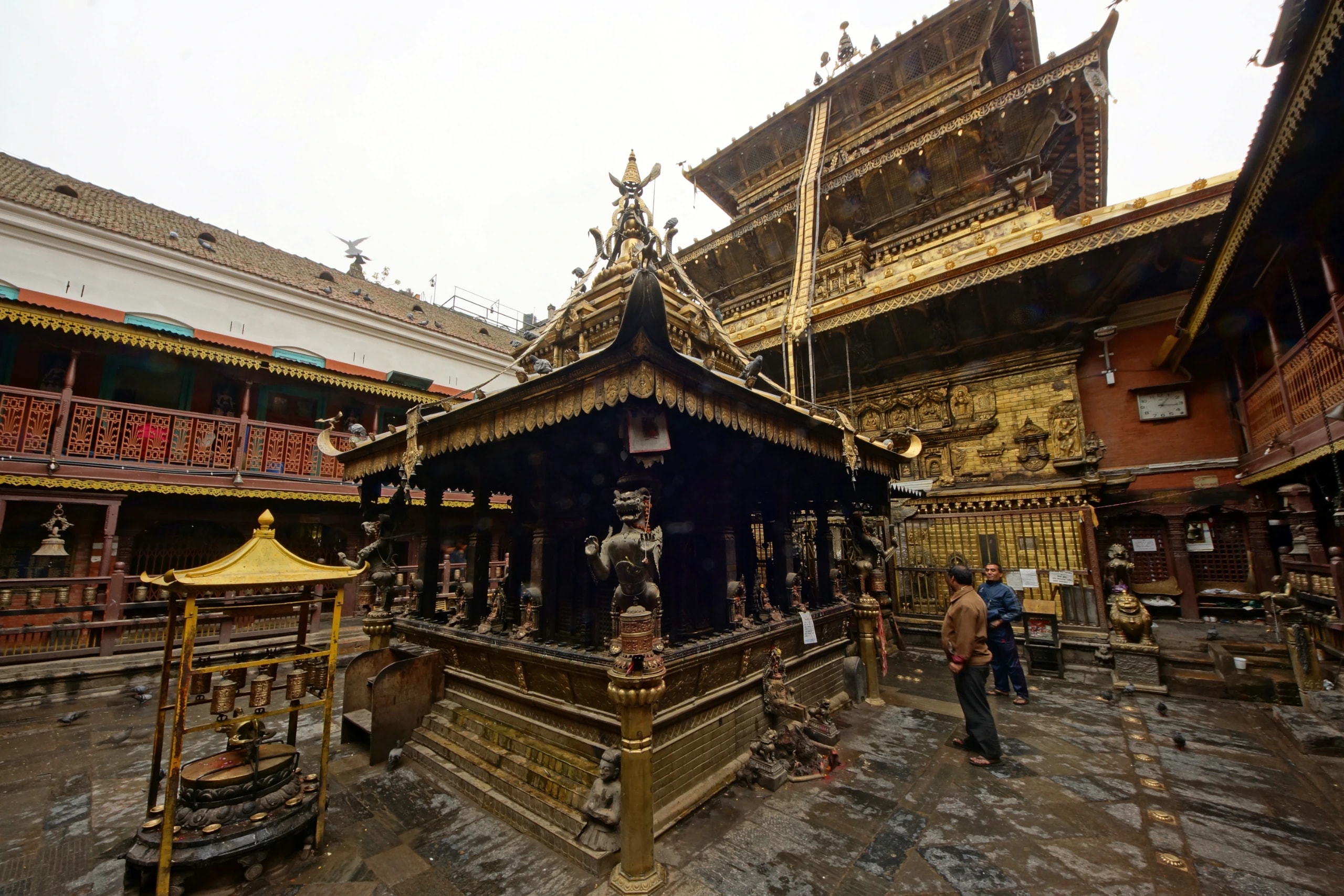
You tend to smell it before you understand it: butter lamps, crushed marigold, the sweet exhaustion of old incense. Duck beneath the low doorway guarded by two stone carved lions and the alley suddenly opens into a courtyard. Gilded roofs that throw back the light. Prayer wheels turn under the hands of passing devotees, and somewhere above, a bell keeps its own unhurried time.
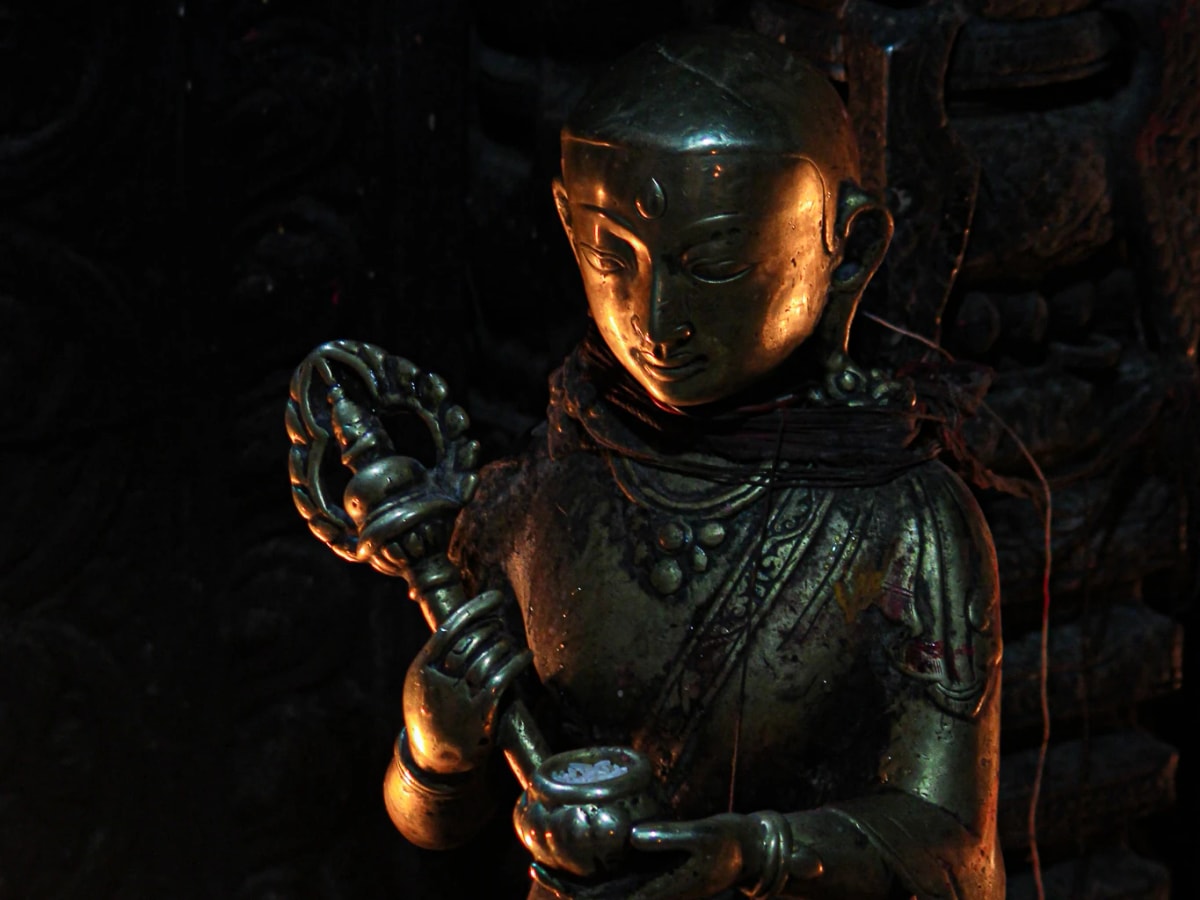
This is Hiranya Varna Mahavihar - Kwa Bahal to the Newars who built it and it isn't a monument at all, but a living Buddhist monastery.
The full name unfolds into three words. “Hiranya” means golden or precious. “Varna” means color and “Mahavihar” means great monastery. Put them together and Hiranya Varna Mahavihar is, quite literally, “The Great Monastery of Golden Color.” So where did “Golden Temple” come from? Largely from tourism - an easy shorthand for that gleaming translation. And here is the small, satisfying truth most visitors miss: the building is not solid gold at all. It is polished gilt copper, beaten and burnished until it throws back the sun like bullion.
The Legend of Golden Temple
Every great monument has an origin story, and the golden temple begins, fittingly, with a dream.
One night, the chronicles say, King Bhaskara Deva woke from a dream of the impossible: a golden mouse chasing a cat. The next morning, on the very spot, he saw it happen in broad daylight - a small golden creature driving its natural predator before it, prey hunting hunter, the whole order of the world turned cleanly on its head. The king read the omen for exactly what it was: a sign of a power that overturns ordinary fear. On that ground, he resolved, he would enshrine an image of Shakyamuni Buddha, the sage of the Shakyas himself.
Tradition and scholarship alike - including the work of the Nepal scholar Michael Hutt - place the founding in the mid-eleventh century, under King Bhaskara Deva, around 1045 to 1048 CE; the monastery's formal name still carries his own: Bhaskaradeva Samskarita Hiranyavarna Mahavihara. The gleaming three-tiered pagoda you walk into today is largely a later rebuilding from about 1409. But at the courtyard's heart sits a small gilded chaitya, identified with Swayambhu and believed older than everything around it - the still point the whole monastery turns on, and proof, the faithful will tell you, that this ground was sacred long before there was a temple to mark it.
Local memory reaches back to a time before the city, before even dry land - to when the Kathmandu Valley was a great lake, and the bodhisattva Manjushri drained it with one stroke of his sword. Among the first sacred spots to surface from the receding water, the elders say, were Swayambhu and this very ground. To this day a small chaitya in the center of the courtyard, identified with Swayambhu and believed older than the temple around it, anchors the whole monastery.
The Monasterial Architecture
The Hiranya Varna Mahavihar is divided into three structural layers: the entrance courtyard, the middle sanctum and the inner courtyard.
The Entrance Courtyard:
Two stone lion couples flank the main gates. Step between them and you see a second gate built of wood, laid with brass, and set with a pair of eyes. These belong to Bhairab, the fierce Hindu-Buddhist deity who guards the monastery against ill omens. Above him sits the Dharmadhatu mandala, carved in black stone: a symbol of emptiness and the awakened mind, and some of the finest old craftsmanship in Patan.
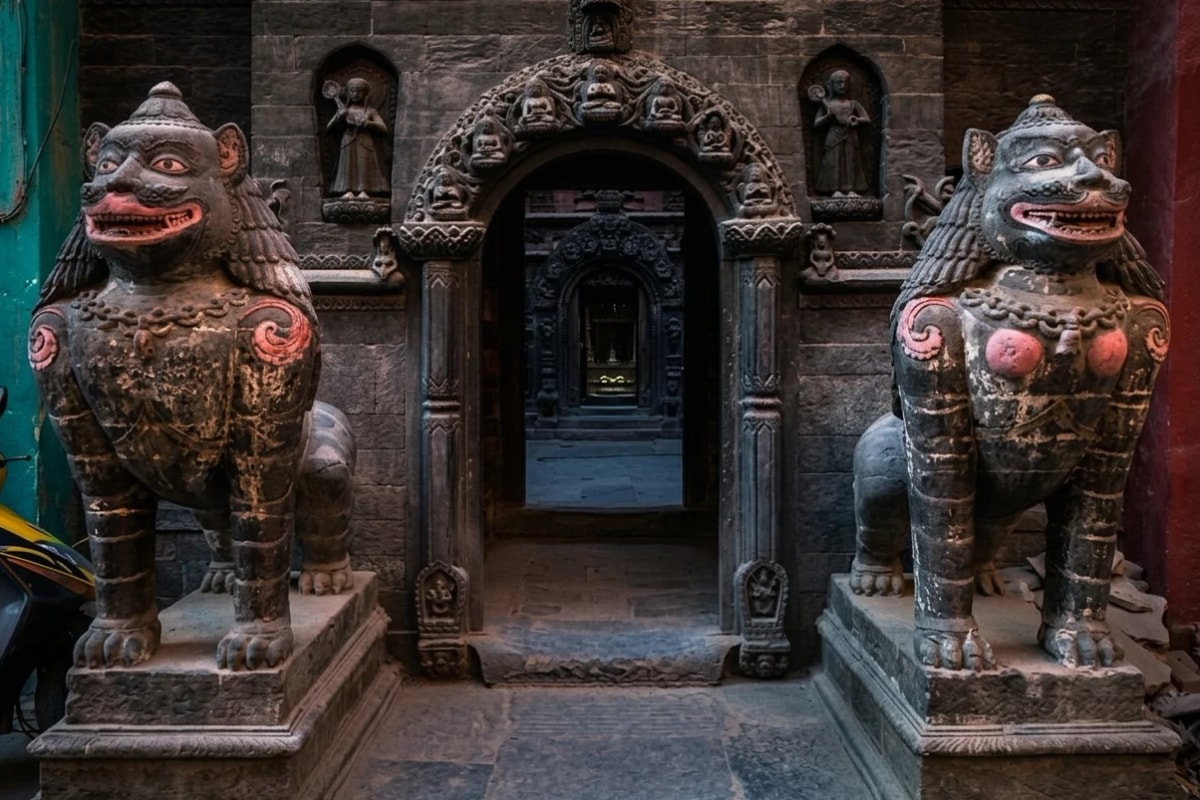
Straight ahead, the gate into the middle sanctum, is detailed with stone work of deities - a level of carving you'll rarely see anywhere else. Look up to the wooden struts bearing the roof's weight carved with bodhisattvas, the enlightened beings who help humans reach buddhahood.
The Middle Sanctum:
Small, but dense with meaning. On the left live the temple's caretaker priests; on the right stands the shrine of Mahakal, the protector deity who shares the work of guarding the monastery. Pass through the final golden gate, and the inner courtyard opens up.
The Inner Courtyard: The Golden Pagoda Revealed
Here is the temple that gives the place its name: a three-storey pagoda crowned with a gilded roof that throws golden light across the whole sanctum. It's gateway is flanked by two guardians seated on elephants, which themselves stand on tortoises. Down the steps, a Vajradhatu mandala is enshrined - the "Diamond World" diagram of Vajrayana Buddhism, mapping the cosmos around its five wisdom Buddhas. Walk the small gilded shrine clockwise, the way devotees do as the direction is part of the prayer and respect.
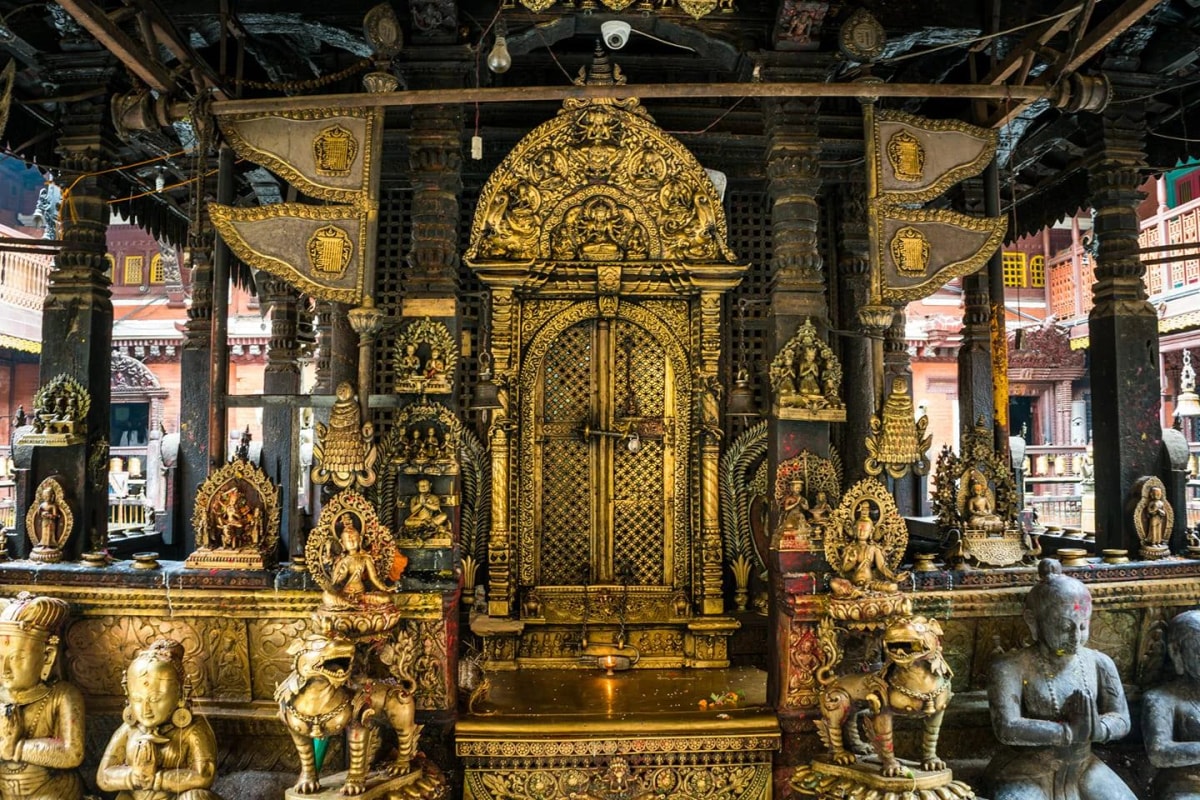
The Main Shrine: Kwapa-Dya and Prajnaparamita
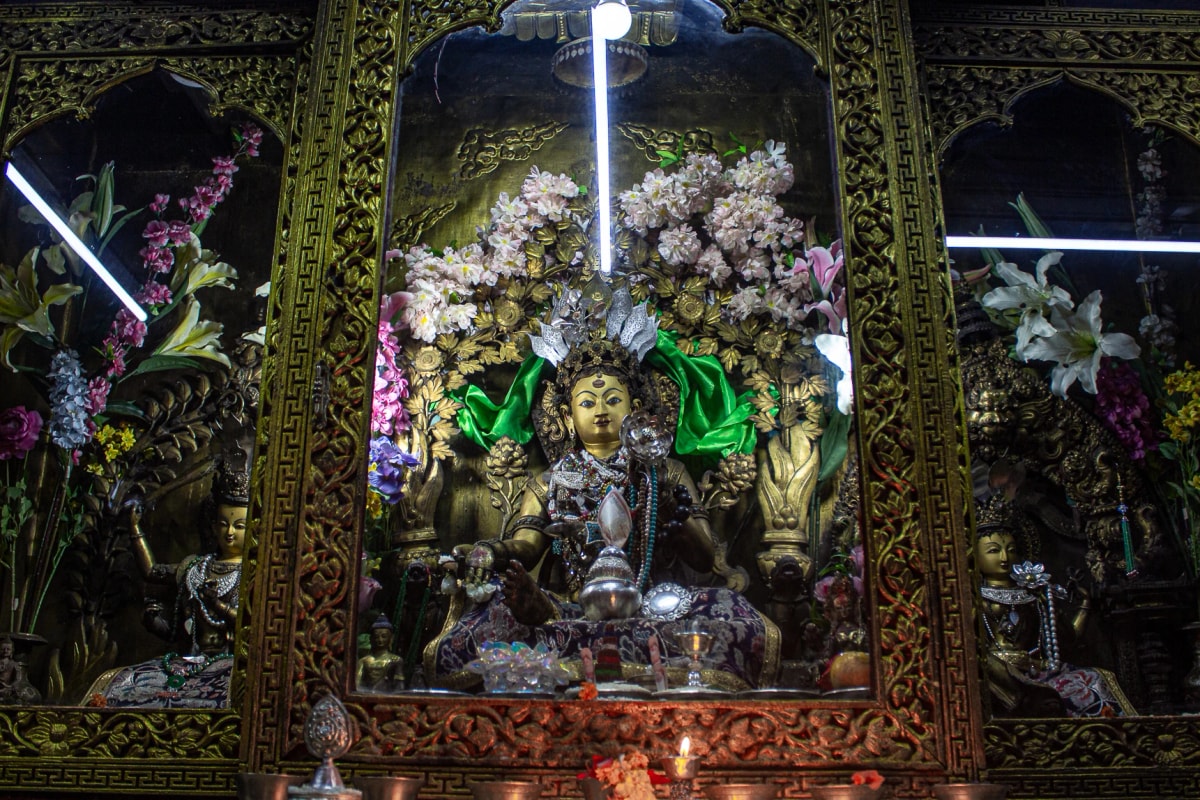
At the main shrine you see Kwapa-Dya - also called Kwapa-Aju - guardian of the sangha, the Buddhist community itself. He is Shakyamuni Buddha, the historical Buddha, a large silver image so completely draped in cloth and ornament that only the serene face shows.
Kwa Bahal is one of only four sites in Nepal - and the only one in Patan to hold a Prajnaparamita, the "Perfection of Transcendent Wisdom." It is venerated in two forms at once: as a goddess, the Great Mother of Mahayana Buddhism, and as a sacred text - an illuminated manuscript roughly eight centuries old, still read aloud on request for ceremonial family duties and re-inscribed in gold every three years.
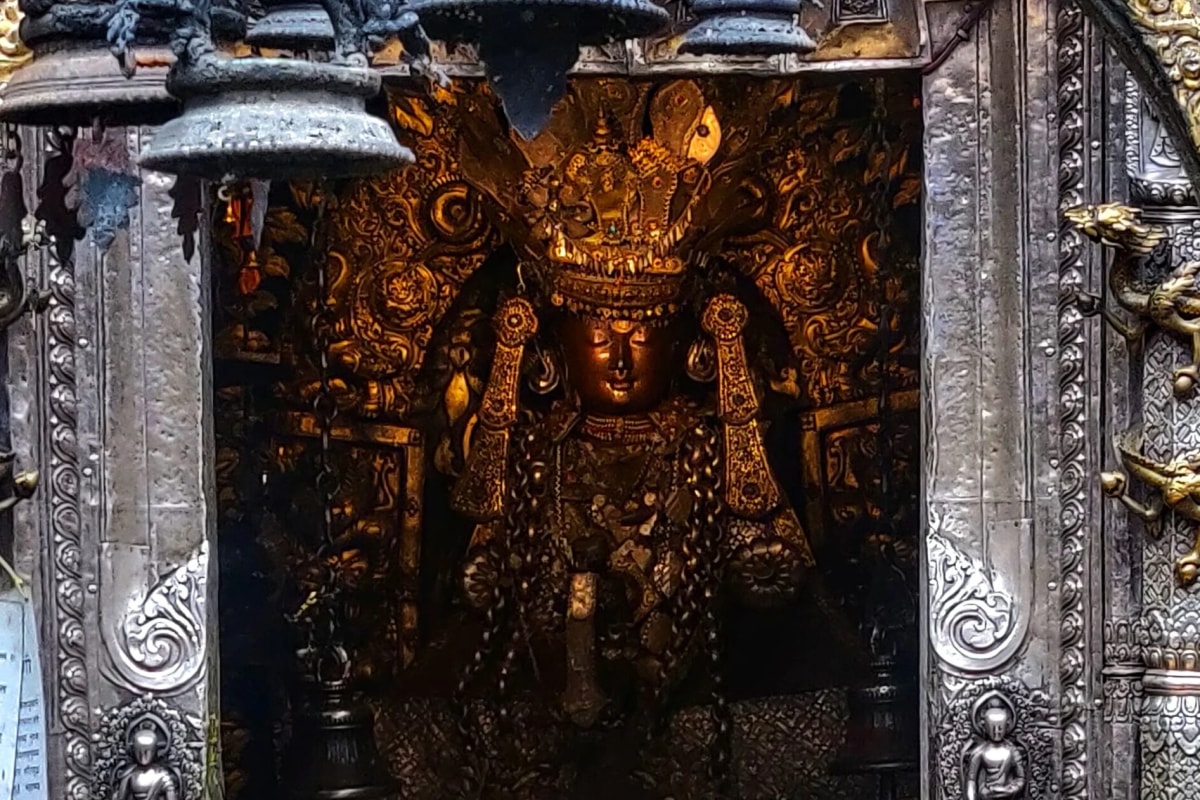
Around the Courtyard: Vajrasattva, Green Tara, and the Prayer Wheels
To the left stands the temple of Vajrasattva, revered as the "guru," or teacher, for priests trained in tantric Buddhist ritual. Like Kwapa-Aju, he is draped in silver with a face painted in gold. Move around the courtyard and you'll pass prayer wheels inscribed with the mantra Om Mani Padme Hum - the sound of compassion and enlightenment - and a shrine to Green Tara, goddess of compassion, whose name locals chant for peace and prosperity.
Climbing Higher: Amoghapasa and a Hidden Tantric Chamber
Climb the steep inner stairs and you reach a quiet prayer hall dedicated to Amoghapasa Lokeshvara - guardian of the world, charged with teaching and carrying karuna, compassion. The Dalai Lama is revered as one of his incarnations. Higher and more hidden still, above the public shrine, lies a secret chamber for the tantric deity Chakrasamvara and his consort Vajravarahi - a room only the monastery's most senior initiates may ever enter.
A Relic Sought by Pilgrims: The Buddha's Tooth
By the monastery's own tradition, the upper sanctum shelters a relic of the Buddha - a sacred tooth, local accounts say, gifted to Kwa Bahal from Sri Lanka, the island that has guarded the Buddha's tooth for over a thousand years. To stand near a relic of the Buddha is, for many travelers, a once-in-a-lifetime moment and here it is held to be real. As with everything in this inner world, approach only with permission, and tread softly.
The three layer architecture might feel like a fort for most travelers as this was necessary to the monasteries precious form intruder hence for local “Kwa bahal” is also “Kwatha Bahal” - the “Fort monastery”
More Than a Monument: A Living Heritage
It is a living heritage, and in a thousand years it has never once closed. It is sustained by its sangha - a hereditary community of Shakya and Vajracharya families, said to number around five thousand, who take monthly turns caring for the shrine. Each month a Deopala (caretaker) takes charge of the rites.
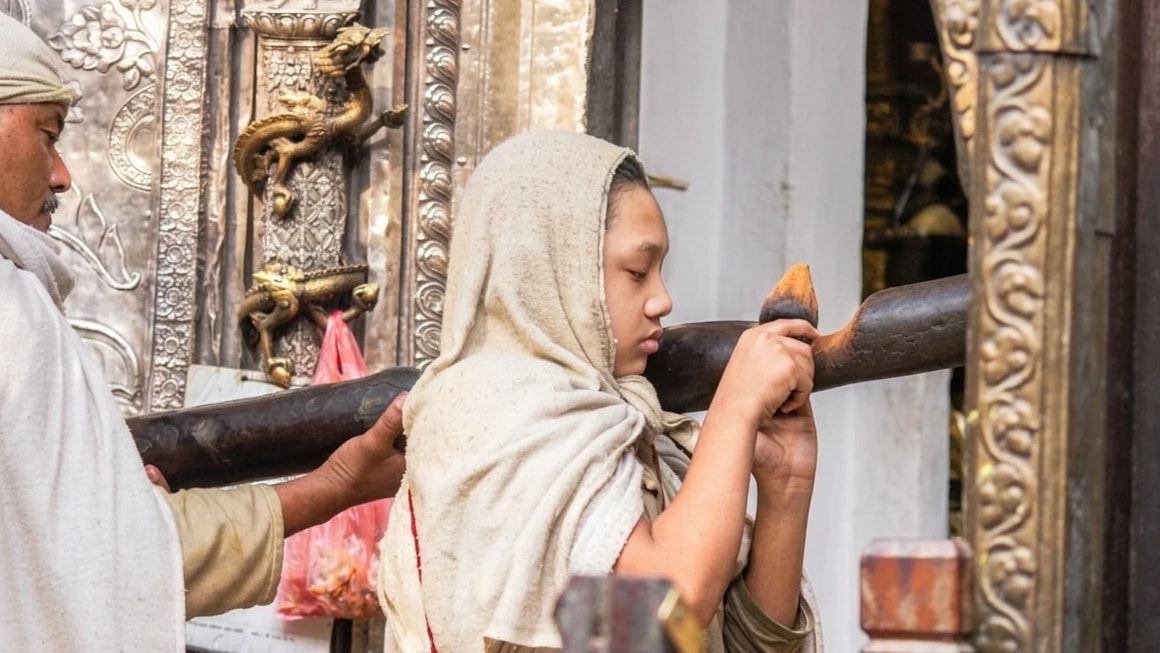
The chief priest of the Golden Temple, the Bapacha, is always a boy under the age of twelve.
Why a child priest?
Local legend reaches back to a war between two great kingdoms, the Kirants and the Lichhavis, when the streets grew too dangerous for anyone to reach the temple and the Buddha went unwashed. A devout family sent their small son in their place, reasoning that no soldier would raise a hand against a child. The boy slipped past the fighting, set his water pot down at the shrine, and called out to the Buddha to wash himself in the child’s mind, everyone surely did. Nothing happened. He called again, and again, and at last began to cry. Moved by the boy’s innocence, the story goes, the Buddha performed his own ablutions. And so, the tradition of the boy-priest was born.
The daily ritual rituals
At four in the morning, the child priest known as Bapacha bathes the Buddha. He washes and tends the deity through the full morning rite, and the water that runs from the god is never thrown away. To the devotees gathered in the dark it is holy and is shared out among them received as a blessing. Through the whole rite they sing and chant without pause and many this dawn vigil is no special occasion but the rhythm of a lifetime - devotion measured not in mornings but in years.
At around 5pm in the evening, the Buddha is put to sleep. The Bapacha dresses the god in his night clothes and performs the final Aarati - an offering of fire, the last devotion of the day before the shrine's great doors close,
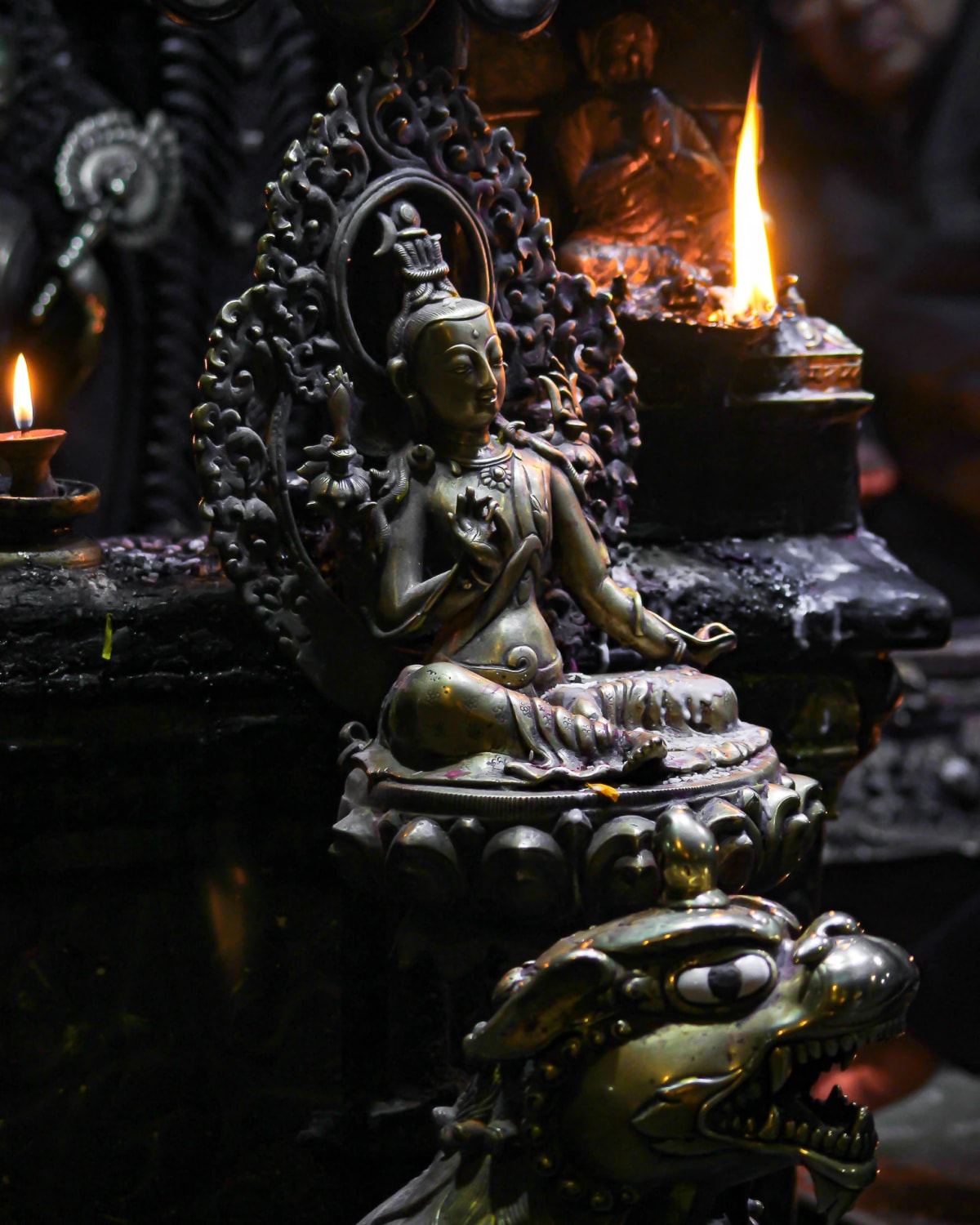
Should you find yourself inside during these moments, the rule is absolute: stand still, stay silent, touch nothing in order to maintain purity while conducting the rituals.
Twice daily following the ritual the Bapacha walks a slow circuit of the neighborhood ringing a bell and otherwise holding complete silence. And here is the turn that stops most travelers cold: the Bapacha is a child. A pre-teen, entrusted as the monastery's high priest. It sounds backward until you hear the reasoning, which is pure Newar Buddhist logic. A child is held to be the purest devotee of all, able to keep the five precepts of Buddhism without a single lapse, and so the only fitting hands to attend the Buddha.
Kwa Bahal is also a working station on the Tibetan Buddhist pilgrimage routes crossing the valley - one knot in a web of devotion that stretches to Tibet, to India, and beyond.
What the Golden Temple Means to Patan
For the people of Patan, the Golden Temple is not a sight to be seen but an inheritance to be kept. It is woven into the ordinary texture of life: a place to pause on the way home, to light a lamp, to have the Prajnaparamita recited in a family and religious occasions. Each generation is asked to be both guardian and student at once. The monastery is a treasure that is revered by all generations who pass by.
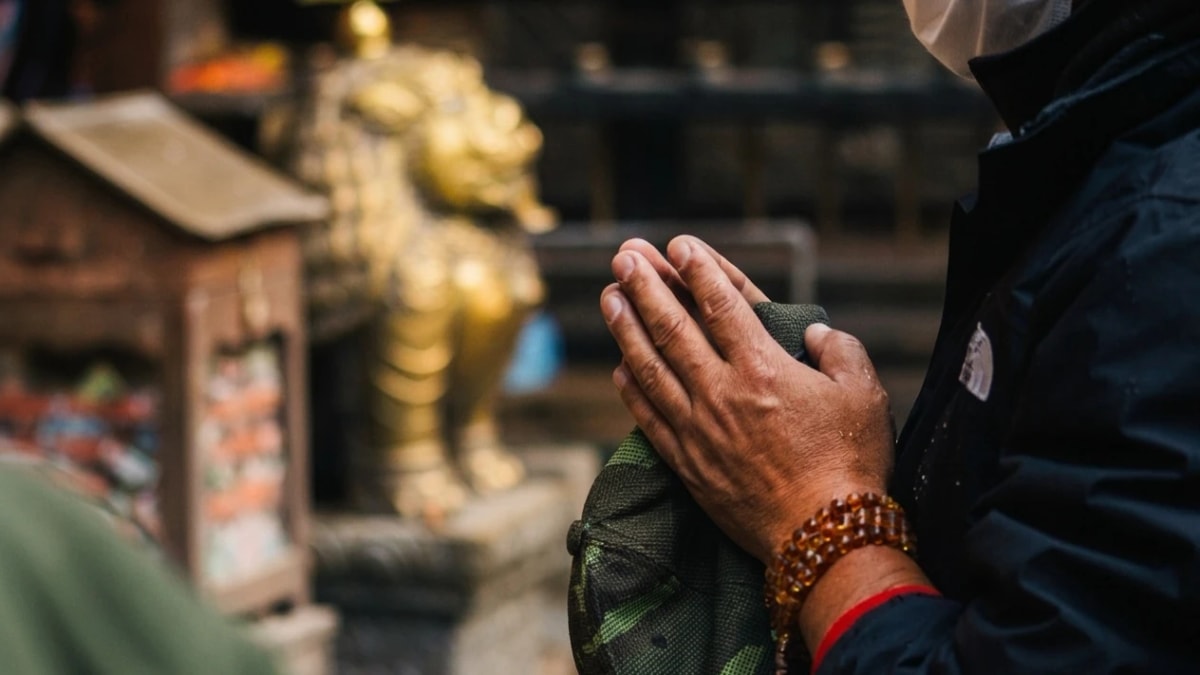
In conversation with Basanta Raj Shakya — an active sangha member of the Golden Temple who has served as a priest in the temple quarter both as a child and as an adult — we asked what this monastery truly means.
"To me, Kwabahal is a living sanctuary where our history breathes and our traditions thrive. When we walk through its gates each morning with our prayers, we find a rare medicine for both mind and body. It is the sacred thread that weaves our community together, anchoring everything from the Chariot Festival of Karunamaya to Samyak Dan. But we must look forward. I envision a future where Kwabahal rises as a vibrant academy for traditional art and Buddhist philosophy, a sanctuary for meditation and healing, and the ultimate gateway for the world to experience the true soul of our city."
Similar to Basanta’s opinion on the role of Kwa Bahal in the daily life of locals in Patan . Kwa Bahal means more than just a religious entity it is a symbol of Patan’s history, culture and more over the heart of the city which one must experience .