Pimbahal Pond, Patan: History, Mystery & Enchantment
Pimbahal is Patan's foundationless pond — dug, legend says, by demons in one night and held together by a tantric sage's will. History, myth, and what to expect on a visit.

Sarvagya Shakya
Author
Sarvagya Shakya writes for Hidden Hymn — long-form stories from the world's quietest corners.
July 18, 2026 · 9 min read
Pimbahal: A Pond at the Heart of a Living City
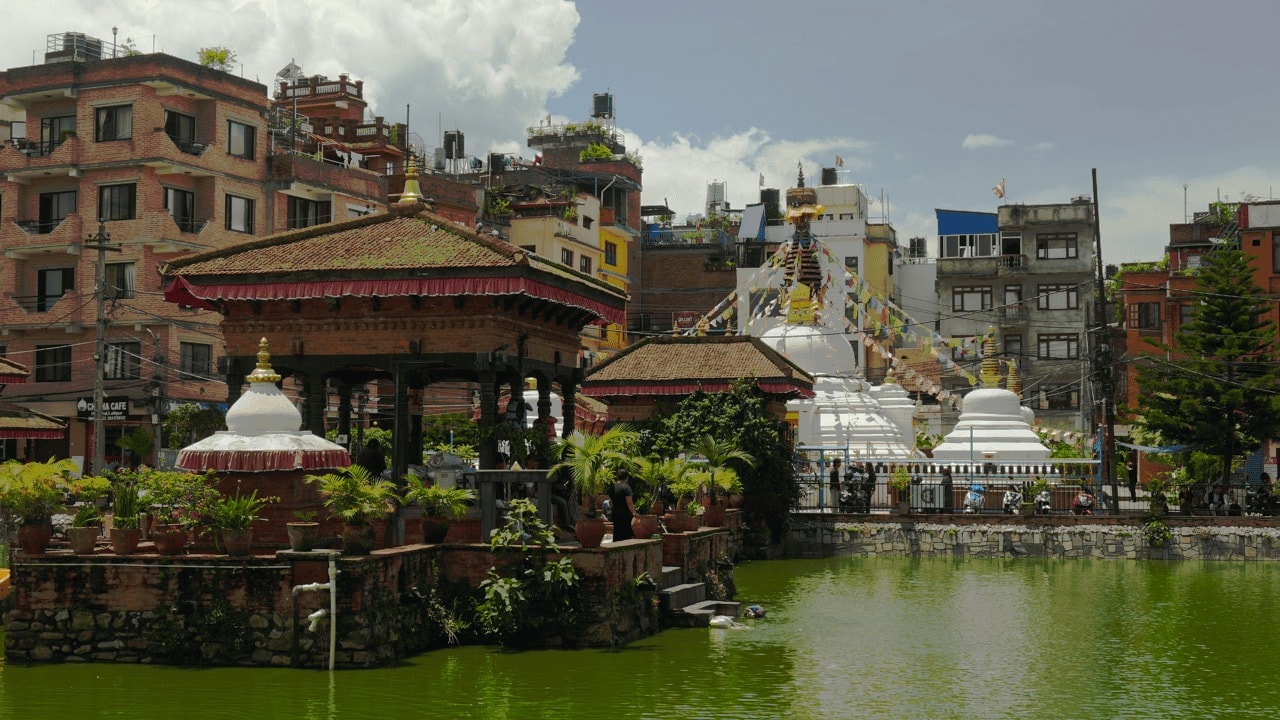
In the heart of Patan lies Pimbahal, one of Lalitpur's oldest and most sacred ponds - its most enduring myth, and one of its most beloved places to simply sit. Walk far enough into the brick maze of old Patan, the buildings step back, and there it is - a broad sheet of still water in the middle of a city that has almost no room to spare for it. A whitewashed stupa watches from one bank. Seagulls wheel and settle on the surface. Steps lead down to the water's edge, where elders enjoy cups of tea, students slouch with their phones, and the temples ringing the pond lay their reflections across it.
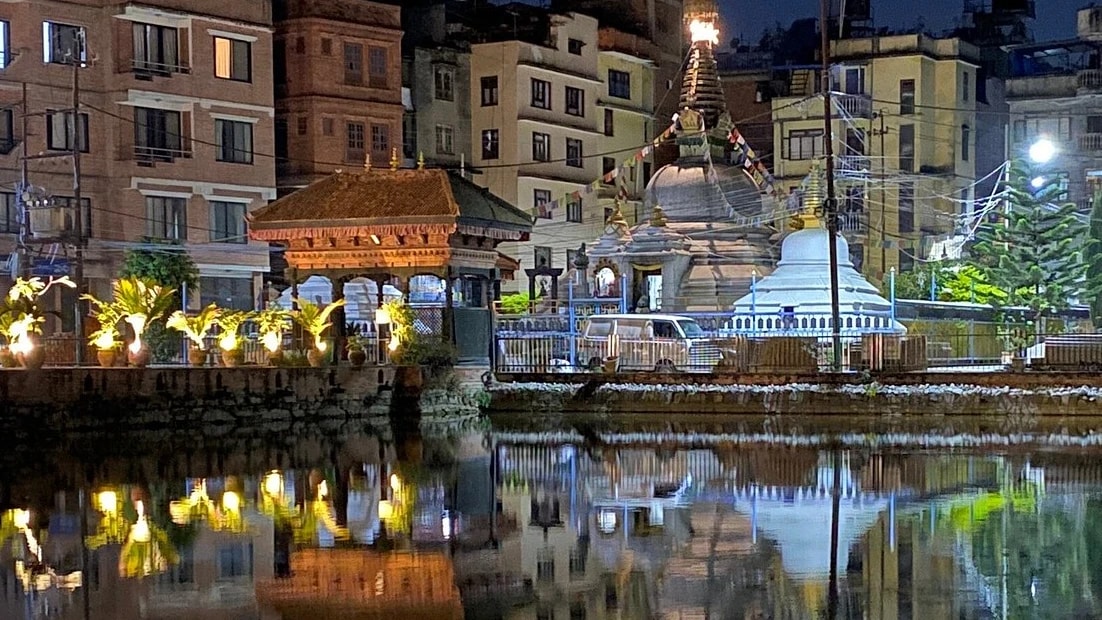
Most travelers come to Patan for the carved splendor of Patan Durbar Square, and they should. But this quiet pond in the residential heart of the city is, in its own way, just as remarkable - and far less understood. Because Pimbahal is not just a pond, it's a hundreds of year old argument that some things survive not because they are well built, but because a community refuses to let them go. It was conjured (the city insists) by demons, nearly paved over by a government, choked half to death by neglect, and pulled back to life by the people who live around it. Here is its story:
Why Did Patan Build Its Own Water Supply?
The world's great civilizations rose along rivers - the Nile, the Indus, the Yellow River - and the Kathmandu Valley follows the same ancient pattern, cradled between the sacred Bagmati and Bishnumati river. But the dense old heart of the city - Patan, sat a fair walk from either riverbank, and hauling water that far, every day, for a growing population, simply wasn't practical.
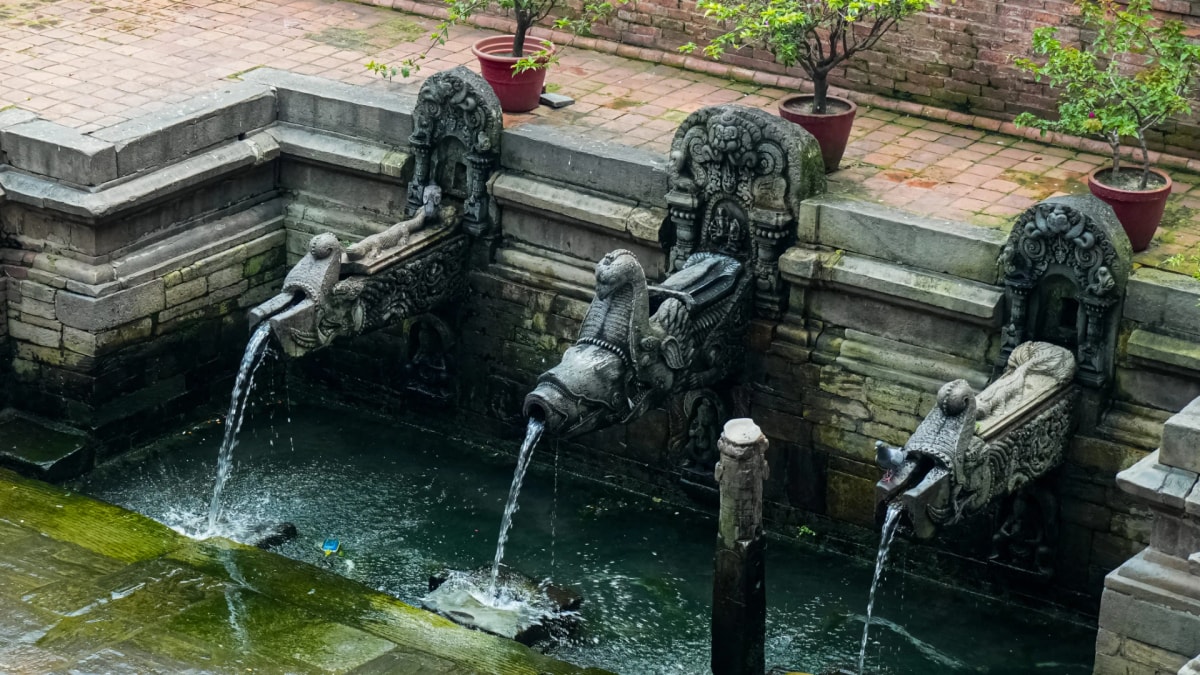
So the city's priests and engineers turned the constraint into invention. They wove an entire hidden waterworks into the urban fabric - underground channels feeding carved stone spouts (dhunge dhara, or hiti ) and a network of ponds and reservoirs, many of which still function today. It is one of the most sophisticated pre-modern water systems anywhere, and it ran for centuries without a single pump.
Pimbahal was part of that system - but it was never only that. From the moment of its creation it belonged less to the history of plumbing than to the mythology of the city itself.
Legends And Myths
Long before the tea shops and the whitewash, Pimbahal was open ground and after dark it belonged to the Lakhes, the flesh-hungry demons of Newar folklore. Night after night they came, breaking into homes and terrifying the children, until even the king's soldiers gave up and the people simply lay awake and endured.
Then Gayah Bajya had enough. A real fourteenth-century tantric master, from a family of royal priests, he lived right here - and where everyone else saw unbeatable monsters, he saw raw energy to be caught and turned. He summoned the Lakhes, bound them to his will, and set them digging: as long as bare ground remained, he reasoned, the demons would keep returning to it, so he ordered them to dig it away. In a single furious night, they did. By dawn, where there had been flat land, there was a lake. (A gentler telling survives too, in which the digger is a lovesick Lakhe who builds the pond overnight so his wife need never walk far for water again.)
But the demons, working in one frantic night with no plan, never gave the pond a foundation - and that flaw became its name. Locals call it Jagamadu Pukhu: Jaga means "foundation"; madu means "without" & pukhu means "pond." The pond with no foundation - held together, they will tell you, not by stone or mortar but by the will of the sage who conjured it. That it has carried Patan through drought, conquest, and earthquake ever since is taken here as proof of something no survey could measure.
Is the Legend Real? What They Found Beneath the Sage's House
For travelers who approach Nepal's sacred sites with equal parts reverence and scepticism, Pimbahal offers something rare: a myth that history has partly caught up with.
Gayah Bajya was not a character dreamed up to explain an oddly shaped pond. He was a documented historical figure - a revered tantric priest whose family served the crown, and to whom the whole surrounding neighbourhood once belonged. His house still stands just north of the pond. And in the 1950s, when that house was excavated, the diggers found something unexpected: a concealed underground passage, carefully built, descending beneath the building into what looked like a private meditation chamber. The tunnel kept going down until the team hit the water table, at which point they could go no further.
It's worth being precise here - this is a local-history record rather than a peer-reviewed dig - but the find is genuinely striking. A hidden subterranean chamber directly beneath the home of the very sage credited with conjuring the pond, reachable only by a secret passage, fits exactly what historians know of advanced tantric practice in the valley: such spaces were used for esoteric teaching, high ritual, and the kind of sustained, solitary spiritual work the legend pins on Gayah Bajya. The myth doesn't dissolve under examination. It deepens.
What to See at Pimbahal: The Ancient Stupa and Chandeshwari Temple
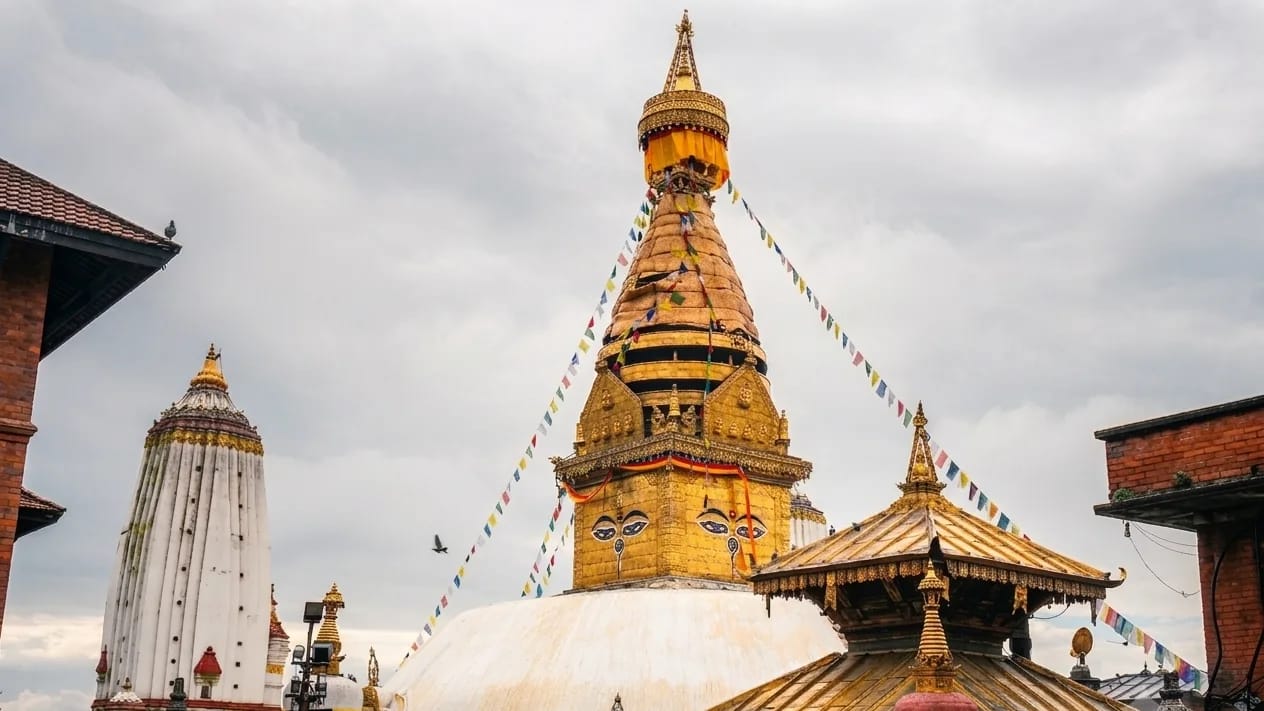
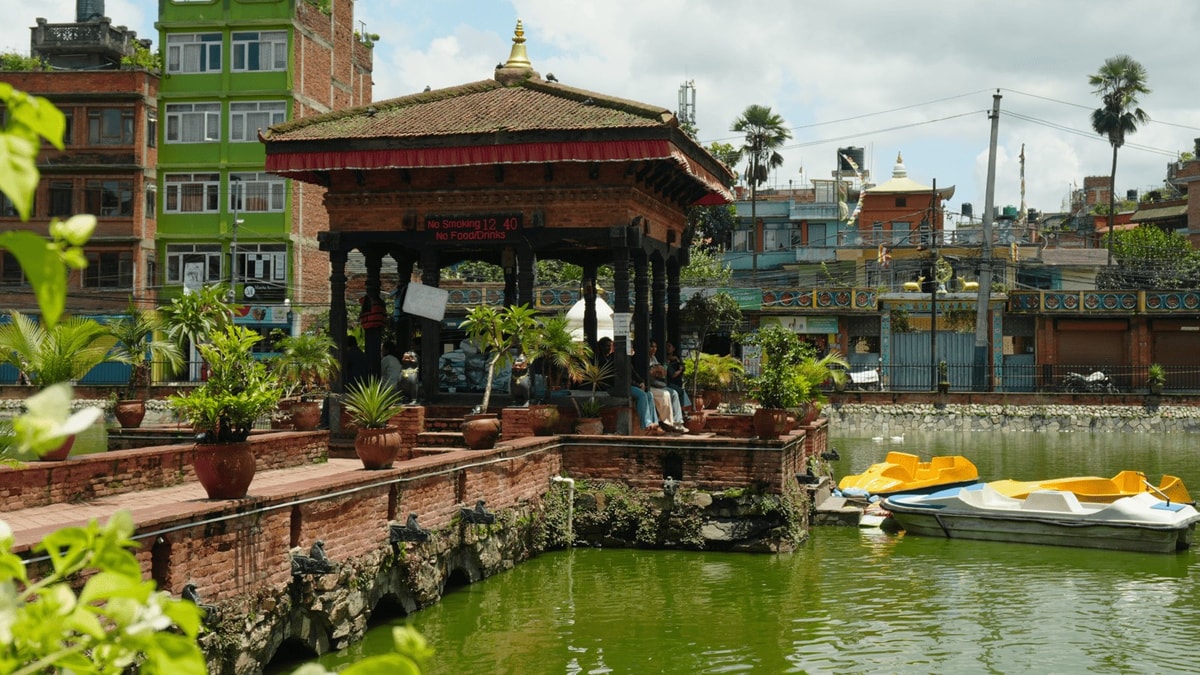
Pimbahal is one of those Patan sites that quietly hides several treasures in plain view. On the bank stands an ancient stupa - weathered, whitewashed, and far older than the pond beside it. Its date is genuinely uncertain; some hold it to be one of the Ashokan stupas said to mark Patan's sacred geography, which would make it roughly two thousand years old. What's better documented is its scar: it was damaged in the devastating raid of the Bengal sultan Shamsuddin Ilyas Shah around 1349, one of the worst blows the medieval valley ever suffered. It has been rebuilt and re-whitened many times since, and remains a quiet stop for Buddhist pilgrims.

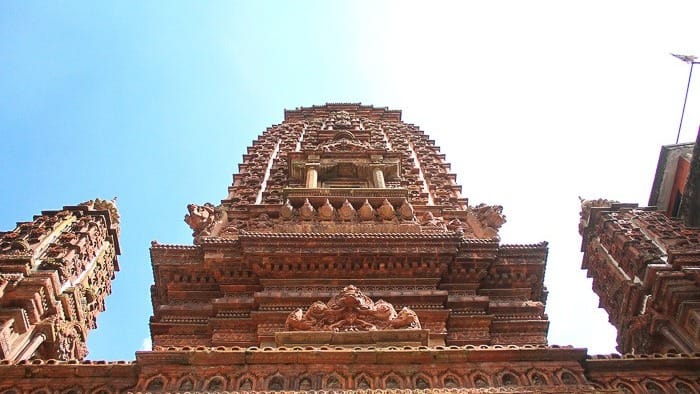
On the northern side rises the three-storeyed pagoda of the Chandeshwari Temple, built in 1663 - and it carries its own demon story. The goddess Chandeshwari, the tale runs, was the one who finally destroyed a marauding demon named Chanda, who had won from Shiva a boon making him untouchable by gods and men alike. A second tantric victory, a second monster put down: this whole corner of Patan is, in a sense, a memorial to spiritual power over chaos. There's even a small shrine set out in the pond itself.
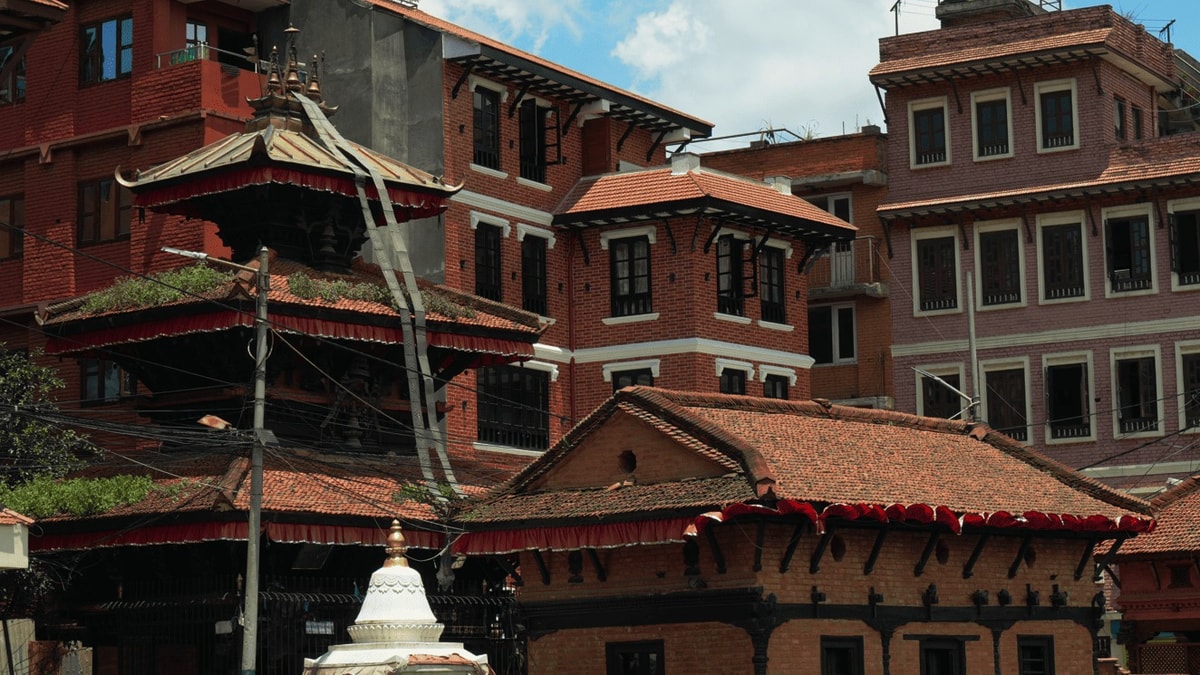
And underneath the mythology, the pond kept doing its plain, vital job. For centuries Pimbahal pond supplied water for households and rituals, recharged the groundwater that fed the city's spouts, and practically enough served as a reservoir for fighting fires. To the people of Patan it was never a monument to admire from a distance. It was infrastructure they lived on, and a living room they gathered in.
The Pond That Nearly Died - and Came Back
The great earthquake of 1934 destroyed the pond; when it was rebuilt, the restoration was reportedly guided in part by an old painting of the site made by the Victorian-era British artist Henry Ambrose Oldfield - the pond, like the Mahabuddha temple across town, remade from a picture rather than a plan. Then, in 1967, the government tried to drain Pimbahal pond and build a market on top of it. The neighbourhood refused, organised, and pushed back until the plan was dropped - one of the earliest victories in what would become a long fight for the pond's life.
It nearly slipped away anyway. By 2014 the pond had fallen into a wretched state: the water so low that bushes grew in the bed, household rubbish and drainage emptying into it, mosquitoes breeding in the muck. The 2015 earthquake did further damage. And then the community simply decided it would not let the pond die. A residents' committee, worked with the city and with international support, restored the pond to its old form by 2017 and added rainwater harvesting and new stone paving soon after.
Today Pimbahal is alive again - busier, frankly, than it has been in living memory. Tea shops and snack stalls ring the pond, joined now by cafés and the occasional boat for hire. In the evenings the pond throws back the lights of the surrounding streets. It's a working, gathering, sometimes bustling public square with water at its centre. But here is the trust that should earn you: what you are looking at is not just a heritage replica laid on for visitors. It is a pond, a whole community fought, to keep - and chose, again and again, to save.
What Locals Say About Pimbahal
The true character of Pimbahal reveals itself not just through history books or travel guides, but also through the people who come over here day after day. For the residents of Patan, Pimbahal is not just a heritage site to be appreciated from a distance. It is a living part of daily life - a place that holds the emotional geography of the city together.
" For me, Pimbahal has become a place where I can rest and recollect myself. After a busy day at university, I sit down with a cup of tea, watch the seagulls gliding across the pond, and experience the energy of the temples surrounding this sacred space. It’s where I reconnect with something deeper than my daily concerns."
- Biplov Aryal, Patan resident
What Biplov describes is exactly what makes Pimbahal valuable for travelers too. This is not just a monument to be photographed and moved on from. It is a space to join the rhythm of a city that has been finding reasons to gather beside for some good reason.
The seagulls he watches carry no mythological significance. The tea he drinks is ordinary tea. But together, against the backdrop of ancient temples and the faint sounds of the city beyond, they add up to the kind of experience that travelers remember long after they have forgotten the name of the restaurant they ate in or the guesthouse they stayed at.
Pimbahal is, in the truest sense, a living sacred site. History, spirituality, and contemporary life do not merely coexist here - they interweave, each thread giving meaning to the others. The pond that demons built in a single night has become something no demon could have intended: a refuge, a gathering place, and one of Patan's most quietly extraordinary destinations.