Matya Festival 2026: The Complete Guide to Patan's Festival of Light
Matya is Patan's festival of light - a barefoot, day-long pilgrimage of lamps, buffalo horns, and the nine-instrument Nau Baja, honouring the Buddha's victory over Mara and the recent dead.

Sarvagya Shakya
Author
Sarvagya Shakya writes for Hidden Hymn — long-form stories from the world's quietest corners.
July 19, 2026 · 10 min read
What Is Matya Festival ?
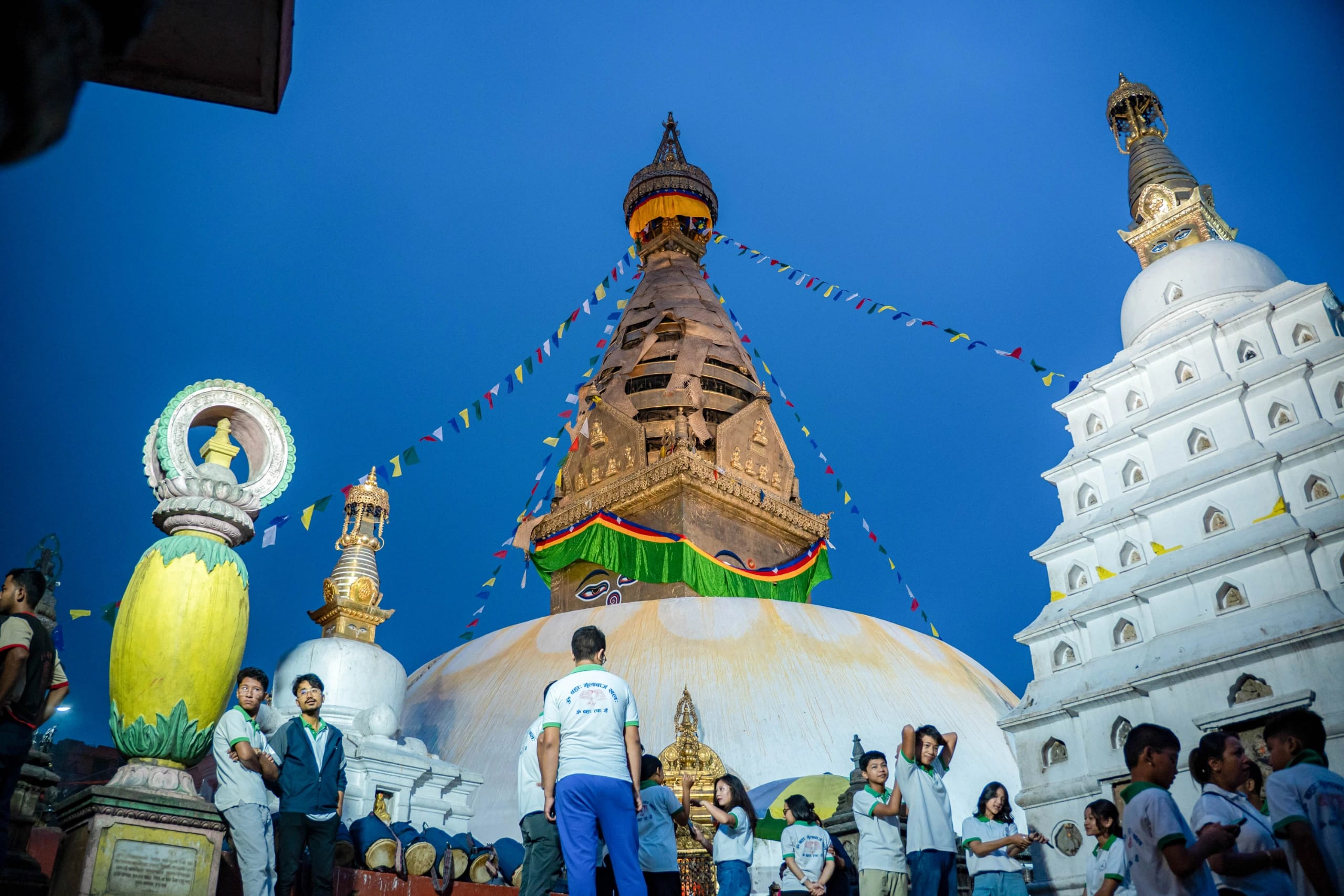
Matya - known in the indigenous Newari tongue as Mataya - is Patan's most luminous and least-seen act of devotion. The name tells you what it is: mata means light and ya, from yatra means a journey, so Matya is quite literally "the journey of light", a procession of devotees carrying lamps and candles through the city from dawn until late into the day.
Rooted in Newar Buddhism, the festival turns on a single, steadying conviction: that light - the light of an awakened mind, is the one thing that answers darkness, whether that darkness is temptation, ignorance, or grief. Once a year, the Buddhists of Patan carry that light by hand through the whole old city, honoring the night the Buddha overcame the demon Mara, and lighting the way for their own recently dead. It is, in essence, both a victory parade and a funeral procession - walked as one.
Festival at a Glance: Dates, Location & What to Expect in 2026
Detail | Information for Travelers |
|---|---|
Local Name | Matya / Mataya |
When to Go | 30 August 2026 - the day after Gai Jatra |
Where to Be | The old city of Patan (Lalitpur); the walk sets out from the year's host locality and circles the four cardinal Ashoka stupas |
The Vibe | A pre-dawn start and a day-long, barefoot pilgrimage of lamplight - solemn penance shot through with masked, satirical revelry |
Key Highlight | The keening buffalo horns (Neku), the lamp - lit file past 1,000+ shrines, the masked "Maras", and the four Ashoka stupas |
History of Matya Festival
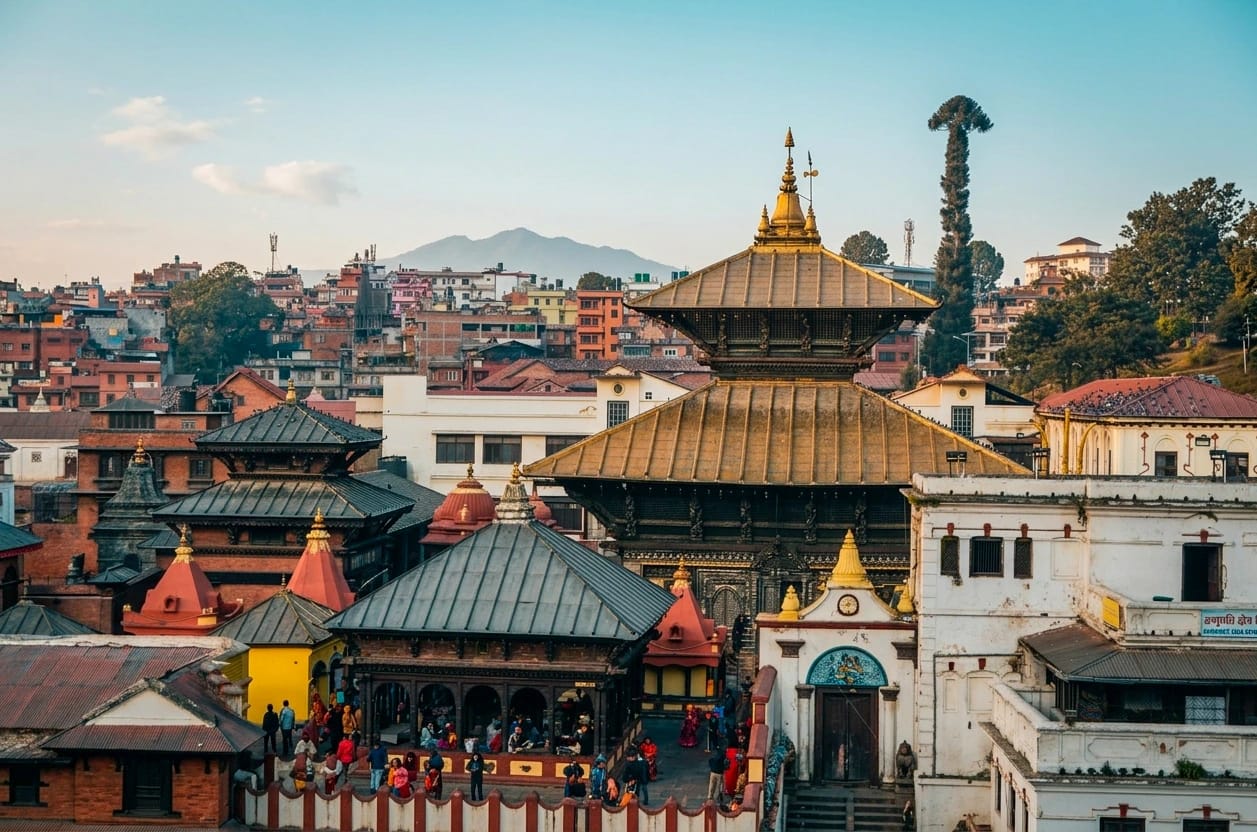
The festival's roots run improbably deep. Tradition recorded in the Wright Chronicle, the 1877 English rendering of the old Newar and Nepali chronicles - credits its founding to the Lichhavi king Gunakamadeva, the same ruler remembered for founding Kathmandu itself, who is said to have handed the duty of staging it Tangeli, just south of the Durbar Square . Later in the time of Siddhi Narsingh Malla the responsibility was restored and 10 communities were given the duty of continuing the tradition . By some reckonings the tradition is around fourteen centuries old; whatever its exact age, this procession has been walked, in essentially the form you'll see.
But the reason for all those lamps lies in an older story - the great turning point of the Buddhist tradition.
Siddhartha Gautama sits beneath the Bodhi tree at Bodh Gaya, vowing not to rise until he has seen the truth. Mara - the lord of temptation, the nearest thing Buddhism has to a devil - cannot afford to lose a soul from his kingdom of craving, and so he throws everything he has at the meditating prince. First the armies: a howling host of demons, a storm of arrows and fire. But Siddhartha's punya, the vast reservoir of merit gathered over lifetimes of compassion, closes around him like armor, and every weapon that touches it falls away harmless. Then Mara sends his daughters, beautiful beyond bearing, to seduce him from his purpose. They fail too. And as the last of the night burns away, Siddhartha opens his eyes as the Buddha - the Awakened One - and beings from every corner of existence come before him bearing lamps.
That is what Patan re-enacts each August: the night the darkness threw everything it had at a single point of light, and lost. Matya is that first procession of lamps, walked again through a living city.
How to Experience Matya in Patan ?
To understand Matya, you have to give it the one thing modern travel rarely allows: the whole day, and the hour before it.
Long before the monsoon sun finds the pinnacles of Patan's Durbar Square, the old city is already awake. In one neighbourhood, chosen from the ten localities whose turn to host comes round only about once a decade - lamps are being lit and trimmed, horns tested, bare feet gathering on cold brick. Weeks of quiet preparation lie behind this moment: a small band has already walked the route by night, marking each shrine with vermilion and rice so that, when morning comes, nothing is missed. This process in the Newar tongue is known as “Baagi Wanegu”.
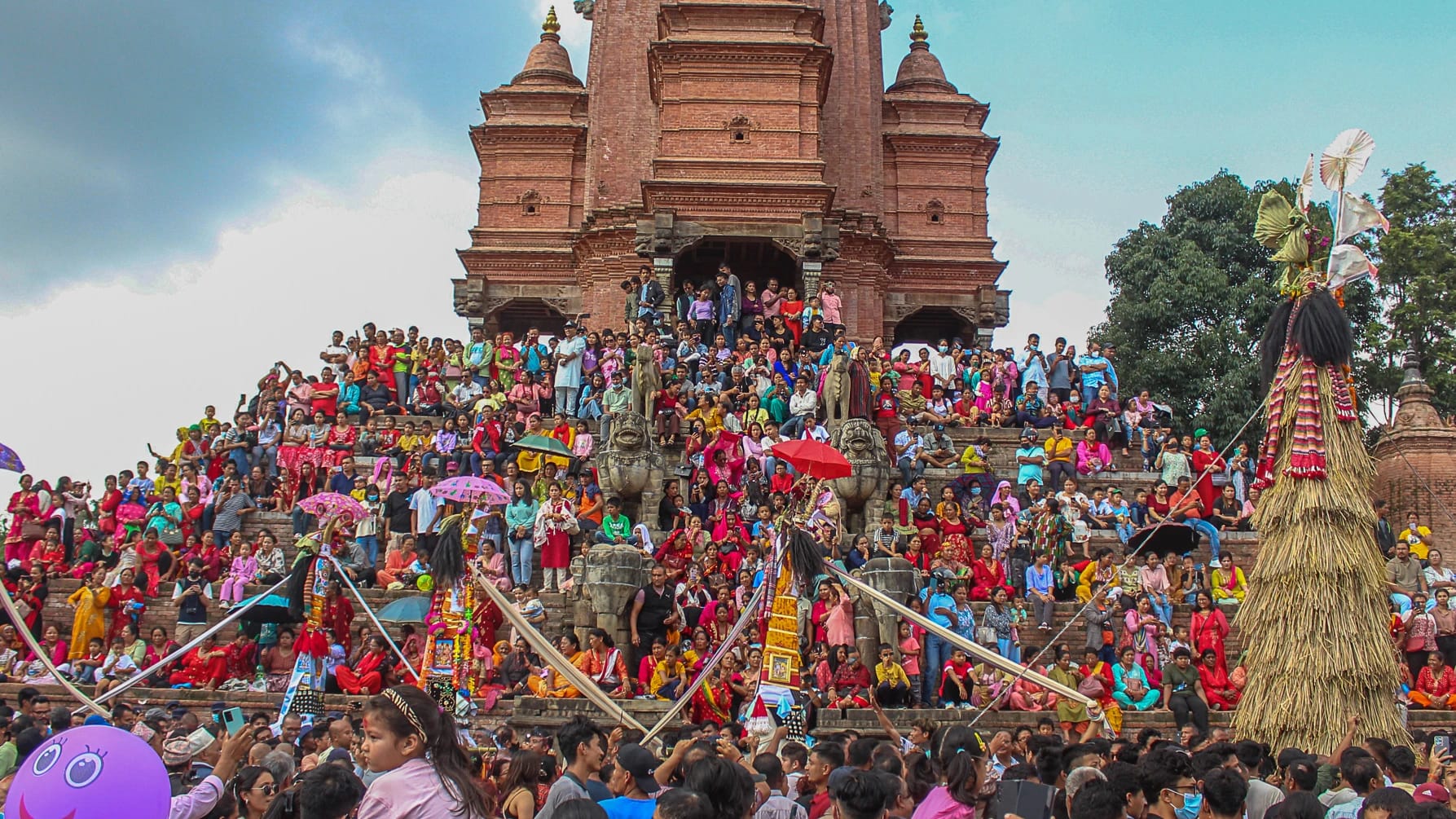
Then the first light comes, and finds the walkers already moving. The file sets out and simply keeps going - threading the tightest lanes of the old city, barefoot and fasting for many, and stopping at an astonishing number of sacred points: shrines, chaityas, monasteries, stupas. Most accounts put the count well over a thousand; some processions are said to pass as many as two thousand. It will not end until the day does, some thirteen hours later - a slow river of small fires winding through the oldest heart of Patan, exactly as it has for centuries.
And the whole vast circuit is anchored by four great shrines: the four cardinal Ashoka stupas at the corners of the city - Lagankhel, Pulchowk, I-bahi, and Imadol - grassy mounds traditionally attributed to the Indian emperor Ashoka in the third century BCE and believed to hold relics of the Buddha. Devotees circle each one. And here the city does something quietly profound: by binding these four far-flung points into a single walked line, Matya draws an enormous wheel of light across the entire town, gathering every alley and courtyard inside one act of devotion. Nobody, and nowhere, is left outside the circle.
What Do The Pilgrims Carry ?
Watch the file go past and you'll notice each walker carries a few simple things:
The Light:
A butter or oil lamp - the beating heart of the whole festival. Of the many offerings pressed onto the city's shrines today, this is the one that matters most, because it stands for the light of the Buddha's own awakening. To carry it is to carry the meaning of the day in your hands.
The Horn:
The Neku, a buffalo horn sounded in every lane, courtyard, and corner. Its deep, keening call is the unmistakable voice of Matya - and, as we'll see, it carries a strange and beautiful power over the dead.
The Offerings:
Rice, grains, flowers, vermilion, sweets, incense, coins - laid at shrine after shrine, a thousand small acts of devotion strung along a single day.
The Bare Feet:
Many walk the entire route unshod and fasting; some wrap themselves in rough sackcloth and sink into full prostration before each shrine. This is grief and merit made physical - the body itself offered up, mile after mile, on behalf of the dead.
The Sound of Matya: The Horn, Its Legend, and the Nau Baja
If Mataya is the festival you see, Neku Jatra is the festival you hear - and here the music is not mere accompaniment to the walk. It is the devotion.
The Legend of the Horn: The Shringabheri Avadana
Patan tells a story called the Shringabheri Avadana, the tale of the horn - that reaches back into one of the Buddha's many past lives.
In that life, the Buddha was born as King Simhaketu, a man who loved to hunt and killed for sport, deaf to the pleas of his devout queen, Sulakshana, who begged him to spare the innocent animals. When he died, his own karma returned him to the world not as a king but as a buffalo - and that buffalo, in turn, was hunted down and killed, exactly as he had once hunted. His queen, meanwhile, had been reborn as a humble herder-girl, and the very buffalo she tended was, though she could scarcely believe it, her husband from a former life. After the animal's death, on the counsel of the bodhisattva Suparang, she gathered its remains, built a chaitya of sand around them, and circled the shrine again and again, blowing the dead buffalo's own horn. Her devotion was so complete, her merit so great, that the king rose from the chaitya restored to human form. The two were reunited.
So the Neku is no ordinary instrument. It is karma made audible - the king's cruelty returned to him as a hunted beast, and a love strong enough to call him back across death itself. Every horn blown on the day of Neku Jatra repeats that act of devotion, and its sound, the people of Patan believe, still reaches the dead.
The Nau Baja: Nine Sacred Instruments
The horn does not sound alone. It rides atop the Nau Baja literally, the "nine instruments" - an ensemble so demanding that its musicians train for close to two years to be ready for a single dawn. Its foundation is the Dha, the great double-headed drum whose bass is the heartbeat of the entire procession; around it gather the other eight, each carrying its own weight in the texture:
-
Dha — the large double-headed bass drum, the ensemble's heartbeat.
-
Dhime — the deep barrel drum, so iconic it is almost a synonym for Newar music.
-
Pachima — a wooden body drum.
-
Dhancha — a smaller relative of the Dha.
-
Dholak — the horizontal, two-headed drum.
-
Kokhing — a small, sharp, single-faced drum.
-
Nyakhing — a sharp double-headed drum.
-
Nagara — a bronze kettle-drum.
-
Kot — a distinctive layered drum that completes the nine.
Why Matya Is Unlike Any Other Festival of Light
The world has no shortage of festivals of light. Most of them switch the light on - strings of bulbs, banks of candles, fireworks unfurling overhead - and ask you to stand back and admire it. Matya does the opposite. It puts the light in your hands and asks you to walk, through the dark, for someone you have lost.
That is the paradigm shift waiting for the traveler here. This is not illumination as decoration; it is illumination as answer - a whole city's reply to the two oldest fears there are, the dark and the dead. Patan's answer, offered every August for fourteen hundred years, is disarmingly simple: you do not wait for the light to return. You pick it up, and you carry it, and you carry one for them.
So if you find yourself in Patan in late August, rise before dawn, find the lanes already filled with lamplight, and let the deep call of the horns settle into your own chest. Watch the bare feet, the flames, the masked demons dancing beside the grieving - and understand that you are not watching a performance at all. You are watching a city walk its dead safely through the night, one small flame at a time.