Gunla - The Holy Month of Merit

Sarvagya Shakya
Author
Hello fellow explores !! I am Sarvagya Shakya a cultural enthusiast , explorer and storyteller by heart . Bring out hidden stories from by Himalayan kingdom - Nepal
September 6, 2026 · 15 min read
Religion and Nepal
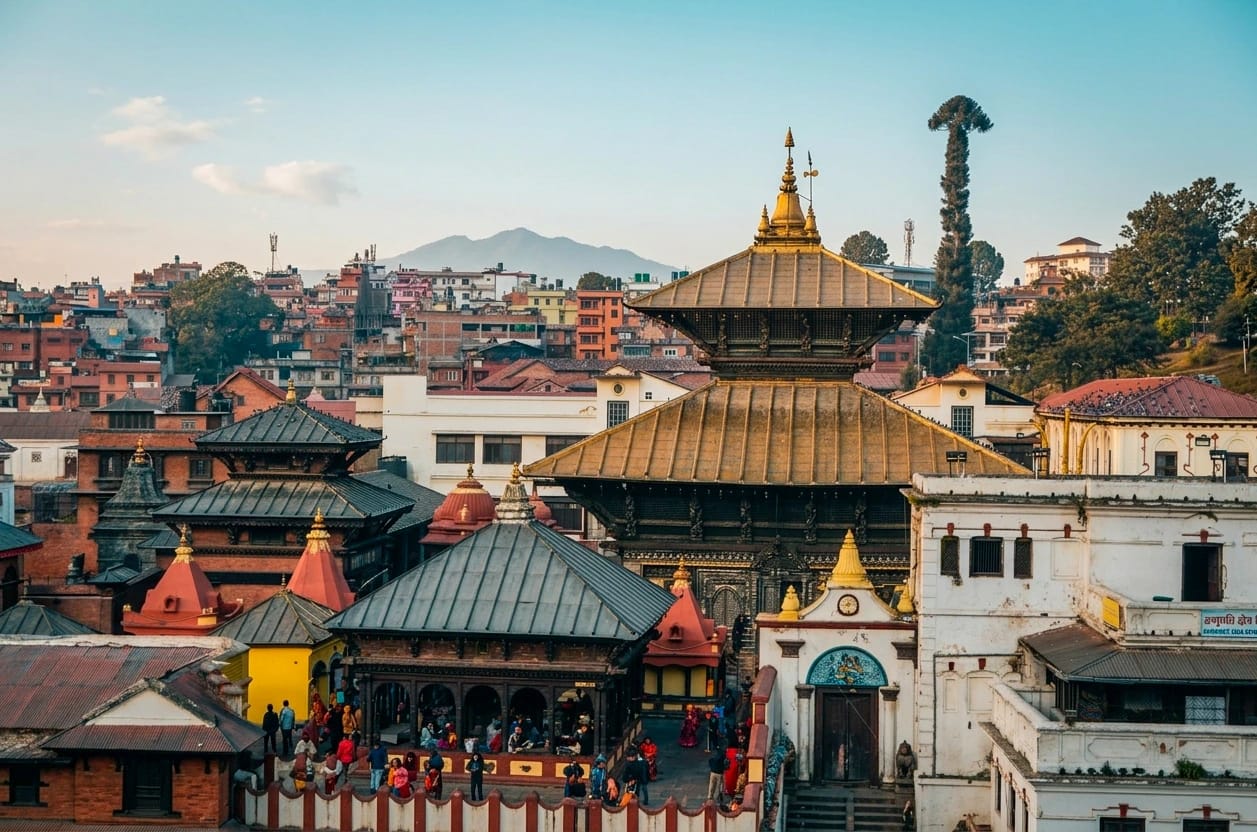
“A yam between two boulders” is what describes Nepal's location, the best situated between two giants India in the north and China in the south, completely a land locked Nation but an important subsidiary of the Silk trade. Nepal has been the melting pot of religion and culture traveling in South Asia , “Religion” in this corner of the world is more than just a practice or faith it is a way of life that often guides once daily and important life decisions .
The religion scape of Nepal
Nepal's 2021 census counts 81.19% of the population as Hindu, 8.21% as Buddhist, 5.09% as Muslim, 3.17% as followers of Kirat Mundhum, 1.76% as Christian, with smaller communities following Prakriti nature worship, Bon, Sikhism and Jainism. The country has been constitutionally secular since 2008, though secularism here is defined as the protection of traditions handed down — not a wall between temple and state.
What a census box cannot hold
Look at the Newars, the people who built the Kathmandu Valley. On paper, the overwhelming majority register as Newar Hindu, with a Buddhist minority of around 9%. Ask that same population who they worship and the arithmetic collapses. The same family will take a sick child to Harati Devi, a goddess sitting inside the Buddhist stupa at Swayambhu. The same courtyard will host a Buddhist ritual on Monday and a Hindu one on Friday. The Dhyani Buddha and the household lineage deity share a shelf.
The two pillars of Nepalese religion
Among all the multiple religions practiced in Nepal Hinduism and Buddhism has been a core two pillar of Nepalese religions.
Hinduism in Nepal is lived through household deities, lineage duty and the great annual cycle like Dashain, Tihar, Teej with Pashupatinath as its gravitational center. It is domestic before it is congregational.
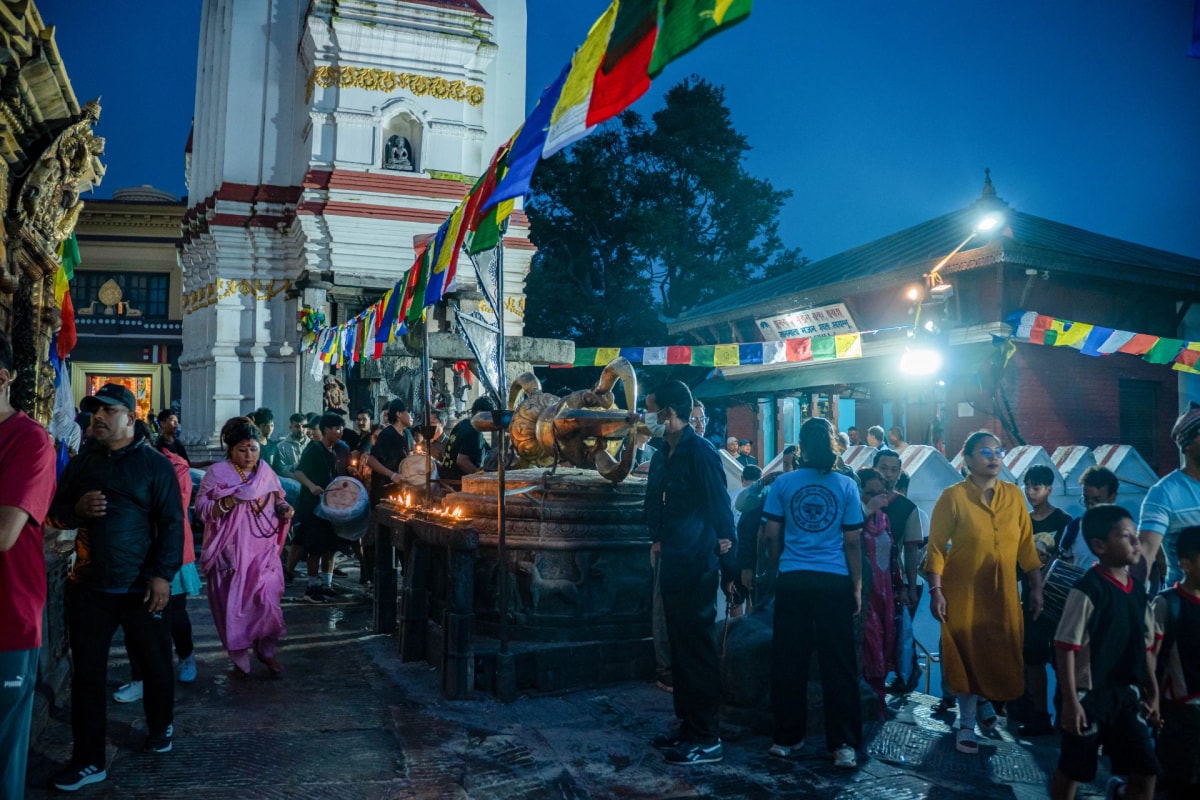
Buddhism in Nepal comes in three distinct streams that are easy to mistake for one another: the Tibetan Vajrayana of the northern highlands and of Boudha, the Theravada revival of the twentieth century, and the Newar Vajrayana of the valley — the oldest of the three, and the one Gunla belongs to.
Newar Buddhism and Gunla
Buddhism began with one man in northern India Nepal and then did what all big ideas do: it travelled, and it changed shape wherever it landed.
Three of those shapes matter here
-
Theravada went south in countries like Sri Lanka, Thailand, Myanmar. The oldest and plainest form, built around monks and the earliest teachings.
-
Mahayana went east in nations like China, Korea, Japan. Wider, more devotional, full of buddhas and bodhisattvas you can pray to.
-
Vajrayana went north around Tibet, the Himalaya. Mahayana plus ritual, mantra and tantra: the fast road, guarded by teachers.
Newar Buddhism is the fourth address. It is Vajrayana but it is not Tibetan Vajrayana. It came directly from India Buddhist University Nalanda , over the mountains into the Kathmandu Valley. When Buddhism was wiped out in the land of its birth, this valley kept the Indian version alive in the language of Origin Sanskrit, held by Newar families who had been doing it for generations.
That is what makes it rare. Newar Buddhism is the last living Vajrayana tradition on earth that is not Tibetan. Roughly a thousand years of unbroken practice, in one valley..
It is a family religion, not a monastery religion. There are no robed communities living apart on a hillside here. The tradition is carried by households by families in the old towns who inherit it the way you inherit a surname. That is why Gunla looks the way it does: not monks performing while a crowd watches, but a whole neighborhood doing it themselves and together
गुँला - Gunlā.
Gun is the half that carries the meaning. It comes from guṇa — virtue, merit, quality of goodness. As Ras Joshi, a lecturer at Patan Multiple Campus, explains, Gunla is understood as a month for acquiring merit, the term deriving from two words in Nepal Bhasa: 'guni', meaning merit, in Nepal Bhasa, the language of the Newars, lā simply means month. You will see it all over the calendar: Kachhalā, Thinlā, Yanlā, Kaulā. Twelve months, twelve lā.
What Gunla actually means
Newar's rarely say "we are celebrating Gunla." They say they are doing Gunla Dharma — keeping the dharma of the month. Across these thirty days, Newar Buddhists observe fast and penance, recite their scriptures, and process to sacred sites playing devotional music. The whole month is understood as an opportunity to accumulate punya, merit.
Most festivals | Gunla |
One day, or a few | Thirty days, without a break |
A spectacle you attend | A practice you perform |
Peaks at a procession | Has no peak — the point is the repetition |
Priests do the ritual | Every household does the ritual |
Best weather of the year | Worst weather of the year |
Nothing about Gunla is designed to impress you. There is no chariot, no mask dance. It is a process that develops gradually, through repeated daily practices which is precisely why most visitors ‘who are in Kathmandu during Gunla and never notice.
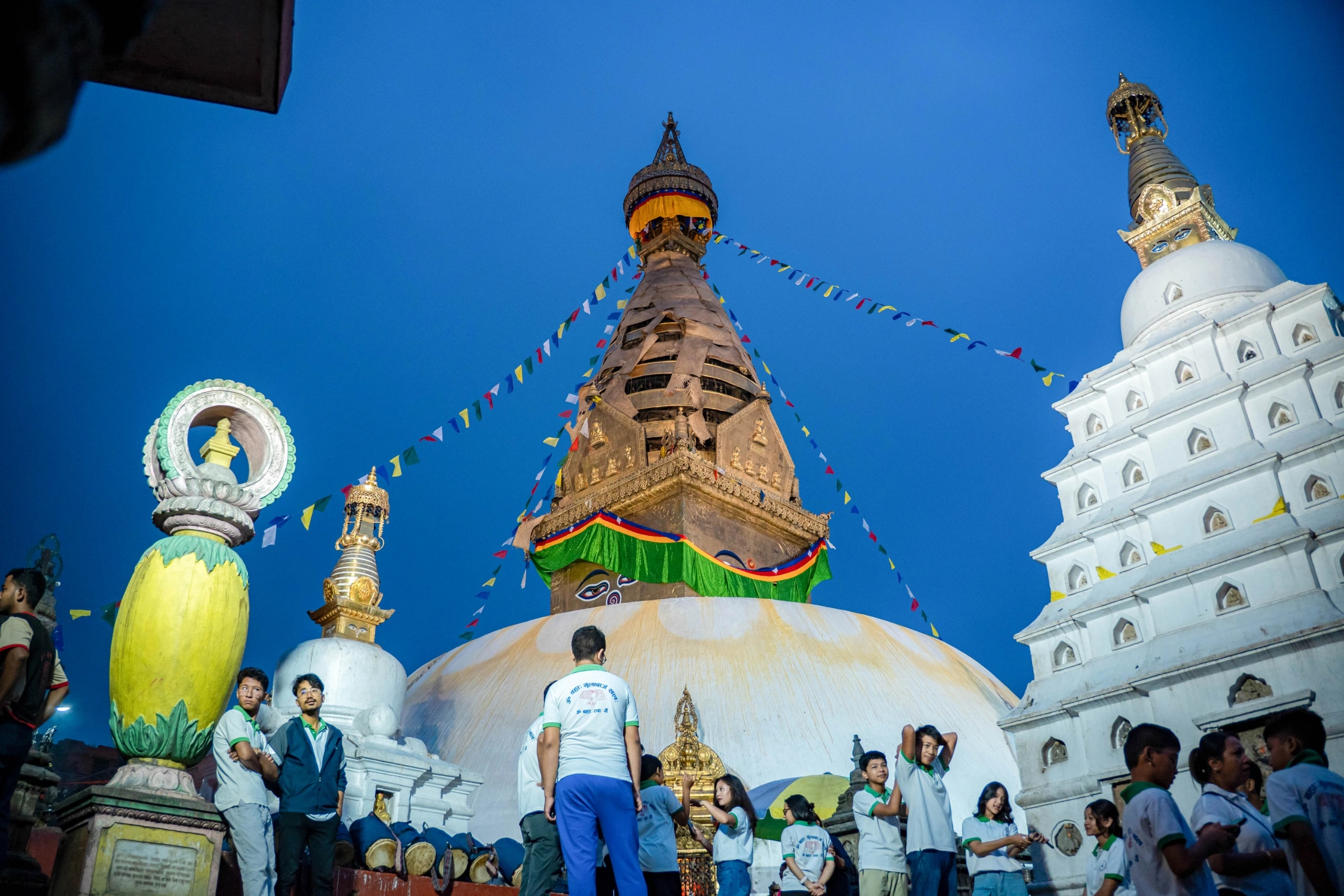
What is being accumulated over those thirty days is puṇya — merit. Merit here is not stored for yourself. It is given away, devotees circumambulating the Swayambhu Mahachaitya offer prayers for relatives who have died within the year, so that they may dwell in Sukhavati, the land of the pure.
The Legend & History
Where Gunla comes from
Gunla begins with the oldest scheduled practice in Buddhism the rains retreat, or vassa.
The Buddha's monks lived by walking. During the monsoon this became a problem: they trampled young crops and killed the insects and small creatures the rains brought up out of the ground, and farming communities objected. So the Buddha set a rule. For the three months of rain, monks stopped travelling. They stayed in one place, studied, and taught whoever lived nearby.
Gunla descends directly from that retreat from the practice of monks staying put and teaching the Dharma through the wet months.
Valleys Rain retreat
The Kathmandu Valley took the monsoon seriously for practical reasons. Houses were mud brick, rivers left their beds, and tradition records that heavy rain devastated the mud houses while floods and landslides deepened the hardship of the season.
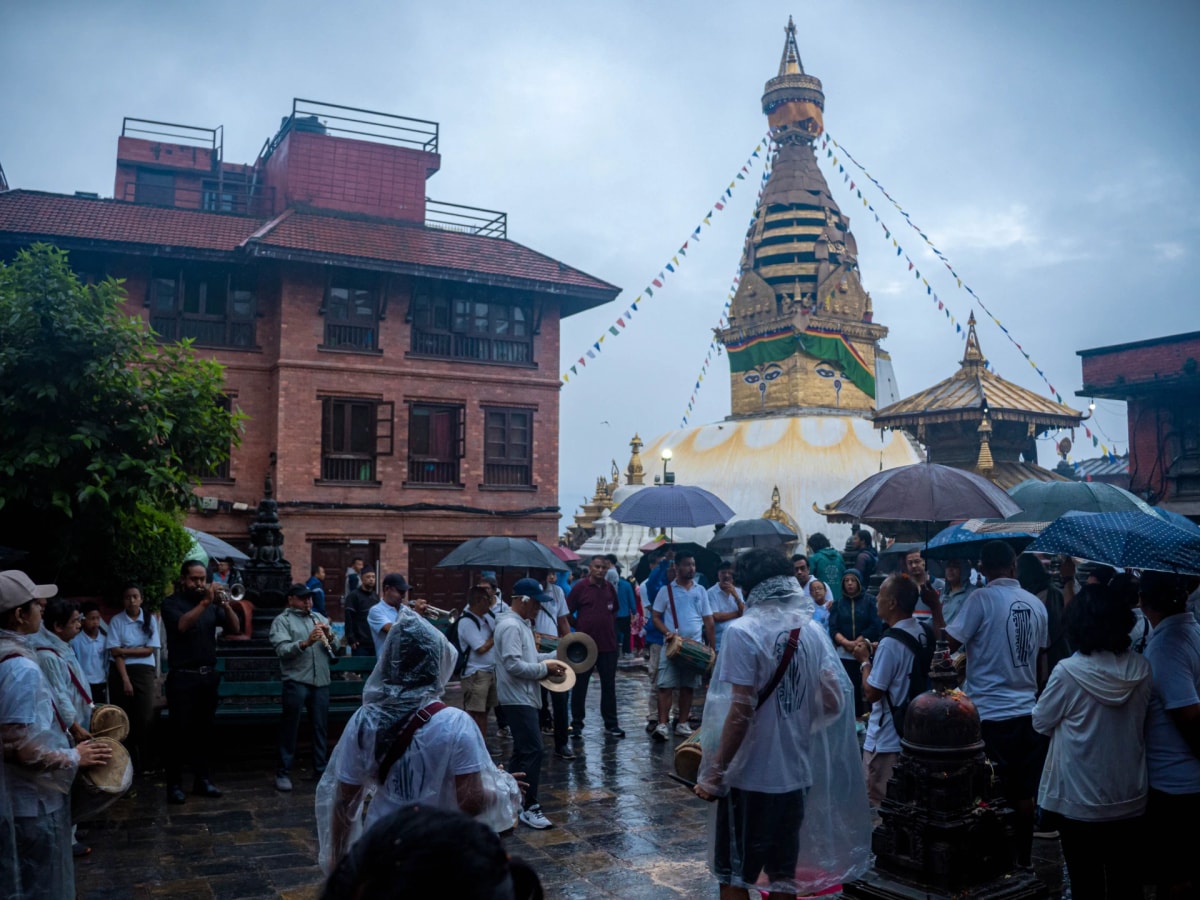
The response was to go up: people climbed to Swayambhu, which stood above the water, playing devotional music as they went. Older residents add a practical reason for the music and the soundkept wild animals off the paths, back when the route to Swayambhu ran through unsettled ground.
That combination of the hill, the pre-dawn climb, the drums are still the shape of Gunla today.
Gunla Bajan: the sound of Gunla
Gunla Bajan is the processional music of the month — the sound you hear before dawn, moving through the old streets toward the hill.
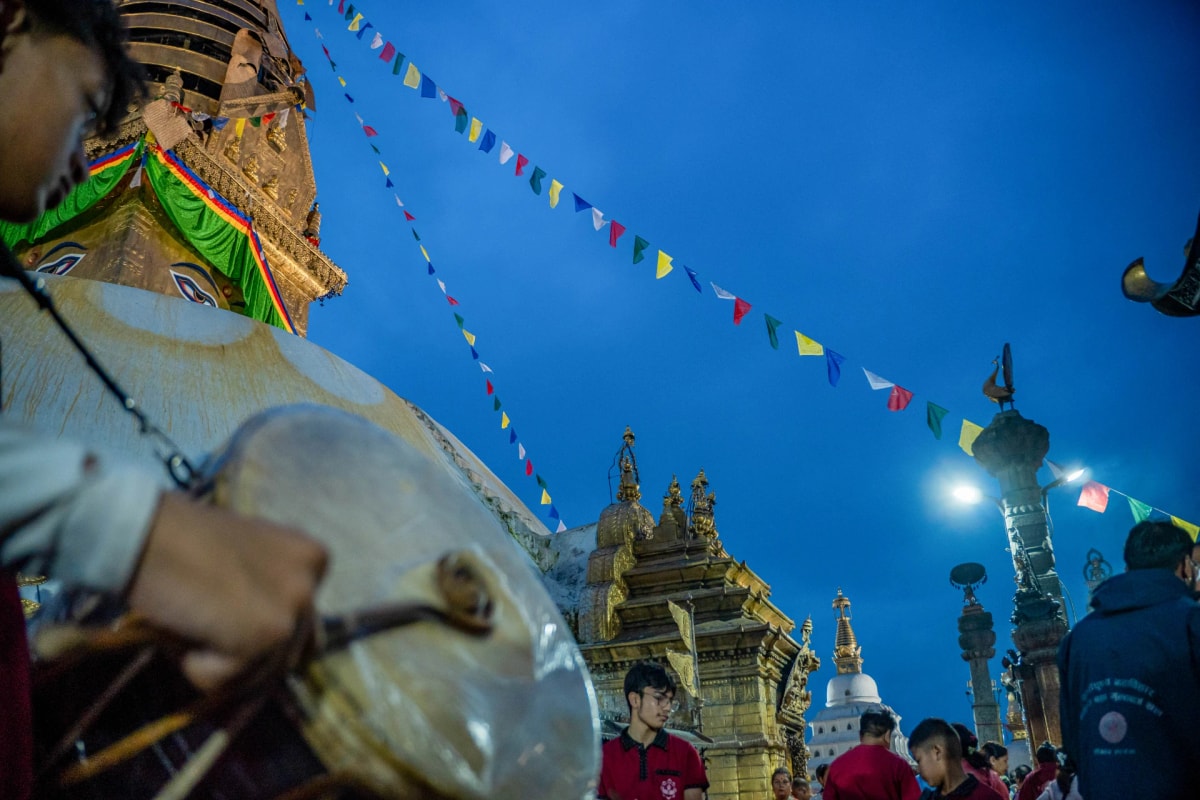
Gunlā Bājan is Buddhist devotional music played by the Newars. It is organised by societies based on locality or caste, in which membership is hereditary. These groups keep an annual calendar of public performances, run music lessons, and hold hymn-singing sessions, religious festivals and feasts. Each khala represents a specific neighbourhood — which means that during Gunla, the streets of Kathmandu are as active as the other.
The most important activity of the year is the daily pilgrimage to Swayambhu and other Buddhist sites, playing Gunla music.
It is a structured practice. Each performance follows a set sequence, a short salutation to the deities, then distinct pieces reserved for marching, for circling a shrine, and for crossing a bridge. A traveller watching a group halt mid-climb and play something different is not watching a rest stop. They have reached a specific point on the route that has its own piece.
The lead voice in this procession is the dhah, a large double-headed drum so closely tied to this month that the ensemble is named for it. Around it sit the taa and bhusya cymbals — taa, a pair of thick cymbals cast from asta dhatu, an alloy of eight sacred metals, accompanies the dhah and the naya khin when played as Gunla Bajan plus wind instruments including the muhali shawm, the long copper ponga trumpet accompanying the beats.
The Calendar Within the Month
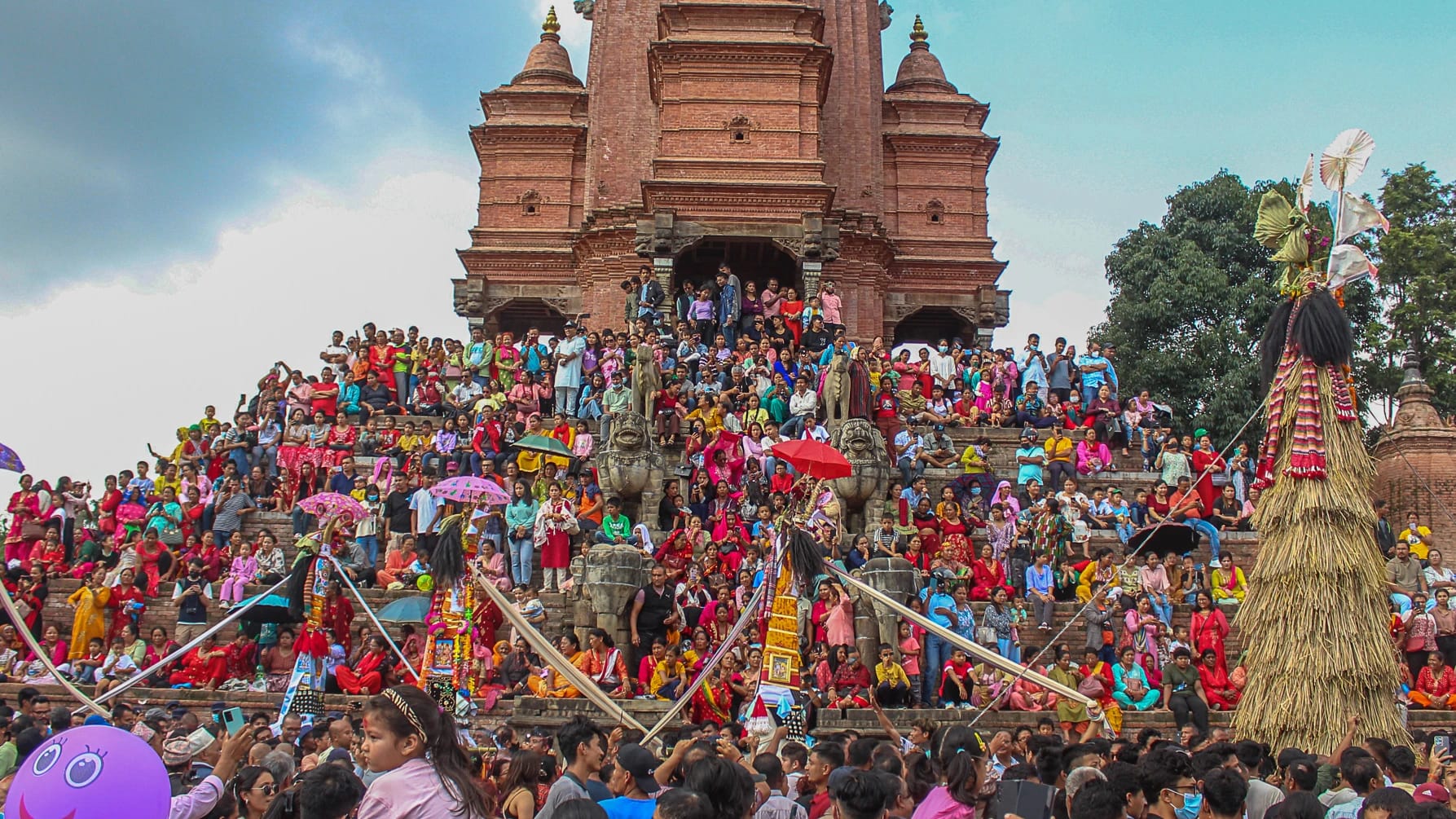
Gunla is not a single festival it is a container. Several distinct observances fall inside its thirty days, some Buddhist and specific to the month, others shared with the wider Hindu valley. Together they give the month its shape
Festival | When it is celebrated | How it is celebrated | Philosophical meaning |
Gathamuga Chare (Gathemangal / Ghantakarna) | Shrawan Krishna Chaturdashi — immediately before Gunla opens | Effigies of the demon Ghantakarna are built at crossroads and burnt or dragged from the settlement, iron rings are worn, households ritually clean and protect the home | Clear the ground before you begin. Nothing new can be taken up until what is harmful has been named and put out of the house |
Naag Panchami | Day 5 of Gunla (Shrawan Shukla Panchami) | Images of the serpent deities are fixed above doorways, offerings of milk are made to the nagas | The valley was a serpent lake before it was a city. The land is borrowed, and the older tenants are still owed respect |
Baghi (Lalitpur) | First four days of Gunla | A pre-dawn rally beginning around 1:30am, visiting one of the four stupas ringing Patan each day, Lagankhya, Pucha, Bagmati and Teta Thur ,accompanied in sequence by Dha, Khin, Damokhin and Dhime bands | The month begins by walking the boundary. Before you look inward, you establish the edges of what you belong to |
Panchadan | Lalitpur: Shrawan Shukla Ashtami (early Gunla). Kathmandu: Bhadra Krishna Trayodashi (late Gunla). Bhaktapur keeps its own day | Households give five ceremonial offerings grains, pulses, salt, fruit and money to Vajracharya and Shakya priests. Images of Dipankara Buddha are brought out and processed to receive alms | Giving as the base practice, not the byproduct. The householder feeds the tradition; the tradition does not fund itself |
Gunhu Punhi (Janai Purnima / Kwati Punhi) | Full moon, roughly day 15 | Sacred threads are tied at the wrist, kwati, a soup of nine sprouted beans, is eaten. Shared across Hindu and Buddhist households alike | The midpoint. A knot tied at the wrist because commitments need a physical marker, not just an intention |
Bahidyah Bwoyegu (Bahidyah Swahwanegu) | The days following the full moon | The bahas and bahis open. Large images of Dipankara Buddha and paubha paintings, stored all year, are put on public display. Bajan groups process courtyard to courtyard to view them | Once a year the treasury is opened and shown. What is kept hidden must periodically be proven still to exist |
Sa Paru (Gai Jatra) | Day after the full moon | Families who lost someone in the past year send a cow or a child dressed as one through the streets, satire, masks and public mockery follow | Grief is not private property. A city that mourns together and laughs on the same day is a city that has learned to carry it |
Mataya (Lalitpur) | Day after Gai Jatra | A single-day light procession covering every chaitya in Patan hundreds of them on foot, with lamps, incense and rice offered at each. Bands accompany by masked and costumed figures join. Families in mourning take part | Marking the Buddha’s victory over Mara. Merit made by exhaustion, offered on behalf of the dead. The route is deliberately too long |
Paru Bwoye (Yanlathwa Paru) | Final day, the first day of Yanla | Bajan and reciting groups gather at Swayambhu in traditional dress for closing worship; families honour ancestors and the recently dead | The month is settled by giving the merit away prayer for the end of all suffering, so that no one remains in pain |
What Gunla Teaches
1. Practice belongs to everyone
The rain retreat was written for ordained monks. Newar Buddhism had none, and instead of abandoning the practice it handed the whole thing to shopkeepers, goldsmiths, children and grandmothers. Nobody in that dawn procession is qualified. That is the point.
The teaching: Most people hand the things that matter most to specialists — fitness to a trainer, discipline to an app, faith to a priest. Gunla's position is that a practice only becomes real when an unqualified person takes it on themselves. Waiting until you are ready is how it never starts.
2. Repetition outranks intensity
There is no climax to this month. No chariot, no single ceremony everything builds toward. Gunla develops gradually, through repeated daily practices — which is exactly why visitors miss it. It is thirty small mornings, not one large event.
The teaching: Most systems reward peaks — the retreat, the marathon, the breakthrough. Gunla makes the opposite bet: the small thing done four hundred times changes a person more than the large thing done once.
3. Difficulty is not an obstacle to practice
Gunla lands in the deepest part of the monsoon, and this is deliberate. In 2026 it runs 13 August to 12 September — thirty days of rain, slick steps and dark mornings. The month was never moved to a more convenient season
The teaching: Anything worth doing has an easier version, and the easier version is usually a different thing under the same name. The conditions here act as a filter — after a week, only those who meant it are still climbing. A commitment that costs nothing to keep has not yet been tested.
4. Merit is made to be given away.
Thirty days of effort, and none of it is banked for the person doing it. Devotees circling the stupa pray for relatives who died within the year, that they may dwell in Sukhavati, the Pure Land of Amitabha. On Paru Bwoye, the final day, families gather at Swayambhu to honor their ancestors and pray for the end of all suffering — that nobody anywhere remains in pain.
The teaching: The month is spent on people who cannot repay it. There is no mechanism for the effort to return to the person making it, and that is deliberate — the only permitted use of what you earn is someone else. Measured against most incentive structures, it makes no sense. It is also a better idea.