
Indra Jatra 2026 Kathmandu: Itinerary , Festival Map & Ultimate Travel Guide
lorem lorem
Hidden Hymn
Author
Hidden Hymn writes for Hidden Hymn — long-form stories from the world's quietest corners.
September 20, 2026 · 12 min read
About Indra Jatra
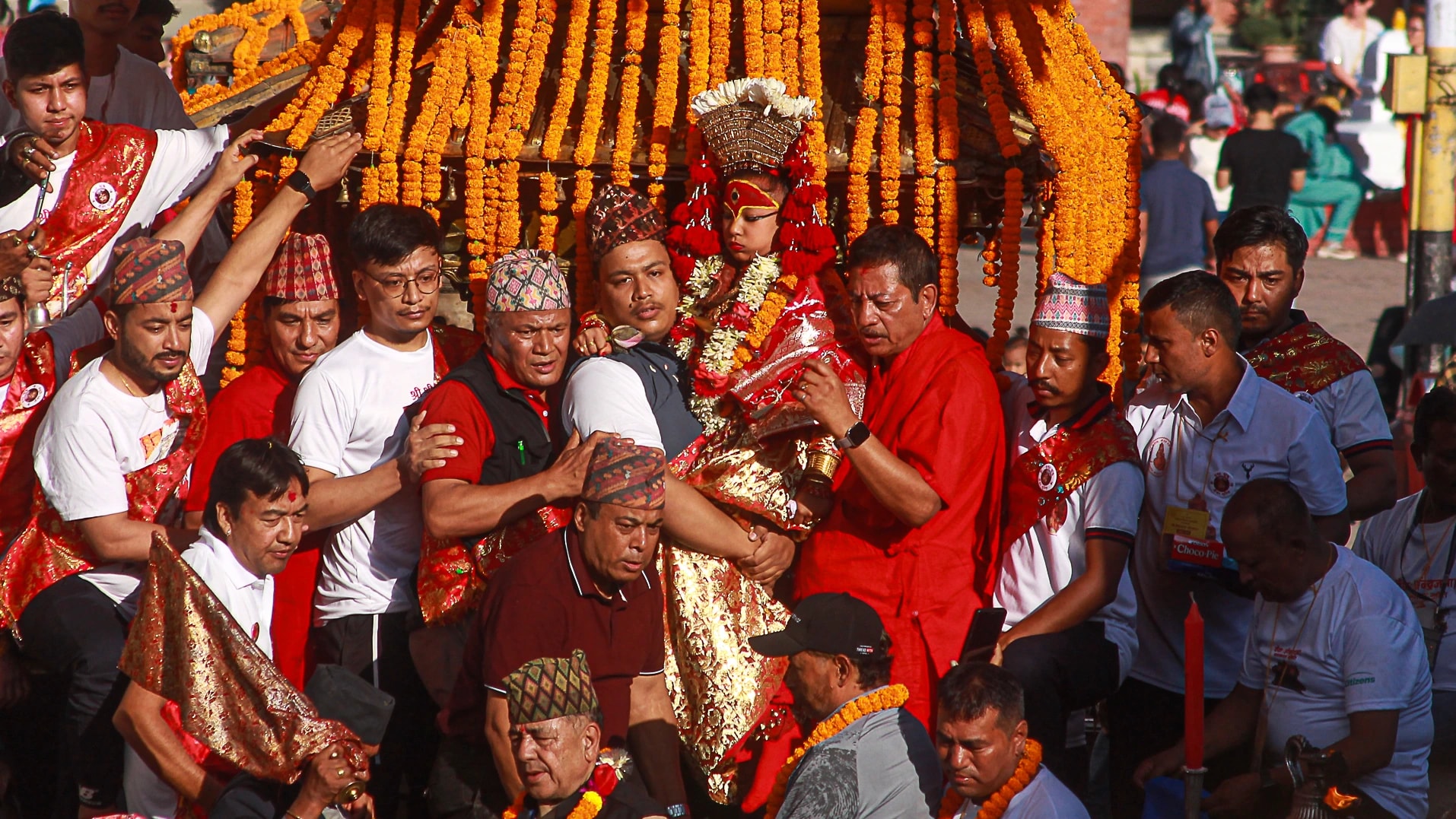
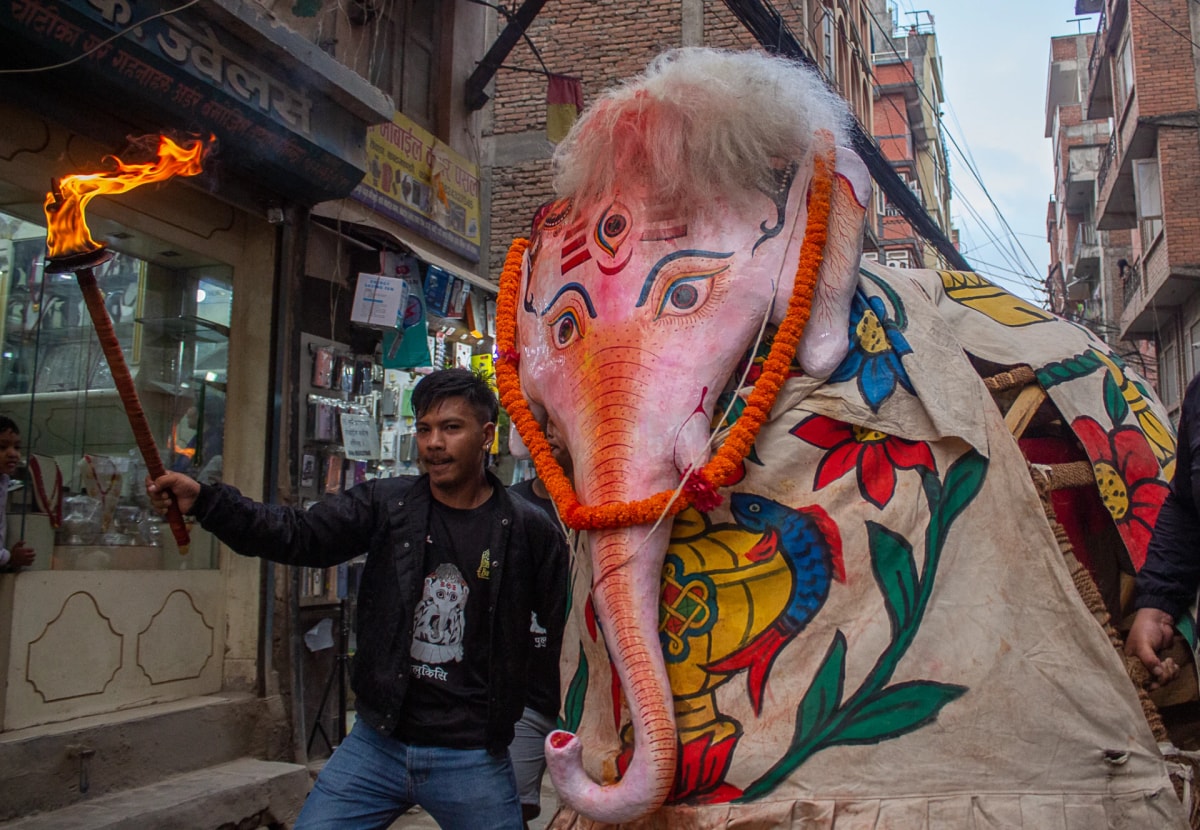
Indra Jatra is a festival of Nepal dedicated to Lord Indra which is celebrated in the Kathmandu Valley primarily at Kathmandu Durbar Square. It is celebrated for eight days and its major attraction is the Chariot process of the living goddess Kumari followed by the procession of lesser known two other living gods Bhariab and Ganesh. The celebration is not limited - the city for eight days hosts an array of street masked dance of various demons and deities such as the the Lakhey - the read faced demons , Pulkisi - the mount of god Indra and the Halchok bhairab - the protector of Kathmandu’s borders. In 2026, Indra Jatra will be celebrated from Wednesday September 23rd , 2026 to Wednesday September 30th , 2026.
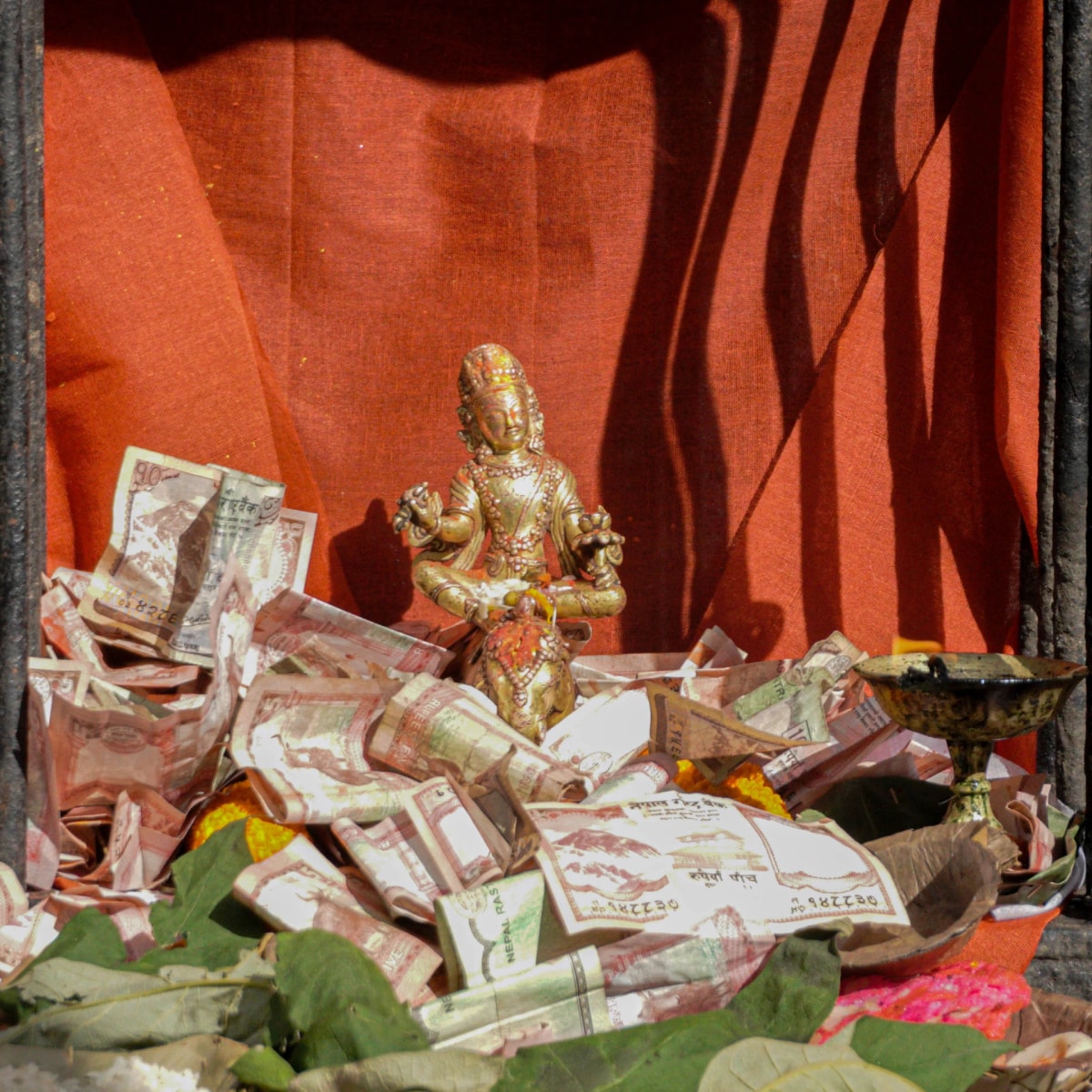
What does the Indra Jatra name mean ?
Name | Language | Meaning | Notes |
Indra Jatra | Nepali | The procession (jatra) of Indra, king of the gods and bringer of rain | Became the widely used name after the Shah conquest of 1768, when the festival changed from a Newar city celebration to a national state occasion |
Yenya | Newar (Nepal Bhasa) | Ye (Kathmandu) + ya (celebration): "the festival of Kathmandu" | The name the Newars have always used |
Yenya Punhi | Newar (Nepal Bhasa) | Yenya + punhi (full moon) | Refers to the full moon of the lunar month of Yanla, which the festival turns on |
Kumari Jatra | Nepali | The procession of the Kumari, the living goddess | Refers to the chariot pulls within the wider festival |
[ Disclaimer - All the names are correct, and locals use them interchangeably.]
Why is Indra Jatra celebrated ?
Indra jatra is celebrated for four major purposes as the harvest festival, the festival of the dead , the birth of Kathmandu city and a State ritual.
1. A harvest festival - It thanks Indra for the monsoon rain and asks for the dew and mist that ripen the winter crop.
2. A festival of the dead - Families who have lost someone in the past year walk the old city with lamps and join the procession of Indra's mother, Dagin, who is believed to guide departed souls to heaven.
3. The birthday of the city - Yenya is traditionally tied to the founding of Kathmandu, and is still spoken of as the city's birthday.
4. A state ritual - Since the 18th century, the Kumari's tika has renewed the bond between Nepal's ruler and the goddess who legitimises him.
Where is Indra Jatra Celebrated?
Indra Jatra is celebrated in Nepal's Capital Kathmandu city , and majorly at Basantapur Durbar square. However, the celebration is not limited to Durbar area from there the celebration spreads through the old city -, Indra Chowk, Asan, Kilagal, Maru and Kel Tole as the chariots of the Kumari, Ganesh and Bhairav are pulled along the processional routes that circle the historic quarters.
Beyond the capital, the festival is celebrated in other Newar settlements such Kirtipur, Thimi, Tokha and Bhaktapur and outside the valley the Newar trading towns carry it with them - Bandipur in Tanahun holds a well-known Indra Jatra of its own, as do Dolakha, Dhulikhel and Banepa. Wherever Newar communities have settled, in Nepal or abroad, some version of the pole-raising and the offerings to Indra tends to follow.
Who Celebrates Indra jatra ?
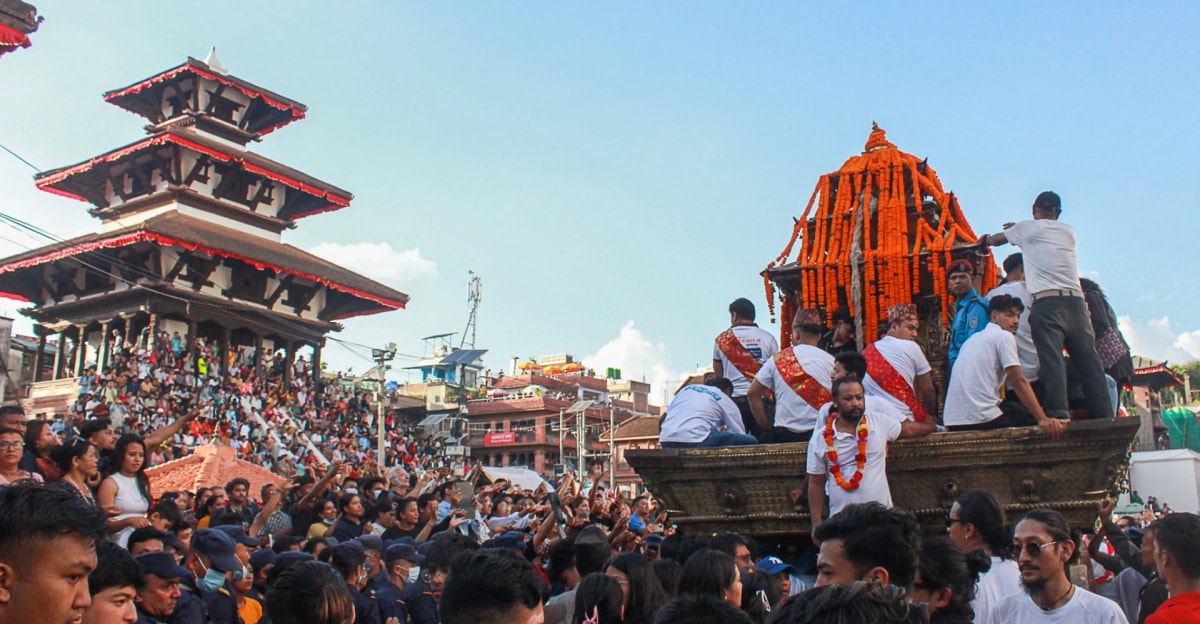
Indra Jatra is celebrated by the Newar community of Kathmandu and all around Nepal. Hereditary trusts locally known as guthis still build the chariots, lead the procession and initiate the mask dances. Like much of the valley's religious life, it does not divide along lines of faith. Hindus and Buddhists take part side by side, and the Kumari at its centre is a Buddhist-born girl worshipped as a Hindu goddess. Today the festival is a public holiday in the Kathmandu Valley and one of the most attended events in Nepal.
History of Indra Jatra - Who started Indra Jatra ?
Indra jatra was introduced by King Gunakamadeva in the 10th century to celebrate his founding of Kantipur, the old name for Kathmandu. In 1757, King Jaya Prakash Malla added the Kumari's chariot procession and built the Kumari Ghar. Eleven years later, in 1768, Prithvi Narayan Shah captured Kathmandu during the festival and received the Kumari's tika himself to legitimize his power and rule . For the next two centuries, the tika went to the king of Nepal. Since the monarchy was abolished in 2008, it has gone to the head of state, and today that is the President.
[→ Learn More: https://hiddenhymn.com/articles/yenya-punhi-indra-jatra-the-festival-of-kathmandu]
Indra Jatra daily itinerary : What Happens, How, and Where to Go
Indra Jatra is held for eight days. Four days Wednesday September 23rd 2026, Friday September 25th 2026, Saturday September 26th2026 and Wednesday September 30th 2026 experience huge crowds and are packed. The others are quieter, and those are often the days when you see the festival as locals experience it. Use the overview to decide which days to prioritise, then read each day for the detail.
Day | Date (2026) | Main event | Crowds | Don't miss it if you want to experience… |
1 | Wed 23 Sep | Yosin Thanegu (pole raising) · Upaku Wonegu | Very high → low | want to see the festival begin |
2 | Thu 24 Sep | Masks and images go on display | Moderate | want to see the square before the rush |
3 | Fri 25 Sep | Kwaneya chariot pull, Kumari's tika , Dagin & Bau Mata | Extreme | can only come for one day |
4 | Sat 26 Sep | Thaneya chariot pull (full moon) | Very high | want the market-street chariot route |
5 | Sun 27 Sep | Masked dances, night processions | Moderate | want dances without the chariot crowds |
6 | Mon 28 Sep | Masked dances, night processions | Moderate | prefer quieter evenings |
7 | Tue 29 Sep | Masked dances, night processions | Moderate | want to catch what you missed |
8 | Wed 30 Sep | Nanichaya women's chariot pull, Yosin Kwathalegu | High | want a closer view of the Kumari |
“Here is the details of what happens , how it happens and where it happens through the eight days of Indra jatra”
Day 1 · Wednesday 23 September: Yosin Thanegu (pole raising)
What Happens
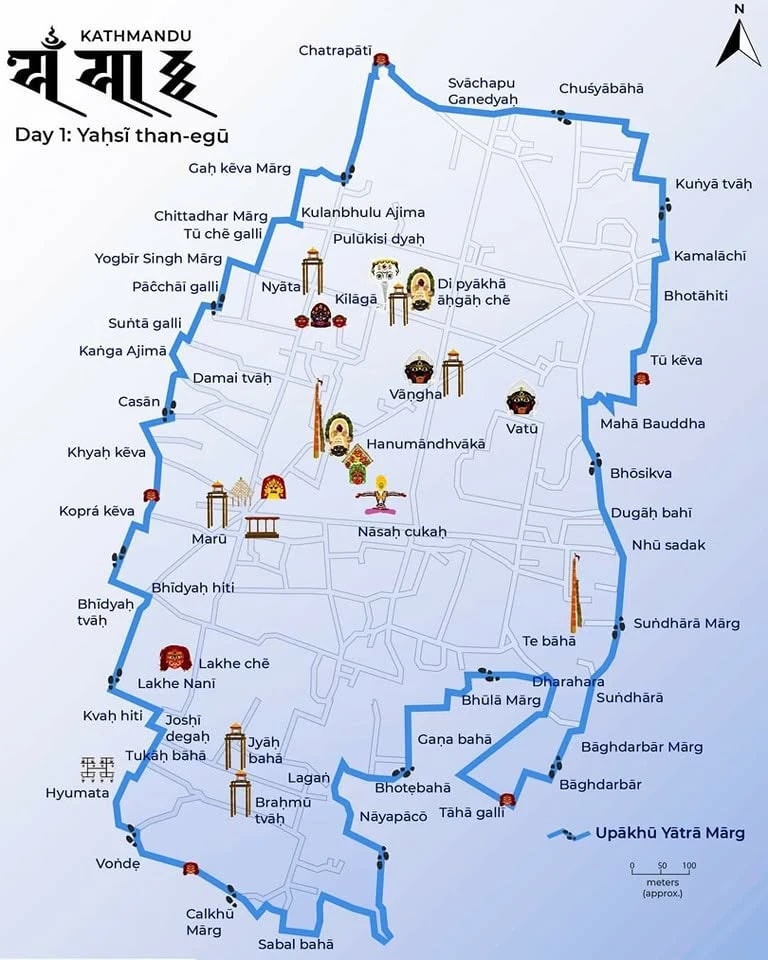
The festival opens with Yosin Thanegu. A tall wooden pole called the Yosin is raised in front of Hanuman Dhoka, and Indra's banner is unfurled from it. The pole represents Indra's flagstaff and marks his arrival in the city. That evening, a very different ritual follows - Upaku Wonegu where the families who have lost someone in the past year walk to the city's shrines carrying lit incense, marking the first of the festival's rituals for the dead.
How It Happens
The pole's journey starts days earlier, with a pine tree in a forest near Nala, about 29 km east of Kathmandu. It is chosen through ritual, felled, and taken in a procession to the pottery town of Thimi. Residents then carry it on to Tundikhel, where a priest blesses it, before it reaches the square. Men of the Manandhar community drag the pole through the streets and raise it using traditional methods. In the evening, mourners place small butter lamps along the way, and some sing hymns as they walk a route that circles the edge of the historic city.
Where & When to Go
In the morning, go to Hanuman Dhoka in Basantapur and arrive at least an hour early, because the square fills well before the pole goes up. From about 4pm, head to the outer lanes of the old city for Upaku Wonegu. Watch from the side of the street, and do not photograph the mourners.
Day 2 · Thursday 24 September: Masks and images go on display
What Happens
There are no chariots and no single headline event today. Instead, the festival's sacred images appear around the old city. The great mask of Sweta Bhairav is revealed behind its screen near Hanuman Dhoka, the head of Akash Bhairav is displayed at Indra Chowk, and images of Indra, arms spread and bound as the captured thief of the legend, are raised on platforms, most famously at Maru.
How It Happens
Priests and hereditary guthi families prepare and dress each image, and local people start arriving to worship and make offerings. Around Basantapur, the chariots are made ready for the first pull the next day, and the square slowly takes on its festival shape.
Where & When to Go
Spend the morning walking from Basantapur to Indra Chowk and Maru, while the images are newly on view and the lanes are still manageable. In the afternoon, return to Basantapur to watch the chariot preparations. This is the best day to get your bearings before the crowds arrive.
Day 3 · Friday 25 September: Kwaneya chariot pull and Kumari's tika
T
What Happens
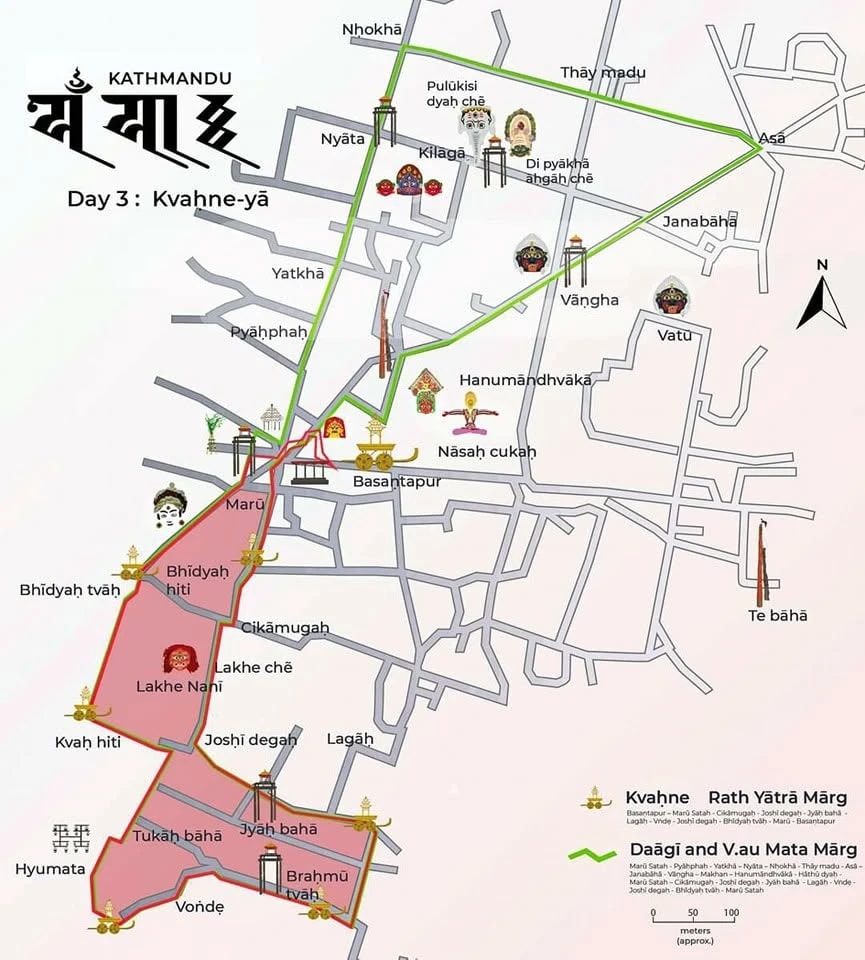
This is the busiest day of the festival. The Kwaneya chariot pull takes the living goddess Kumari, with Ganesh and Bhairav, through the southern half of the old city. That evening at Basantapur, the Kumari gives tika to the President as Nepal's head of state. After dark, three linked mourning processions pass through the old city: Mata Biye, Dagin and Bau Mata.
How It Happens
Three chariots carry children who embody the three deities, with musical bands alongside, and the pull starts at around 3pm. The route goes from Basantapur through Maru, Chikanmugal, Jaisidewal, Lagan, Brahma Marga, Wonde, Hyumata, Kohity and Bhimsensthan, then back through Maru to Basantapur. From about 6pm, families who have lost someone in the past year place butter lamps along the route and hand lamps to friends and relatives as a mark of respect. After the Kumari's chariot returns to Basantapur, a masked man playing Dagin, Indra's mother, walks the city in search of her son, with a band ahead of him and many bereaved families behind. When Dagin returns to Kasthamandap at Maru, the Manandhar community carries out Bau Mata: a long snake-shaped frame made of reeds, held up on poles, with oil lamps burning along it.
Where & When to Go
Take your place at Basantapur by 1pm, or book a rooftop café seat in advance. Once the chariots start moving, crossing the route is almost impossible. After dark, stay around Maru for Dagin and Bau Mata. These are solemn processions, so keep a respectful distance and never use flash.
Day 4 · Saturday 26 September: Thaneya chariot pull
What Happens
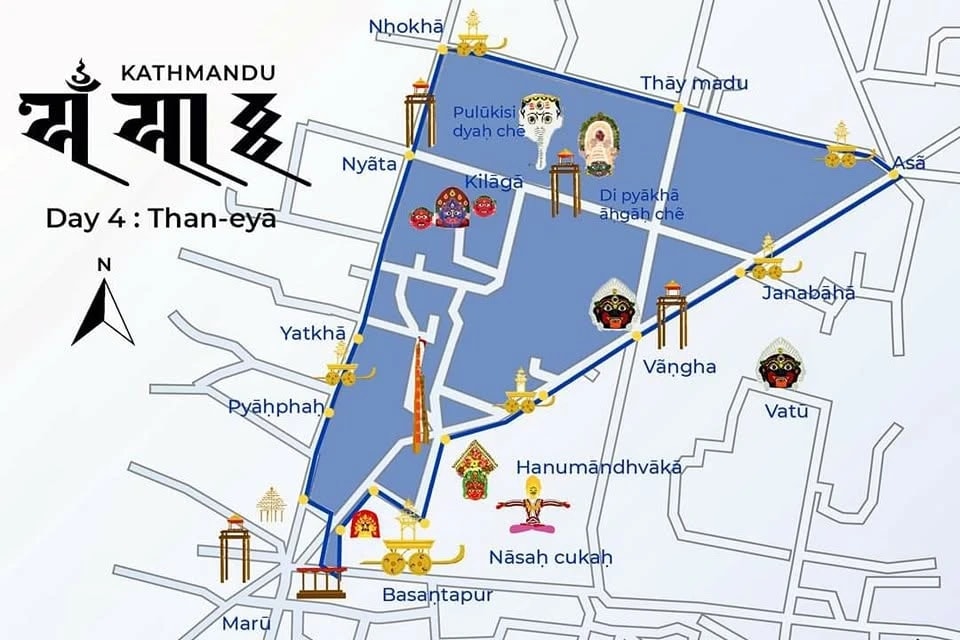
Today is Yenya Punhi, the full-moon day that gives the festival its Newar name. The Thaneya chariot pull takes the three chariots north through Kathmandu's oldest market streets.
How It Happens
The chariots again leave Basantapur in the afternoon. The route runs through Pyaphal, Yatkha, Nyata, Tengal, Nhyokha, Nhaikan Tol, Asan, Kel Tol, Indra Chowk and Makhan, and back to Basantapur. On the way, the chariots pass Akash Bhairav at Indra Chowk, where devotees pour offerings of alcohol through the Bhairav image.
Where & When to Go
From early afternoon, Asan or Indra Chowk give you the full market-street atmosphere of balconies, shrines and dense crowds. Makhan, closer to the square, is a better choice if you want an easy way out. Keep valuables zipped away in the narrow lanes.
Day 5 · Sunday 27 September: Masked dances, night processions
What Happens
With no chariot pull today, the old city belongs to the masked dancers. Lakhey demons, Pulu Kisi the elephant searching for his master Indra, and the goddess dances of Devi Pyakhan appear at crossroads and squares around the old centre.
How It Happens
Hereditary dance groups and guthis perform at set locations, usually accompanied by dhime drums and cymbals. The Devi Pyakhan, for example, is performed at Kilagal and Jaisidewal. Pulu Kisi does not stay in one place but charges through the lanes the way Airavata did in the legend, and the crowd scatters and laughs as he comes.
Where & When to Go
From late afternoon into the evening, follow the music between Hanuman Dhoka, Jaisidewal, Kilagal and Indra Chowk. Performance times are not published, but shopkeepers and locals usually know where the dancers will be next, so ask. This is the most relaxed day for families with children.
Day 6 · Monday 28 September: Masked dances, night processions
What Happens
The dances and displays carry on, but this is a good day to see the festival after dark. The old city's shrines and palace buildings are lit with oil wicks, and the Paya procession of masked men carrying khadgas (ritual swords) moves through the streets.
How It Happens
All through the week, groups of worshippers visit the Yosin pole to pray, sing hymns and offer oil lamps, and by the middle of the festival this steady devotion has become part of the city's evening rhythm. The Paya procession has no published route or timetable, so it appears in the lanes rather than on a stage. Do not confuse it with the separate Khadga Jatra, also called Paya, that Newar communities hold during Dashain.
Where & When to Go
Arrive at Hanuman Dhoka around dusk to see the pole and the square lit by lamps, then walk slowly towards Indra Chowk and Kilagal, where you are most likely to meet the night processions. Take a small torch for the unlit lanes.
Day 7 · Tuesday 29 September: Masked dances, night processions
What Happens
This is the last day before the finale, and your final chance to see what you have missed. The Bhairav images and bound Indra figures are still on display, the dances continue, and the crowds are at their thinnest of the week.
How It Happens
Nothing new begins today. The festival simply keeps going, with daily worship at the images and the pole and performances at their usual locations, while the guthis prepare for the final chariot pull.
Where & When to Go
If you haven't seen Akash Bhairav at Indra Chowk or the bound Indra at Maru, come in the morning, when you can get close to them. Spend the afternoon at a rooftop café near Basantapur, watching the square without the crush of the chariot days.
Day 8 · Wednesday 30 September: Nanichaya and the Pole Comes Down
What Happens
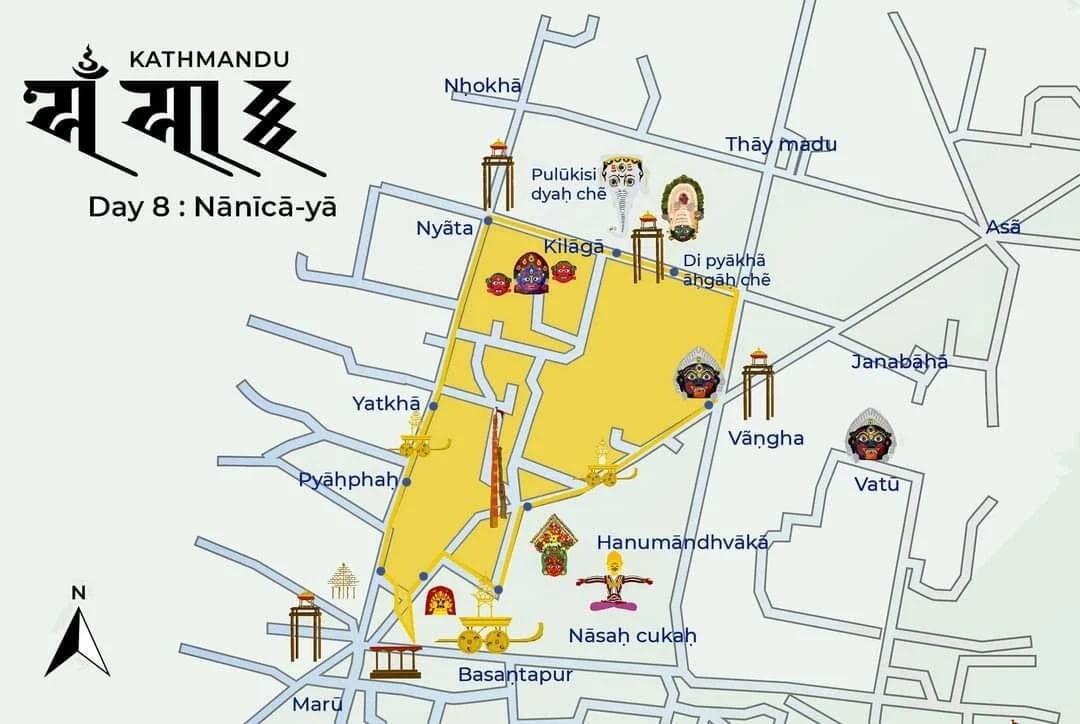
The festival ends with two events. The Nanichaya chariot pull takes the Kumari through the heart of the old city, with an all-women team pulling her chariot, a practice started in 2012. That night comes Yosin Kwathalegu, when the pole is taken down and the festival closes.
How It Happens
The chariots leave Basantapur in the afternoon on the shortest of the three routes, through Pyaphal, Yatkha, Nyata, Kilagal, Bhedasing, Indra Chowk and Makhan, then back to Basantapur. After the chariots return, the pole in front of Hanuman Dhoka is lowered with ritual, marking Indra's departure from the city for another year.
Where & When to Go
In the afternoon, watch from Kilagal or Bhedasing, where the route is shorter and the crowds are thinner, for the closest view of the Kumari of all three pulls. At night, return to Hanuman Dhoka for the lowering of the pole. It draws a far smaller crowd than the raising and makes an atmospheric end to the festival.
Deities, Masks & Music of Indra Jatra
Deities & Sacred Images
Indra Jatra has a number of deities three of which are the living gods Kumari, Bhairab and Ganesh , two of which are giant masks of Swet Bhairab and Akash Bhairab brought out once a year, and one is the Indra king of heaven, shown tied up as a thief.
Deity | Who they are | Where to see | What to look for |
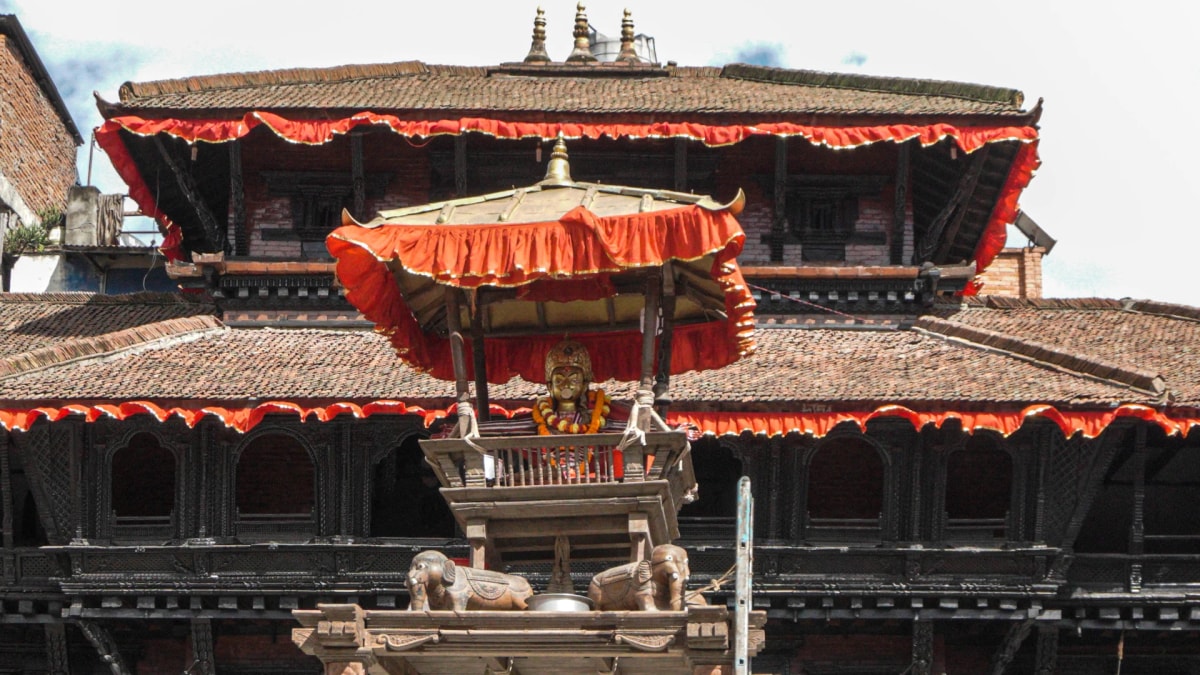
Kumari | A young girl from the Newar Buddhist Shakya clan, worshipped as the living form of the goddess Taleju | The largest Three-tiered chariot, Basantapur | Red clothing and a painted third eye. She gives a tika to the President of Kwaneya. |
Ganesh & Bhairav | Two boys worshipped as the living forms of the god of good fortune and the fierce protector. Kathmandu is the only city that has them. | The two smaller chariots, Basantapur | Ganesh leads the procession and Bhairav follows the Kumari |
Sweta Bhairav | Giant gilded mask of Shiva in his fierce form, dated to 1796 and normally hidden behind a lattice | Hanuman Dhoka | Rice beer poured from a pipe in its mouth as a blessing during the entirety of the festival. |
Akash Bhairav | Silver Sky Bhairav mask, which many believe is the head of Yalambar, the first Kirat king | Indra Chowk | Liquor offerings and evening hymn singing |
Baka Bhairav | A smaller Bhairav image displayed during the festival | Wotu, beside Indra Chowk | The Bhairav most visitors walk straight past |
Indra | Indra with his arms spread and bound, as the captured flower thief of the legend | High platforms at Maru and Indra Chowk | Offerings of flowers, grain and lamps |
Dagin | Indra's mother, played by a masked performer | Old city lanes after dark on Kwaneya | Bereaved families walking behind |
Masked Dances
During Indra Jatra, the old city becomes an open-air theatre with masked performances of various demons and deities among them the most anticipated being the red faced demon- Majipa Lakhey and the elephant vehicle/ mount of indra - Pulukisi.

Dance | Group / origin | What it depicts | Where to watch |
Majipa Lakhey | Maru, center of old Kathmandu | A red-faced demon who, despite his look, protects the valley's children | The street route, every evening |
Pulu Kisi | Kilagal | Indra's white elephant searching the city for his master | Charging through the lanes around Kilagal and Indra Chowk |
Sawa Bhakku | Halchok, western valley | Bhairav in blue with a sword, and two attendants in red | Major street squares along the route |
Devi Pyakhan | Kilagal | Masked gods and goddesses including Bhairav, Chandi and Khya | Kilagal, Hanuman Dhoka, Jaisidewal, Bangemuda, Indra Chowk |
Mahakali Pyakhan | Bhaktapur | Goddess dance featuring the comic, hairy Khya | Durbar Square and the main street squares |
Dasavatar | Basantapur Durbar Square | The ten incarnations of Vishnu | Basantapur Durbar Square, every night |
Instruments
The Eight day of Indra Jatra features a number of traditional musical instruments majorly played during the chariot procession and alongside the marks dance and street performance.
Instrument | Type | What it sounds like | Where you hear it |
Dhime | Large double-headed Newar drum | Deep, driving rhythm | Leading Lakhey dances and processions |
Bhusya | Large brass cymbals | Loud, clashing beat | Paired with dhime in dance troupes |
Tah / Jhyali | Small hand cymbals | Bright, steady timekeeping | Almost every group and hymn circle |
Naykhin | Small two-headed drum | Quick, sharp patterns | Devotional bands and processions |
Muhali | Double-reed wind instrument | Piercing, high melody | Leading ritual processions |
Pwanga / Kaha | Long brass trumpets | Low, solemn blasts | Ritual moments and the chariot bands |
[→ Learn More:https://hiddenhymn.com/articles/yenya-punhi-indra-jatra-the-festival-of-kathmandu]
Indra Jatra is the best opportunity for travelers and explorers to understand and experience Kathmandu. These Eight days the Atmosphere Kathmandu changes from a bustling busy capital to a festive city - it's when the locals and city truly live and this is why this place is known as the Living city. The Best way is understand and experience is to follow procession and dances though out, interacting with locals would bring up a whole new perspective to experience Indra jatra.
Conclusion
Indra Jatra is the eight-day festival of the Kathmandu Valley dedicated to the god Indra, held in 2026 from Wednesday, September 23 to Wednesday, September 30. Introduced by Gunakamadeva in the 10th century, it takes place at Basantapur Durbar Square and then moves through Indra Chowk, Asan, Kilagal, Maru and Kel Tole. The chariot of the living goddess Kumari is its main attraction, pulled alongside those of Bhairav and Ganesh. The red-faced Lakhey and other masked dancers fill the streets each night. Beyond Kathmandu, Newar towns such as Kirtipur, Thimi, Bhaktapur and Bandipur hold their own celebrations. It is a public holiday in the valley and one of Nepal's most attended festivals.
[Read more about Indra Jatra at: https://hiddenhymn.com/articles/yenya-punhi-indra-jatra-the-festival-of-kathmandu ]