
Things To Know Before Traveling To Kathmandu, Nepal 2026
a bird eye view of Kathmandu understanding the current political, social and cultural outlook of the society
Hidden Hymn
Author
Hidden Hymn writes for Hidden Hymn — long-form stories from the world's quietest corners.
September 12, 2026 · 8 min read
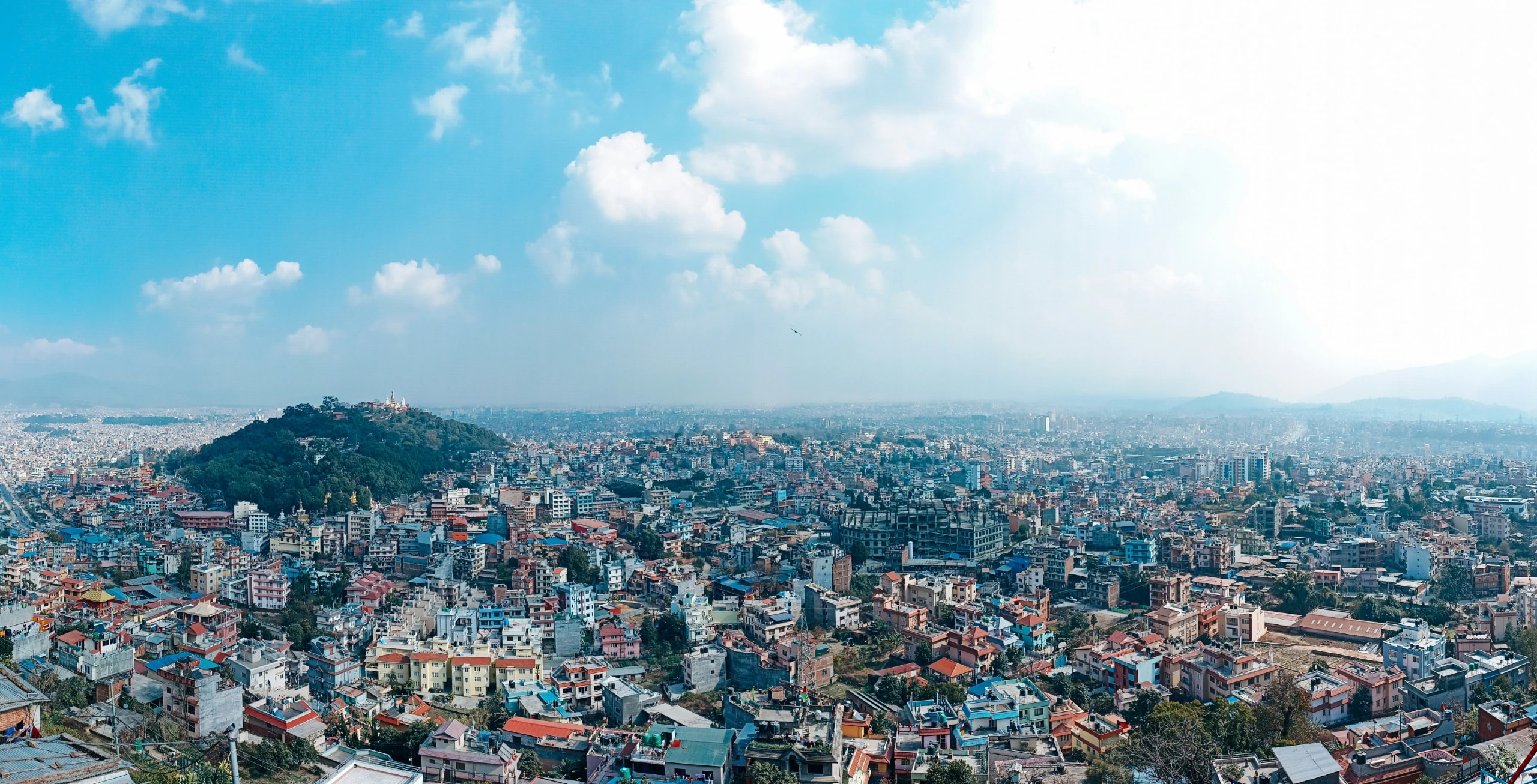
Kathmandu arrives all at once - horns and prayer bells, a shrine wedged between two shopfronts, marigolds strung across a doorway. It is a medieval Newar city with a modern capital grown around it, and it holds more UNESCO-listed monuments inside its own limits than most countries manage nationwide. It also asks for a little preparation from you. Here's what to know before you visit:
1. Kathmandu is a valley, not a single city
The name covers three things at once: the city, the district, and the bowl of hills that holds both. At around 1,400 m, the Kathmandu Valley contains three former royal cities - Kathmandu, Patan and Bhaktapur and seven UNESCO monument zones, four of them within Kathmandu itself. To the Newars who built it, the city is called "Yen". Practically, this matters because almost everything you have come to see sits within about 20 km of everything else, and a valley itinerary is one trip rather than several.
2. Getting your visa on arrival
Most nationalities can get a tourist visa at Tribhuvan International Airport or at eligible land crossings. Fees run around USD 30 for 15 days, USD 50 for 30 days and USD 125 for 90 days, all multiple entries. You will need a passport with at least six months' validity, a passport photo, a completed form and the fee in cash. Nepal's Department of Immigration also runs an online tourist-visa form that can be submitted up to 15 days before arrival. Print the barcode receipt and save it offline and a quick scan in the arrivals hall does the same job on the spot. Pay at the bank counter in the hall before joining the immigration queue.
Indian citizens need no visa and can enter on a passport or original voter ID, though Aadhaar card is not accepted on flights. Children under 10 of any nationality are exempt, Chinese nationals are gratis, and SAARC nationals get their first 30 days free in a calendar year. A small number of nationalities are not eligible for visa on arrival and must apply at a Nepali mission in advance, so check your own status before booking rather than at the airport.
Planning tip: Carry US dollars for the fee. The card machines at the payment counters exist but fail often on network errors. Rupees, pounds and euros are generally accepted. Processing runs anywhere from 20 to 90 minutes depending on how many flights land together. If you need longer, extensions are handled at the Department of Immigration in Kathmandu or Pokhara - roughly USD 45 for a minimum 15 days, then about USD 3 per day, with total tourist stay capped at 150 days per calendar year. Apply before your visa expires; the airport is not the place to sort out an overstay.
3. The political situation has settled
This is worth stating plainly, because 2025 coverage still dominates search results and puts travelers off. The nationwide demonstrations that began in September 2025 have ended. Early elections were held on 5 March 2026, and a new government took office on 27 March. The US State Department has rated Nepal Level 2, exercising increased caution, since 31 March 2026 the same broad tier as much of Western Europe - noting that the security situation is stable.
What has not changed is the political rallies which can still shut streets at short notice, and ride-hailing apps sometimes stop operating during them. Tourist districts continue to function normally and gatherings concentrate around the government zones. Keep a buffer day before an international flight, and avoid demonstrations entirely.
4. Cash runs the city
ATMs are widespread but charge per withdrawal and have low limits, so draw larger amounts less often. Cards are accepted in larger hotels and restaurants and almost nowhere else - heritage tickets, buses, tea stalls and craft shops are all cash. Small notes matter more than you expect, since taxi drivers frequently cannot make change.
Budget for heritage fees separately, because each site charges its own foreigner rate and a full week of valley sightseeing adds up: Kathmandu Durbar Square around NPR 1,000, Patan Durbar Square around NPR 1,000, plus Bhaktapur, Swayambhunath, Boudhanath and Pashupatinath on top. The Kathmandu and Patan tickets can usually be extended for the length of your visa - ask at the booth, and bring your passport. Buy only at official counters and ignore anyone selling tickets or temple passes on the approach lanes.
5. Use apps rather than street taxis, and treat traffic as the real hazard
Meters are not used often. Pathao, InDrive and Yango give fixed or negotiated fares, typically NPR 300–600 for a trip across the city, and are consistently cheaper than hailing off the street. If you do take a street taxi, agree to the price before getting in. From the airport, the prepaid counters in arrivals are more reliable than negotiating outside; expect roughly NPR 700–1,000 into Thamel, 25–40 minutes depending on traffic.
Traffic is the biggest daily risk in Kathmandu. Congestion is heavy, lane discipline is loose, motorbikes come from every direction, and pavements are not well maintained. Cross decisively and do not assume vehicles will stop for you.
Planning tip: Valley congestion peaks late morning and again around 5–7pm. Set out before 9am to beat both the traffic and the tour groups at the heritage sites.
6. Go early in the day
The heritage squares are at their best between roughly 7 and 9am, when they belong to the neighbourhood - residents doing their rounds of the shrines, vendors setting up, low raking light on brick and timber. By mid-morning the tour groups arrive. Museums and inner courtyards keep daytime hours, so save those for the middle of the day, and come back to the squares in the late afternoon when the light warms and locals return.
7. Dress modestly and mind temple etiquette
These are active places of worship, not monuments with worship attached. Cover shoulders and knees, remove your shoes where indicated, and leave leather items such as belts, bags, camera straps behind at some shrines, most strictly at Pashupatinath. Walk clockwise around stupas and shrines, don't touch or step over offerings, and ask before photographing anyone, particularly during a ritual. Access to many courtyards depends on visitors behaving well.
Some inner sanctums are closed to you regardless. The main temple at Pashupatinath is open only to Hindus, with everyone else viewing from the far bank of the Bagmati and certain courtyards inside Hanuman Dhoka are closed to foreigners. Worth knowing before you buy a ticket rather than after.
[→ Full guide: Nepal Temple Etiquette for Travelers]
8. Water, air quality and health
Don't drink the tap water; stick to bottled, filtered or boiled, and be cautious with ice in cheaper venues. Stomach trouble is the most common thing that spoils a Kathmandu trip. Dengue circulates during and after the monsoon, and if you plan to trek, take travel insurance that covers helicopter evacuation.
Air quality is a real consideration: Kathmandu ranks among the most polluted capitals in the world, worst in the dry pre-monsoon months of March to May and again during the winter temperature inversion, and cleanest during the monsoon when rain washes the valley. It is unlikely to trouble a short-term visitor, but bring a proper mask if you are asthmatic and check the daily index. At 1,400 m altitude sickness is not a concern, though winter dawns drop to 2–5°C, so pack layers.
9. Time your trip around Kathmandu's festivals
Indra Jatra in late August or September is the city's biggest eight days of masked Lakhe dancing, the raising of the Linga pole and the Kumari's chariot procession, centred on Durbar Square. Dashain follows in October across fifteen days, and is the one time of year the Taleju Temple opens. Tihar lights the city for five nights in late October or November. Gai Jatra falls in August, Holi in March.
Most follow lunar calendars, so their Gregorian dates shift by several weeks each year and some are confirmed only a week or two ahead. Confirm before you book. Expect large crowds, road closures and dissolved opening hours during the major ones and never cross the path of a procession or touch a chariot.
10. SIM, wi-fi and power
Pick up a local SIM from Ncell or Nepal Telecom at the counters in the arrivals hall for which you'll need a passport copy. Plans are cheap and comfortably outperform hotel wi-fi, which is slow almost everywhere. A Nepali number is also required to register for Pathao, InDrive and Yango, so without one you are stuck bargaining with street taxis for the whole trip. An eSIM such as Airalo can be activated before you land. Buy before you leave the terminal if you intend to use an app to get into the city.
Power runs at 230V through socket types C, D and M, so pack a universal adapter. Supply is far more reliable than it was a decade ago, but a charged power bank is worth carrying.
11. Staying safe and street-smart
Violent crime against tourists is rare, and Kathmandu is a straightforward city for solo travelers, women included. Petty theft is the realistic concern: pickpocketing happens in Thamel, at crowded heritage sites and on packed buses. Ignore unsolicited offers of "free" tours or charity collections, know that friendly strangers offering to show you around are usually paid guides, and bargain politely but firmly in craft shops. English is widely understood in tourist areas.
One low-probability, high-consequence item worth two minutes of thought: the valley is seismically active and earthquakes can happen with little warning. Choose accommodation built to modern standards where you can, and know your hotel's evacuation route.