
How To Get To Kathmandu: Routes, Time & Cost 2026
discover who each route both Air and road connect Nepal to the work
Hidden Hymn
Author
Hidden Hymn writes for Hidden Hymn — long-form stories from the world's quietest corners.
September 11, 2026 · 5 min read
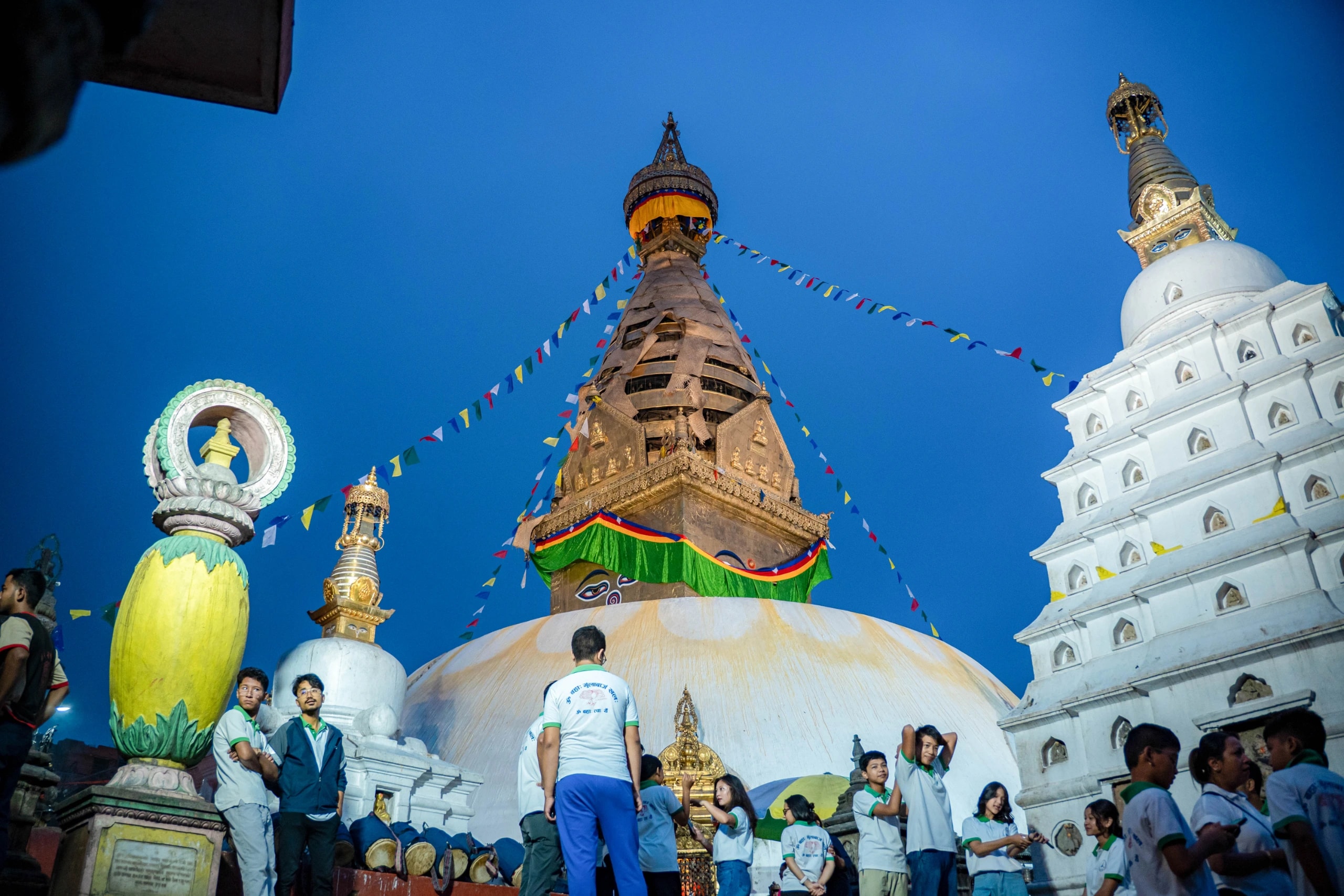
Kathmandu has one international airport and six practical land crossings from India. There is no rail link into Nepal, so every overland route ends in a road journey which is often a long and winding one. For most travelers the decision is simple, but if you are coming from India, or already inside Nepal, the options are worth weighing properly. Here's how each route works.
Almost everyone flies in via a hub
There are no direct flights to Kathmandu from Europe, North America or Australia. Nearly every long-haul traveler connects through a Gulf or Asian hub - Doha, Dubai, Istanbul, Bangkok, Kuala Lumpur, Singapore, Delhi or a Chinese gateway - landing at Tribhuvan International Airport (TIA) on the eastern edge of the city. Qatar Airways, Turkish Airlines, FlyDubai and others run regular services. Expect one stop and somewhere between 12 and 24 hours door to door depending on your origin and layover.
Planning tip: Fares spike sharply for October and April, the two peak travel months, and they spike early. If you are travelling in either window, book months rather than weeks ahead which is the single biggest saving available on a Nepal trip.
Flying from India is quick and cheap
Non-stop services run from Delhi, Mumbai and Bengaluru, with Varanasi and other routes operating seasonally. Delhi to Kathmandu takes about 1 hour 45 minutes and starts from roughly INR 5,000 one way in low season. IndiGo, Air India, Air India Express and Nepal Airlines all fly the Delhi route several times daily.
Indian nationals do not need a visa and can travel on a passport or original voter ID. Aadhaar is not accepted for flights, which catches people out at check-in rather than at the border.
Domestic connections if you are already in Nepal
Buddha Air, Yeti Airlines and others link Pokhara, Bhairahawa, Biratnagar and Bhadrapur to Kathmandu in 25 to 55 minutes, for roughly USD 60–120. On most of these routes the alternative is a long, winding highway drive, which is why the flights are worth the money.
Planning tip: Domestic schedules are weather-dependent, badly so during the monsoon and in winter fog. Never book a tight same-day connection onto an international departure - leave a night in Kathmandu as a buffer.
Overland from India: the four main crossings
All four require you to reach the border by Indian transport, walk or drive across, and pick up Nepali transport on the far side. None is fast. All are cheap.
Crossing | Reached from | Time to Kathmandu | Indicative cost | Best for |
Sunauli / Bhairahawa | Gorakhpur by train, then bus (3–4 hrs) | 8–12 hrs from Gorakhpur | INR 800–1,500 all in | Delhi, Varanasi, eastern UP |
Raxaul / Birgunj | Patna by bus or taxi (4–6 hrs) | 12–16 hrs total | INR 1,000–2,000 | Bihar, Bodh Gaya, Kolkata |
Panitanki / Kakarbhitta | Siliguri or New Jalpaiguri by shared jeep (1 hr) | 14–16 hrs from Kakarbhitta | Low, but a long day | Darjeeling, Sikkim, the Northeast |
Banbasa / Mahendranagar | Bareilly, Haldwani or Rudrapur | Usually broken over two days | Low | Uttarakhand, western UP |
Sunauli is the busiest and the most straightforward. Cross early, between 06:00 and 08:00, to catch the direct tourist buses that leave Bhairahawa around 07:00–08:00. Ignore the touts and money changers and walk straight to immigration.
Raxaul is the most direct route from Bihar. The onward bus takes 6 to 8 hours . A shared jeep cuts it to 4 or 5. Night buses arrive in Kathmandu early in the morning.
Kakarbhitta is a genuinely long day and worth breaking. The better alternative is to take a two-hour bus to Biratnagar and fly the last leg in 45 minutes.
Banbasa is the least-used of the main crossings and has the slowest onward road. Only worth it if you are already in Uttarakhand.
Direct buses that skip the transfers
Two services run all the way through, which removes every vehicle change at the cost of a very long sit.
The Delhi Transport Corporation runs the Indo-Nepal Maitri Bus Sewa, an air-conditioned service from the Dr Ambedkar Stadium terminal, crossing at Sunauli. It covers 1,150 km in about 30 hours and runs on a fixed schedule rather than daily.
From Varanasi, a direct air-conditioned overnight service departs at 22:00 and takes about 21 hours, bookable online or at the Varanasi bus stand. It is considerably shorter than routing via Delhi and is the most popular overland option for Indian travelers.
Getting from the airport into the city
TIA sits about 6 km from the centre, which is 25 to 40 minutes to Thamel depending on traffic. The prepaid taxi counters in arrivals are the reliable option at roughly NPR 700–1,000. Confirm the rate at the counter rather than negotiating with drivers outside. Ride-hailing apps are cheaper but need a local number, so buy your SIM at the Ncell or NTC counter in the hall before you leave the terminal. The cheapest option of all is to walk five to ten minutes out to the Sinamangal road and take a Sajha Yatayat or local bus toward Ratna Park or Jamal, for a few rupees.
The recommended default
Fly into Tribhuvan via a Gulf hub, submit the online visa form before departure, buy a SIM in the arrivals hall, and take a prepaid taxi into the city. For Indian travelers, the Delhi or Varanasi flight is worth the premium over any of the overland routes unless the journey itself is the point, in which case the Varanasi bus is the one to take.